
Table of Contents
- What Zeolite Is and How It Works in Soil
- How to Loosen Compacted Clay Soil with Zeolite
- How Much Zeolite to Add to Soil
- Does Zeolite Improve Soil Drainage
- Zeolite vs Perlite for Soil Improvement
- Realistic Expectations and Limitations
- Combining Zeolite with Other Soil Amendments
- Frequently Asked Questions
Last Updated: October 9, 2026
What Zeolite Is and How It Works in Soil
Zeolite is a naturally porous mineral formed from volcanic ash that traps and slowly releases water and nutrients in soil.
Its porous structure holds positively charged nutrients (like ammonium and potassium) and water in the root zone, releasing them slowly as plants need them.
The mineral doesn't break down, so it keeps working season after season.
Zeolite also reduces odors in soil and containers by trapping ammonia compounds, the same property that makes it popular in poultry environments.
How to Loosen Compacted Clay Soil with Zeolite
Does zeolite help compacted clay soil? The answer is nuanced. Zeolite improves soil structure and drainage, but it won't physically break apart dense clay the way mechanical aeration or organic matter does.
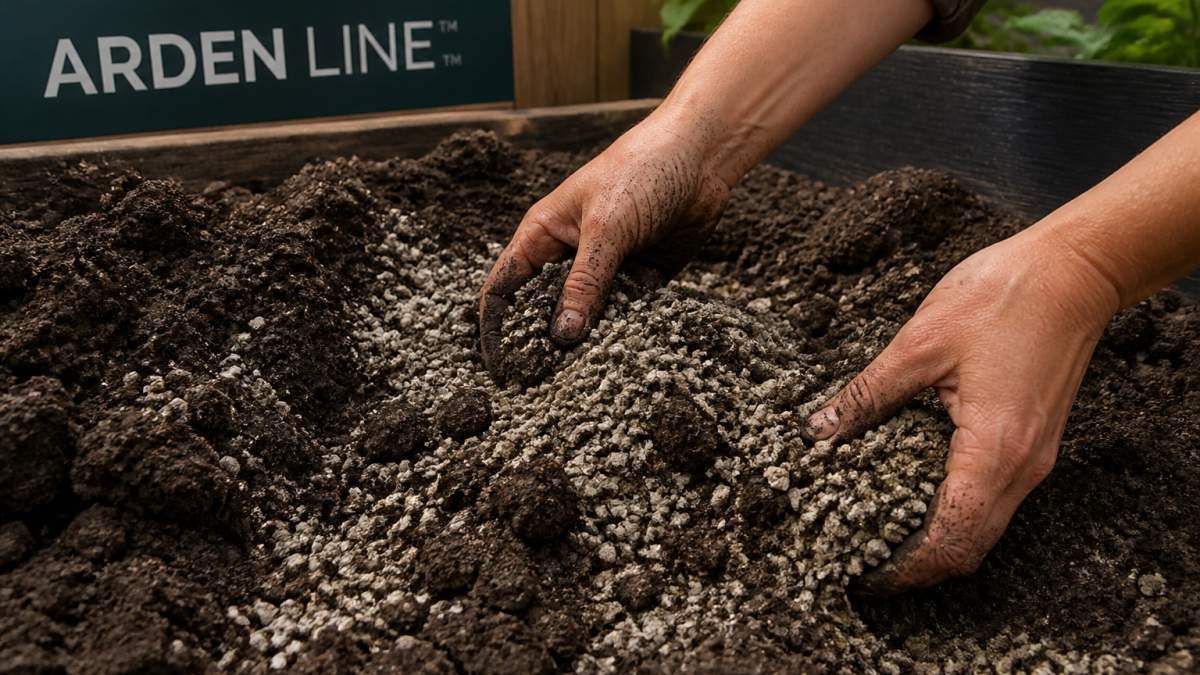
Compacted clay needs air and space between particles. Zeolite creates tiny air pockets and holds water there, helping roots penetrate slightly more easily, but real loosening comes from combining it with other amendments.
Diagnosing Clay Compaction Before You Treat It
Before adding anything, confirm you actually have compaction. Compacted clay feels hard and dense, forms a tight crust when dry, and stays soggy when wet because water can't drain through.
Push a metal rod or screwdriver into the ground: if it stops within 6 inches, you have serious compaction. Water pooling for hours after rain is another sign.
Poor drainage and slow root penetration are the main problems; zeolite helps with both, but only as part of a larger strategy.
Step-by-Step Application for Clay Soil
Step 2: Mix in zeolite. Spread zeolite over the worked area at the rate recommended for your soil type (see next section).
Step 4: Water thoroughly. Wet the amended area so zeolite begins absorbing moisture and settling into the soil matrix.
Step 5: Wait 2-4 weeks. Let amendments integrate before planting so microbes can colonize the new structure.
Mechanical loosening, zeolite, and organic matter together address compaction from multiple angles. Zeolite alone won't fix severe compaction, but it's a valuable piece of the solution.
How Much Zeolite to Add to Soil
There is no single correct rate. Zeolite is a soil conditioner, not a fertilizer, so the amount depends on your clay's heaviness, how the bed is used, and how deeply you can incorporate it. Rates below are by volume of the amended layer, not weight, since zeolite and clay differ so much in bulk density.
A quick way to think about it: 10% by volume means one part zeolite to nine parts soil. In a 5-gallon bucket of finished mix, that is about 2 quarts of zeolite.
Rates by Soil Type
- Moderate clay (workable when moist, drains within a day): 5-10% zeolite by volume in the top 6-8 inches.
- Heavy clay (sticky, slow to drain, cracks when dry): 10-15% by volume in the top 6-8 inches. Do not exceed 15% in the root zone.
- Severely compacted clay with a hardpan: 10-15% in the top 6-8 inches, and no more than 5-10% in any deeper layer you can reach. The upper layer is where roots and water exchange happen.
- Sandy or loamy soil: 5-8% is usually enough. Zeolite's water-holding benefit is less critical where drainage is already good.
Rates by Garden Use
- In-ground vegetable and flower beds: 10-15% by volume, incorporated 6-8 inches deep. This is the workhorse rate for clay.
- Raised beds: 15-20% by volume. Raised beds dry faster and have less native soil buffering, so the moisture-holding benefit pays off.
- Containers and potting mixes: 15-25% by volume of the finished mix. Containers drain fast and dry out quickly; zeolite moderates both.
- Lawns and turf: 10-20 lb per 100 square feet, broadcast and watered in, or topdressed after core aeration. Surface application is slower to work into the root zone than incorporation, so plan on repeat applications over a few seasons.
- Localized planting (trees, shrubs, perennials): Mix 10-20% zeolite by volume into the backfill for the planting hole, blended with the native soil rather than used as a standalone fill. Do not create a pocket of pure zeolite, which can wick water away from roots.
- New sod or seed: 5-10% by volume in the top 4-6 inches of the seedbed.
A Worked Example
A 4 ft x 8 ft bed worked 8 inches deep is about 85 gallons of soil volume. At 10% zeolite, that's roughly 8-9 gallons of mineral; at 15%, about 12-13 gallons. Since a 5-gallon bucket holds about 0.67 cubic feet, 8-9 gallons is a little over one bucket.
For a 1,000-square-foot lawn at 15 lb per 100 square feet, you'd need about 150 lb of zeolite. That's a topdressing rate, so split it across two or three applications in the growing season.
Overapplication: What Happens
More zeolite is not better. In heavy clay, excess zeolite can keep the root zone saturated longer than it should be, the opposite of what compacted clay needs, and can push pH upward over time since zeolite is neutral to slightly alkaline. Stay at or below 15% by volume in the root zone, and below 10% if your clay already drains poorly.
Mix zeolite thoroughly into the top 6-8 inches with a rake, cultivator, or broadfork. Don't work wet clay, it smears and destroys structure. Wait until soil is moist but crumbly.
Does Zeolite Improve Soil Drainage
Yes, but the mechanism isn't what most gardeners assume, and the improvement depends on how bad the compaction is. Understanding both helps you set realistic expectations and measure results.
How Zeolite Actually Affects Drainage
Zeolite doesn't create large air pores the way perlite does. Its rigid, cage-like crystal lattice has channels measured in nanometers, not millimeters, which hold water and positively charged nutrients and release them slowly.
That's a modest structural benefit, not a cure. If your clay has a true hardpan or plow pan, zeolite worked into the top 6-8 inches won't break it, you need mechanical fracturing (broadfork, subsoiler, or core aerator) or deep-rooted cover crops.
How to Measure Whether Drainage Is Improving
Before you amend, run three simple checks and write down the results. Repeat them 4-6 weeks after amending and again the following spring.
Zeolite Mineral Lava Rocks (Regular) →
- Infiltration test. Push a 6-inch-diameter ring (a bottomless coffee can works) about 1 inch into the soil, fill it with water, and time how long it takes to soak in. On heavy clay, an inch of water can take an hour or more. After amending, a meaningful improvement is a noticeably shorter time, often 20-50% faster in the first season.
- Penetration test. Push a metal rod or screwdriver into moist soil. If it stops within 6 inches, you have serious compaction. Track how deep it goes before and after treatment.
- Ponding observation. After a soaking rain, note how long water stands on the surface. Hours of standing water means drainage is still the limiting factor.
What the Improvement Looks Like in Practice
Most drainage gain shows up in the first season, when freshly fractured soil and new zeolite pore space both work.
Amended clay typically drains noticeably better in year one, holds that improvement through year two if organic matter is replenished, then either keeps improving or plateaus depending on whether you keep adding compost and avoid re-compaction from foot traffic and tillage.
When Zeolite Is the Wrong Tool for Drainage
- Standing water for more than 24 hours after rain: investigate grading, a high water table, or a subsurface drain before adding amendments.
- A hardpan below 8 inches: you need mechanical fracturing or deep-rooted cover crops, not a surface amendment.
- Sodic or saline clay: gypsum or a soil test-driven amendment program is the right first step. Zeolite holds cations but does not displace sodium from clay the way gypsum does.
- Sloped sites with erosion: zeolite will not stabilize soil. Use mulch, cover crops, or structural controls.
If your situation is one of these, treat zeolite as a supporting amendment and address the underlying cause first.
Zeolite vs Perlite for Soil Improvement
Both improve drainage and aeration, but they work differently.
Perlite is expanded volcanic glass with large air pockets.
Zeolite stays stable indefinitely, holds both water and nutrients and releases them slowly, and is heavier so it stays where you put it.
For compacted clay, zeolite is the better choice: perlite adds air but doesn't improve nutrient holding or moisture moderation, while zeolite does both.
For potting mixes or very dense clay, using both together creates a balanced approach: perlite for immediate aeration, zeolite for long-term water and nutrient management.
Realistic Expectations and Limitations
Zeolite won't transform compacted clay into perfect garden soil on its own. It's an amendment, not a miracle cure.
What zeolite actually does:
- Reduces watering frequency by 15-25% in amended areas
- Improves nutrient availability so plants grow steadier
- Increases water infiltration in compacted soil
- Lasts for years without breaking down
What zeolite doesn't do:
- Physically break apart dense clay (you need mechanical loosening for that)
- Work as a standalone fix for severe compaction (combine with compost and aeration)
- Reduce soil pH significantly (it's neutral to slightly alkaline at approximately 8.5)
- Replace good drainage if the underlying problem is poor site drainage
Severe compaction needs a multi-year strategy. Year one: mechanical aeration, zeolite, and compost. Year two onward: keep adding organic matter and let soil biology work. By year three, most clay soils show significant improvement.
Combining Zeolite with Other Soil Amendments
Best results come from layering amendments.
Zeolite + Compost: The core combination.
Zeolite + Perlite: For clay that needs both water retention and air space, combine them.
Zeolite + Gypsum: Gypsum breaks apart clay particles chemically; zeolite adds physical water-holding. They complement each other well.
Don't mix zeolite with fresh wood chips or high-carbon materials, they compete with your plants for nitrogen as they decompose.
Compacted clay responds best to a combined approach.
At Arden Line, we recommend starting with our Zeolite Mineral Lava Rocks (Granular) for clay soil amendment.

Frequently Asked Questions
Does zeolite actually help compacted clay soil, or is it just marketing?
Zeolite does improve drainage and aeration in clay soil through its porous structure, which creates air pockets and allows water to move more freely. However, it works best as part of a broader strategy. Zeolite alone cannot mechanically break apart heavy clay compaction; you'll see the most benefit when combining it with organic matter like compost or aged manure. The mineral's ability to retain moisture and nutrients while improving water infiltration makes it a practical amendment, but realistic expectations matter, it's a helper, not a complete clay fix.
How much zeolite should I add to compacted clay soil?
For clay soil improvement, follow the application rates on the product label. Work it into the top 6 to 8 inches of soil. Start with the lower rate if you're combining zeolite with compost or other amendments. For severely compacted soil, you may need to apply zeolite in multiple seasons as the soil structure gradually improves. Monitor drainage after the first application and adjust rates based on results.
How long does it take for zeolite to improve soil drainage?
You may notice improved water infiltration within the first few weeks after application, especially if zeolite is mixed into the top few inches where water first contacts the soil. Full benefits to soil structure and root penetration typically develop over one to two growing seasons as the mineral works alongside organic matter decomposition and root activity. Patience is key, soil amendment is a gradual process, not an instant fix.
Is zeolite better than perlite for clay soil?
Zeolite and perlite both improve aeration, but zeolite has a significant advantage for clay soil: it retains nutrients and moisture while improving drainage, whereas perlite is inert and only improves airflow. Zeolite's cation exchange capacity means it holds plant nutrients and slowly releases them, reducing fertilizer runoff. For clay soil specifically, zeolite is the stronger choice because it addresses both compaction and nutrient retention. Perlite works well for potting mixes and container plants where drainage is the primary concern.


Leave a comment
This site is protected by hCaptcha and the hCaptcha Privacy Policy and Terms of Service apply.