

Regular
Coarse rocks · 3–6 mm
Home odor removal, top dressing, and coarse growing mixes.
THE ARDEN LINE LEARNING CENTER
Get to know the materials, choose the right product, and find practical ways to use it around your home, garden, and backyard.
START AT HOME
Closets, mudrooms, basements, and everyday household spaces: start with Regular Zeolite when choosing zeolite for odor removal at home.
The coarse mineral rocks are easy to place in an open container, keeping the material together while allowing air to reach it.

Closets · Mudrooms · Basements
Start with the job you have in mind. Particle size helps you choose the right form of zeolite.
Coarse rocks · 3–6 mm
Home odor removal, top dressing, and coarse growing mixes.

Smaller granules · 1.4–4 mm
Blending into soil, potting mixes, and container planting.

Finely milled powder
Chicken dust bathing and the fine-grade uses in our flock-care guide.

Chicken care
Zeolite earns its keep two ways — as a soft, finely milled dust bath that helps hens keep feathers clean and dry, and as a coop and run treatment that absorbs droppings moisture and locks up ammonia.
Garden & soil
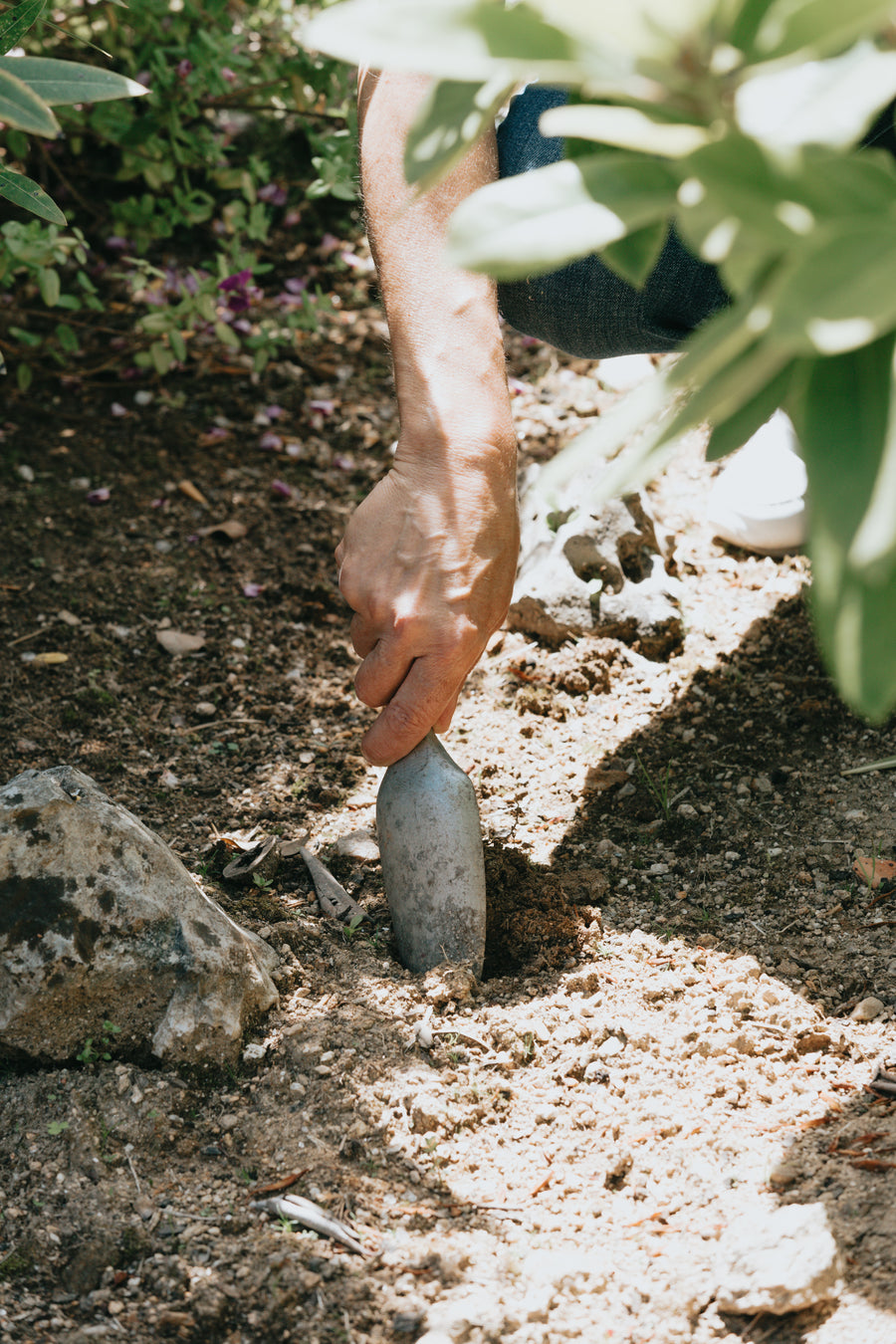
Mixed into beds and potting soil, zeolite improves drainage and aeration while acting as a slow-release reservoir for water and nutrients — reducing how often you water and how much fertilizer leaches away.
Houseplants
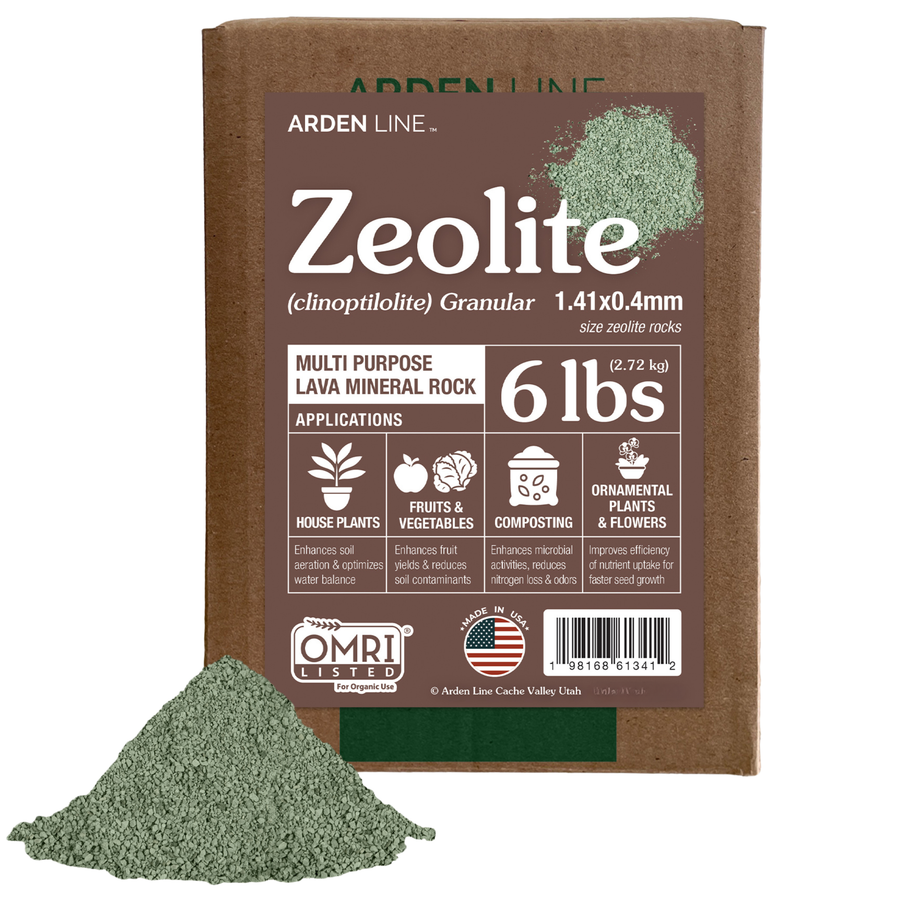
Succulents and cacti die more often from too much water than too little. Zeolite gives a fast-draining mix that never stays soggy — while its channels hold a small moisture buffer that evens out the wet-dry cycle.
Zeolite is a family of natural minerals formed when volcanic ash settled into ancient lakes and seas and crystallized over thousands of years. Ours is clinoptilolite — the most useful and well-studied type — mined and milled in the USA at 85–95% purity, with no crystalline silica.
Under a microscope, each grain is a rigid honeycomb of microscopic channels that packs roughly 24.9 m² of surface area into a single gram — the reason it does so much with so little.
Zeolite’s framework carries a natural negative charge, and that charge does two jobs at once.
A very high cation-exchange capacity (CEC ~180–220 meq/100 g) locks onto ammonium — the source of ammonia odor — plus potassium, calcium, and heavy metals.
The honeycomb channels soak up moisture and loose nutrients — over 55% of its weight in water — then release them slowly over time.
A hard, low-clay mineral (Mohs 3.5–4) that resists breaking down, so it keeps working season after season.
Natural clinoptilolite zeolite · Material profile
| Mineral | Natural clinoptilolite zeolite |
|---|---|
| Purity | 85–95% clinoptilolite (no crystalline silica) |
| General formula | (Na,K,Ca)₂₋₃Al₃(Al,Si)₂Si₁₃O₃₆·12H₂O |
| Cation-exchange capacity (CEC) | ~180–220 meq/100 g |
| Surface area | ~24.9 m²/g |
| Water absorption | Holds >55% of its weight in water |
| Specific gravity | 2.1–2.2 |
| Bulk density | ~55–60 lb/ft³ |
| Hardness | Mohs 3.5–4 (low clay, attrition-resistant) |
| Potassium | ~3.5% |
| Calcium | ~2% |
| Sodium | <0.5% (non-water-soluble) |
| Particle sizes | ½″ × ¼″ down to ultrafine (5–9 microns) |
| Certifications | OMRI Listed · GRAS anti-caking mineral · Sourced & packed in the USA |
Our range is growing. Explore Mineral Essentials, with more products and practical guides to come.
Find more detailed explanations and practical ideas in The Field Guide.