
Table of Contents
- How Volcanic Minerals Improve Water Retention
- The Science Behind Porosity and Nutrient Availability
- How to Use Zeolite in Garden Soil
- Zeolite vs Perlite for Moisture Control
- Improving Sandy Soil Water Retention Naturally
- Volcanic Minerals and Sustainable Soil Health
- Frequently Asked Questions
Last Updated: October 4, 2026
How Volcanic Minerals Improve Water Retention
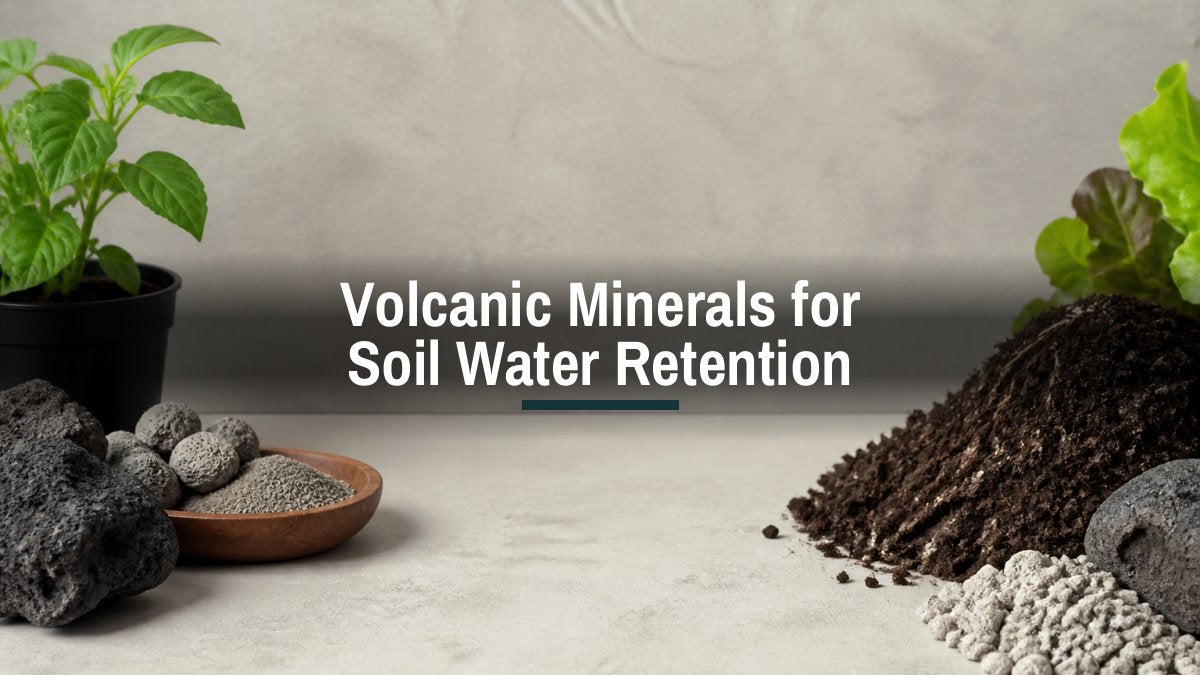
Volcanic minerals like zeolite improve volcanic minerals soil water retention by trapping moisture in their naturally porous structure, allowing soil to hold water longer while still maintaining healthy drainage. The porous nature of these minerals creates tiny chambers that absorb excess water and release it slowly to plant roots, preventing both overwatering and drought stress. This means your plants get consistent access to moisture between watering sessions, reducing the frequency you need to water while improving overall soil health.
Volcanic minerals also hold positively charged nutrients like potassium and ammonium, releasing them gradually to reduce nutrient leaching, especially valuable in sandy soils that drain too quickly.
For home gardeners in drought-prone areas or with heavy clay soils, volcanic minerals offer a natural way to balance moisture, improving both drainage and water retention simultaneously.
The Science Behind Porosity and Nutrient Availability
The porous structure of zeolite creates channels and chambers that trap water while allowing air flow, preventing soil compaction and restricting water infiltration and root development.
The mineral's cation exchange ability holds positively charged nutrients like potassium and ammonium on the zeolite surface, keeping them available to roots rather than washing away.
Volcanic minerals (pH ~8.5) support beneficial microbes that break down organic matter and improve nutrient availability. Improved aeration further supports this microbial ecosystem.
How to Use Zeolite in Garden Soil
Soil Testing and Assessment
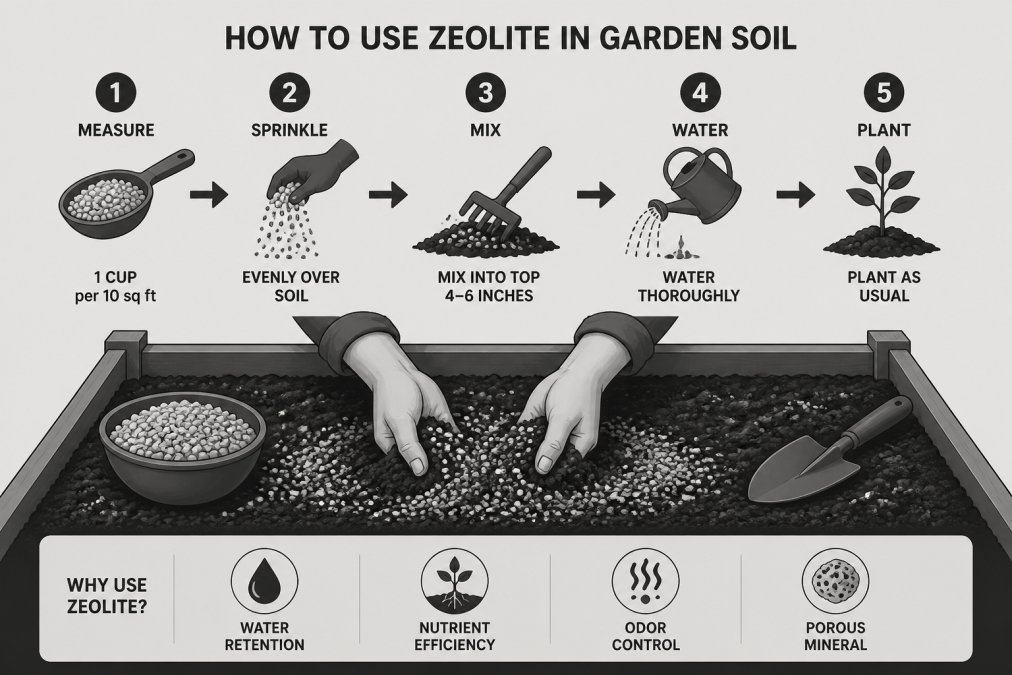
Contact your local cooperative extension office for a soil test measuring pH, organic matter, and nutrient levels. Since zeolite has a naturally high pH of approximately 8.5, it is compatible with a wide range of plants and soil blends.
Application Rates by Soil Type and Condition
Depth and Incorporation Method
For containers, blend zeolite into the entire soil volume before planting.
For raised beds and gardens, incorporate zeolite into the top 8-10 inches where 80% of root activity occurs. Work it in before planting or carefully around established plants. Avoid tilling clay soil more than once per season.
Long-Term Monitoring and Adjustment
Zeolite is a long-lasting mineral that does not break down.
Arden Line Zeolite Granular (1.4-4 mm particles) blends into potting mixes. Arden Line Zeolite Regular (1/8"-1/4" / 3-6 mm particles) works for larger garden applications. Both grades are effective; choose based on your application.

Zeolite vs Perlite for Moisture Control
Perlite is heated volcanic glass that expands to create air pockets, improving drainage and preventing waterlogging.
Zeolite, by contrast, actively holds water and nutrients within its porous structure. This fundamental difference makes zeolite effective for water retention. If your goal is preventing overwatering and improving aeration, perlite may be sufficient. If you want to reduce watering frequency while maintaining consistent nutrient availability, zeolite is a good choice.
The practical difference becomes clear in different growing scenarios. Container plants in hot climates benefit from zeolite's water-holding capacity, reducing the need to water daily. Outdoor garden beds in regions with regular rainfall may perform well with perlite alone, since the additional water retention becomes unnecessary. For most home gardeners seeking to improve water retention specifically, zeolite delivers targeted benefits, though combining both minerals in potting mixes offers complementary advantages, zeolite for moisture and nutrient retention, perlite for drainage and aeration.
Improving Sandy Soil Water Retention Naturally
Sandy soil is the ideal candidate for zeolite amendment because it presents two simultaneous problems that zeolite solves: water drains so rapidly that plants experience drought stress between waterings, and nutrients leach away before roots absorb them.
Why Sandy Soil Responds Best to Zeolite
Zeolite's porous structure directly counteracts sandy soil's weakness. By adding zeolite, you create a network of water-holding chambers that slow water movement and extend the period plants can access soil moisture.
Zeolite Mineral Lava Rocks (Regular) →
The nutrient retention benefit is equally important. Zeolite's cation exchange capacity holds potassium and ammonium in the root zone. For vegetable gardens, this can mean more consistent plant growth.
Regional Considerations and Crop Performance
Combining Zeolite with Organic Matter for Sustained Improvement
Zeolite alone improves water retention immediately, but combining it with organic matter creates compounding benefits over time. Add 2-3 inches of compost or aged manure alongside your zeolite amendment. The organic matter provides:
- Additional water-holding capacity
- Microbial food sources that build soil structure and create stable aggregates
- Gradual nutrient release as microbes break down organic compounds
In sandy soil, this combination works synergistically. Zeolite provides immediate, long-term water and nutrient retention, while organic matter builds biological activity and structural stability.
Cost-Benefit Analysis for Home Gardeners
Arden Line Zeolite Mineral Lava Rocks (Regular or Granular) cost $23.99 for a 6 lb bag. For a 100-square-foot raised bed 12 inches deep (37 cubic feet), a 15% zeolite amendment would require a significant amount of product.

Arden Line Zeolite Mineral Lava Rocks are a long-lasting mineral that does not break down. For gardeners planning to maintain beds for several years, zeolite can be a good long-term investment.
For permanent garden installations, zeolite is a good long-term investment.
Application Strategy for Sandy Soil Specifically
Mix zeolite into the top 10 inches of sandy soil before planting. Work it in thoroughly so particles are distributed evenly.
For established gardens, carefully work zeolite into the soil around plants without damaging roots, then add 2-3 inches of compost as a top layer. This approach avoids major soil disturbance while still incorporating the amendment into the root zone.
Water deeply after application to settle the zeolite and begin the cation exchange process.
Volcanic Minerals and Sustainable Soil Health
Using volcanic minerals like zeolite supports sustainable agriculture by reducing chemical input dependency. Rather than applying fertilizer more frequently to compensate for nutrient loss, the slow-release nutrient retention provided by zeolite means plants access nutrients more efficiently. This reduces both fertilizer waste and the environmental impact of excess nutrient runoff into waterways.
Healthier soils with better structure and microbial diversity are more resilient to drought and erosion, reducing the need for intensive management practices.
For home gardeners and small-scale farmers, volcanic minerals represent a practical step toward reducing chemical inputs while improving soil resilience. The minerals don't degrade or require replacement like organic amendments do, making them a genuinely sustainable long-term investment. Arden Line's commitment to providing natural, chemical-free volcanic zeolite supports this sustainable approach, allowing you to build soil health without synthetic additives while maintaining the purity and safety of your growing environment.
Improving soil water retention doesn't require chemical solutions or constant intervention. Volcanic minerals like zeolite address the root cause of moisture and nutrient imbalance by working with your soil's natural structure rather than against it. If you're managing sandy soil that drains too quickly or looking to reduce watering frequency while improving plant nutrition, consider adding volcanic minerals to your soil amendment strategy. Arden Line's Zeolite Mineral Lava Rocks are sourced and processed 100% in the United States, offering a natural, OMRI-listed option that improves drainage, aeration, and nutrient retention without chemicals or synthetic additives. Start with our regular or granular grade depending on your application, and experience the difference that naturally porous minerals can make in your garden's water retention and long-term soil health.
Frequently Asked Questions
What helps with water retention in soil?
Volcanic minerals like zeolite improve water retention through their porous structure, which holds water and nutrients in the root zone while allowing excess moisture to drain. This prevents overwatering and reduces soil compaction. The mineral's naturally high pH of approximately 8.5 makes it compatible with most plants, supporting steady nutrient release over time without requiring frequent fertilizer applications.
How do I know how much zeolite to apply to my garden?
Application rates depend on your soil type and goals. For raised beds and gardens, mix zeolite into the top 6-8 inches of soil. For potted plants, blend it into your potting mix. Soil testing helps identify whether you have a moisture or compaction problem; if drainage is slow due to clay, zeolite can help improve aeration. Start with a smaller amount and observe plant response over one growing season.
Can volcanic minerals like zeolite replace traditional soil amendments?
Zeolite works best alongside organic amendments rather than replacing them entirely. While it improves drainage, aeration, and nutrient retention, it doesn't add organic matter or microbial activity that compost and aged manure provide. Combining volcanic minerals with organic amendments creates a balanced approach to soil health, reducing chemical fertilizer dependency while supporting long-term soil structure and microbial activity.
Are volcanic minerals safe for organic gardening?
Yes, volcanic zeolite is approved for use in organic production and contains no synthetic additives, fillers, or chemicals. It's a naturally occurring mineral that does not break down or leach harmful substances into soil. This makes it ideal for organic gardeners seeking sustainable, chemical-free amendments that support plant vitality without compromising environmental standards or food safety.


Leave a comment
This site is protected by hCaptcha and the hCaptcha Privacy Policy and Terms of Service apply.