
Table of Contents
- What Mineral Amendments Do for Garden Soil
- How to Improve Drainage in Clay Garden Soil
- Soil Amendments for Clay Soil: Which Minerals Work Best
- Using a Soil Test for Garden Nutrients
- Mineral Amendments vs. Organic Matter: When to Use Each
- Application Rates and Avoiding Overapplication
- Conclusion
- Frequently Asked Questions
Last Updated: October 10, 2026
What Mineral Amendments Do for Garden Soil
Mineral amendments are natural compounds that improve soil structure, drainage, and nutrient availability without chemicals or synthetic additives, making them essential for mineral amendments backyard gardens. At Arden Line, we focus on volcanic zeolite and other minerals that work with your soil's natural chemistry to create conditions where plants thrive.

The core benefit of mineral amendments is straightforward: they fill gaps in your soil. If your garden drains poorly, amendments open air pockets. If your soil won't hold nutrients, amendments trap them. If compaction is strangling roots, amendments break up the density.
Not every mineral works for every soil problem, clay soil needs different treatment than sandy soil, and choosing wrong wastes money and effort.
How to Improve Drainage in Clay Garden Soil
Clay soil drains slowly because particles pack tightly, leaving no space for water or air. Mineral amendments create pore space to solve this.
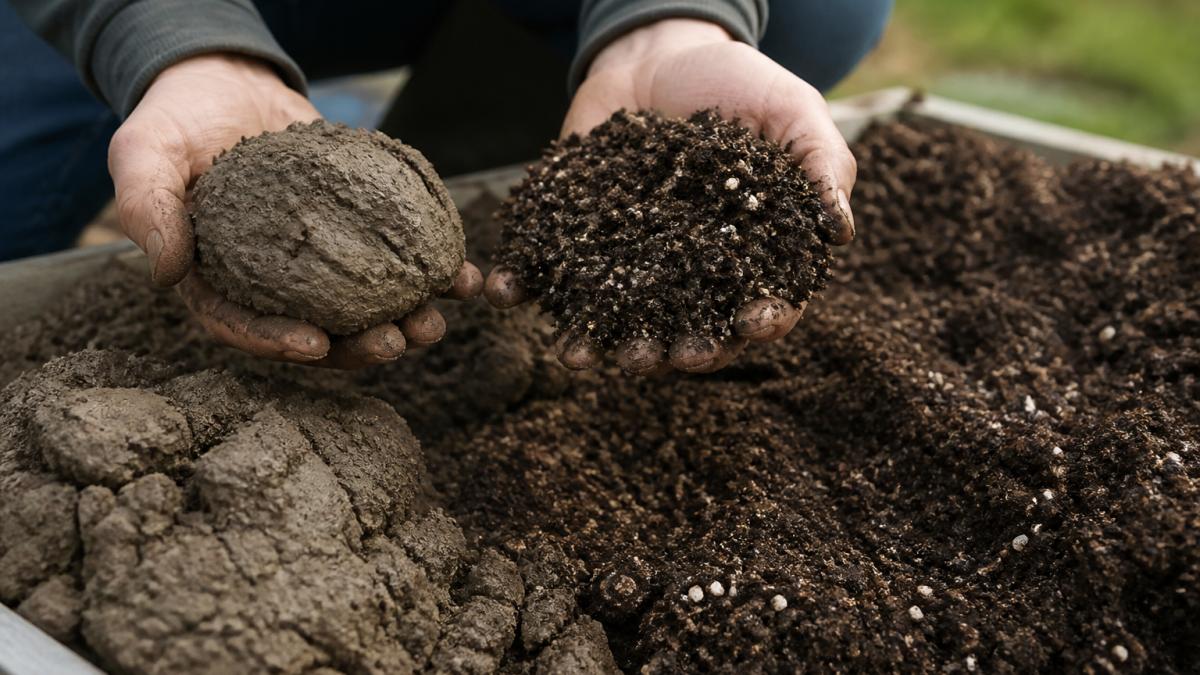
Volcanic zeolite particles are porous by nature and act as tiny sponges, holding water in the root zone while allowing excess to drain. The mineral resists compaction over time, keeping soil workable year after year.
Mix amendments into the top 6 inches of soil where roots live during spring or fall when soil is moist but not waterlogged.
Soil Amendments for Clay Soil: Which Minerals Work Best
Not all mineral amendments work equally well for clay soil, and choosing the wrong one wastes money and delays improvement. The key is matching the amendment to your specific soil problem and timeline. Below is a direct comparison of the most effective mineral amendments for clay gardens.
Volcanic Zeolite for Soil Structure and Moisture
Volcanic zeolite is naturally porous and traps nutrients like potassium and ammonium, releasing them slowly as plants need them, reducing nutrient leaching.
Zeolite doesn't dissolve or compact over time, maintaining soil structure season after season.
Speed: Zeolite begins improving drainage immediately but takes a full growing season to show full benefits in heavily compacted clay.
Application rate: 1-2 inches mixed into the top 6 inches of soil. For a 100-square-foot bed, this requires roughly 30-50 pounds.
Best for: Clay soils with poor drainage. Zeolite has a naturally high pH (around 8.5).
Limitation: Zeolite has a naturally high pH around 8.5.
Gypsum for Compaction Without pH Change
Limitation: Gypsum does not hold water or nutrients like zeolite does. It's a structural fix, not a nutrient solution. If your clay also has poor nutrient availability, gypsum alone will not address that problem. Pair it with compost or other organic matter for complete improvement.
Lime for pH Adjustment and Structure
Limitation: Applying lime to neutral or alkaline soil raises pH further, creating deficiencies in iron, manganese, and zinc. Do not apply lime without a soil test showing pH below 6.0.
Greensand and Rock Dust for Trace Minerals
Limitation: These amendments do not solve immediate drainage or compaction problems. Use only if a soil test shows a specific deficiency, not as a substitute for zeolite, gypsum, or lime.
Comparison Summary
| Amendment | Primary Use | Speed | pH Effect | Best Soil Type | Key Limitation |
|---|---|---|---|---|---|
| Zeolite | Drainage + nutrient retention | Slow (1 season) | Raises pH | Acidic, compacted clay | Unsuitable for alkaline soils |
| Gypsum | Compaction relief | Fast (weeks-months) | None | Compacted clay at correct pH | Does not hold nutrients |
| Lime | pH + compaction | Moderate (3-6 months) | Raises pH | Acidic clay | Overapplication locks up micronutrients |
| Greensand | Trace minerals | Very slow (1-2 years) | Neutral | Any soil as supplement | Slow; claims often overstated |
| Rock Dust | Trace minerals | Very slow (1-2 years) | Neutral | Any soil as supplement | Slow; requires weathering |
Using a Soil Test for Garden Nutrients
A soil test is the only reliable way to choose the right mineral amendment and apply it correctly. Most state university extension offices offer affordable soil testing for $15-$30 per sample.
How to Collect and Submit a Soil Sample
Collect samples from 4-6 spots in your garden at 6-8 inches deep. Mix together, take 1 cup, and place in the sample container provided by your extension office. Avoid contaminating the sample with fertilizer, compost, or debris.
Send the sample to your state university extension soil testing laboratory. Results typically come back within 2 weeks with detailed recommendations.
What the Test Results Tell You
A standard soil test report includes:
Soil pH:
- Below 6.0 = acidic
- 6.0-7.0 = neutral
- Above 7.0 = alkaline
PH is the single most important number for choosing a mineral amendment.
Nutrient levels (nitrogen, phosphorus, potassium): If low, add compost or fertilizer, not minerals. If adequate, focus on structure and drainage.
Secondary nutrients (calcium, magnesium, sulfur): Your report will flag deficiencies.
Micronutrients (iron, zinc, boron, manganese): Deficiencies occur if pH is too high.
Zeolite Mineral Lava Rocks (Regular) →
Organic matter percentage: Most gardens benefit from 3-5%. If below 2%, prioritize compost over minerals. If above 5%, focus on structure and drainage.
Recommended amendments and application rates: Follow these rates exactly, more is not better.
How to Use Test Results to Choose an Amendment
If pH is below 6.0 and soil is compacted: Use lime at the rate specified in your report. Do not add zeolite or gypsum alone.
If pH is 6.0-7.0 and soil drains poorly: Use zeolite or gypsum. Choose based on timeline (gypsum is faster) and budget.
If pH is above 7.0 and soil is compacted: Use gypsum only. Avoid any amendment that raises pH further.
If nutrient levels are low: Add compost or fertilizer, not minerals. Minerals improve structure and pH but do not replace nutrients.
If organic matter is below 2%: Prioritize compost over minerals. Work 2-3 inches into the top 6 inches of soil, then retest after one season.
Why Application Rates Matter
The biggest mistake is applying more than recommended, thinking faster results will follow. Follow your soil test report exactly.
Timeline for Results
Different amendments work at different speeds:
- Zeolite: Improves drainage immediately but takes a full growing season (4-6 months) to show full benefits in heavily compacted clay.
- Compost: Benefits appear within one season but improve over 2-3 years.
Patience matters. Applying amendments once and expecting instant transformation sets you up for disappointment. Amendments work best when incorporated properly and given time to integrate with existing soil.
When to Retest
After applying amendments, wait one full growing season before retesting. Soil chemistry changes slowly. Retesting after 3 months will not show meaningful change and wastes money. After one season, retest to confirm that pH has moved in the right direction and that nutrient levels have improved if you added compost or fertilizer.
Mineral Amendments vs. Organic Matter: When to Use Each
Organic matter (compost, aged leaf mulch, well-rotted manure) feeds soil microbes and improves water retention. Minerals improve structure and drainage without breaking down.
Use both: organic matter builds long-term soil health, while minerals solve immediate problems like poor drainage.
In clay soil, adding only compost without minerals often makes things worse, clay remains compacted. Adding zeolite alongside compost opens the soil so water and air move freely.
In sandy soil, compost and zeolite both help retain moisture and nutrients, accelerating improvement.
The practical mix: 2-3 inches of compost mixed into the top 6 inches, plus 1-2 inches of mineral amendment (zeolite based on your soil test). Work both in together during spring or fall.
Application Rates and Avoiding Overapplication
The biggest mistake gardeners make is adding too much amendment too quickly. More is not better. Overapplication wastes money and can create nutrient imbalances.
For zeolite in garden beds, a typical application is 1-2 inches mixed into the top 6 inches of soil. For a 100-square-foot bed, this requires roughly 30-50 pounds of zeolite. Arden Line's bags come in 6, 12, 18, and 24 lb sizes, making it easy to calculate what you need.

For lime or gypsum, follow your soil test report exactly.
In containers and raised beds, use 10-20% zeolite by volume mixed into potting soil.
Conclusion
Choosing the right mineral amendment for mineral amendments backyard gardens comes down to three steps: test your soil, identify your primary problem (drainage, pH, or compaction), and apply the appropriate mineral in the correct amount.
Arden Line's Zeolite Mineral Lava Rocks address drainage and nutrient retention in clay soils without chemicals or synthetic additives. Available in Regular and Granular grades, both sourced entirely in the USA, our zeolite works with your soil's natural chemistry to create lasting improvement.
Frequently Asked Questions
What is the difference between a soil amendment and a fertilizer?
A soil amendment improves the soil's physical structure, drainage, aeration, and nutrient-holding capacity, things like mineral amendments, compost, and organic matter. A fertilizer adds specific nutrients (nitrogen, phosphorus, potassium) that plants consume. Mineral amendments like zeolite improve soil structure and retain nutrients your plants need, while fertilizers replenish those nutrients. Many gardeners use both: amendments first to build healthy soil, then fertilizers to feed plants.
Can mineral amendments improve drainage in clay soil?
Yes. Mineral amendments like volcanic zeolite reduce compaction and create air pockets in clay, allowing water to drain instead of pooling. Zeolite's porous structure also holds water in the root zone and releases it slowly, preventing both waterlogging and drought stress. For best results, test your soil first to determine whether drainage or pH is your main issue.
How do I know which nutrients my garden soil needs?
A soil test is the only reliable way to know. Contact your local cooperative extension office for a soil test kit, they provide detailed results on pH, nitrogen, phosphorus, potassium, and micronutrients specific to your soil. Results include recommendations for amendments based on what you're growing. Without a test, you're guessing, and overapplying minerals can lock up nutrients or create pH imbalances that harm plant growth. Testing costs $15-$30 and takes 1-2 weeks, making it the best investment for long-term soil health.
How often should I add mineral amendments to garden soil?
Mineral amendments like zeolite break down slowly and can last several years in soil. Apply them once every 2-3 years, or after a soil test shows nutrient or structure decline. Zeolite is especially durable, it doesn't decompose like organic matter, so a single application improves drainage and nutrient retention for years. Start with the rate recommended by your soil test or product label; overapplying can raise pH excessively or create nutrient lockup. For annual vegetable gardens, add compost or aged leaf mulch yearly alongside mineral amendments applied less frequently.

Leave a comment
This site is protected by hCaptcha and the hCaptcha Privacy Policy and Terms of Service apply.