
Table of Contents
- Why Organic Soil Amendments Matter for Vegetable Gardens
- How to Amend Garden Soil: The Foundation for Vegetable Success
- Compost for Vegetable Garden Soil: Building Fertility Naturally
- Animal Manure and Worm Castings: Nutrient-Rich Organic Options
- How to Improve Clay Soil for Gardening With Amendments
- Soil Amendments for Raised Beds: Creating the Ideal Mix
- Plant-Based and Mineral Amendments: Leaf Mold and Biochar
- Avoiding Common Mistakes When Amending Vegetable Soil
- Frequently Asked Questions
Last Updated: October 7, 2026
Why Organic Soil Amendments Matter for Vegetable Gardens
Healthy soil is the foundation of a productive vegetable garden. Without it, even the best seeds and careful watering won't deliver the vegetables you're hoping for. Organic soil amendments improve the structure, drainage, and nutrient content of your garden beds, making plants stronger and harvests more reliable.
At Arden Line, we understand that the best organic soil amendments for vegetables start with understanding what your soil actually needs. Most gardeners apply amendments blindly, hoping something sticks. The smarter approach is testing first, then choosing amendments that address your specific soil problems.

When you add organic matter and mineral amendments to poor soil, you're not just feeding plants. You're building a living ecosystem. Soil microbes break down organic material, roots grow deeper, water moves through more freely, and nutrients become available when plants need them.
This guide covers the best organic soil amendments for vegetables and how to use them effectively.
How to Amend Garden Soil: The Foundation for Vegetable Success
Amending garden soil is straightforward once you understand the basics. The goal is simple: improve drainage in heavy clay, increase water retention in sandy soil, and boost nutrient availability across the board.
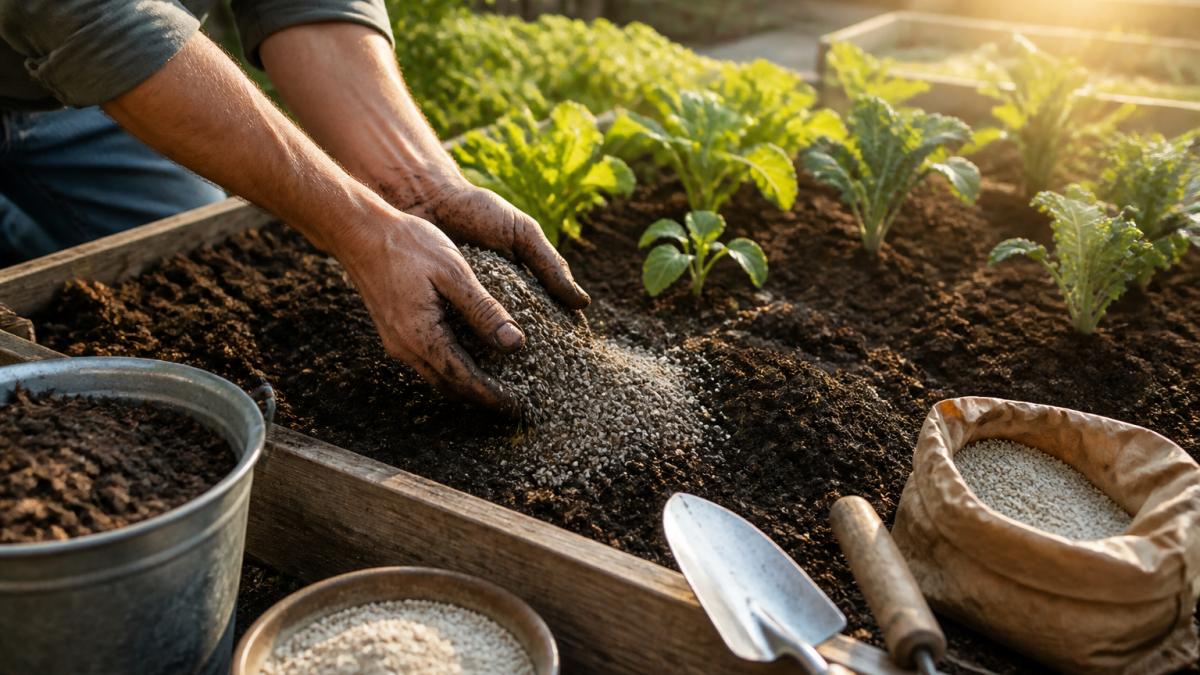
The best amendments work in one or more of these ways:
- Add organic matter that feeds soil microbes
- Improve soil structure so roots penetrate deeper
- Increase water-holding capacity without creating waterlogging
- Supply slow-release nutrients
- Improve aeration and drainage
Different amendments do different jobs. Compost adds nutrients and organic matter. Mineral amendments like zeolite improve drainage and nutrient retention. Manure supplies nitrogen. The right mix depends on what your soil is missing.
Testing Your Soil Before Adding Amendments
Before you buy a single bag of amendments, test your soil. A soil test tells you what you actually have and what you actually need.
You can send a sample to your local cooperative extension office for a comprehensive test. They'll measure pH, nutrient levels, organic matter content, and soil texture. This costs between $10 and $30 and saves you from guessing.
A basic soil test reveals:
- Nitrogen, phosphorus, and potassium levels
- pH (acidity or alkalinity)
- Organic matter percentage
- Texture (clay, silt, sand ratio)
- Micronutrient levels
Once you have results, you can match amendments to actual deficiencies instead of applying random products.
Application Rates and Timing
How much amendment you need depends on your soil condition and the amendment type. A heavily compacted clay bed needs more aggressive treatment than a loamy soil that just needs a nutrient boost.
General guidance for most vegetables:
- Compost: 2-4 inches worked into the top 8-10 inches of soil
- Composted manure: 1-2 inches mixed into the bed
- Worm castings: 0.5-1 inch, worked into the top 6 inches
- Zeolite mineral amendments: 10-20% by volume in the soil mix
The best time to amend is in fall, giving amendments several months to integrate before spring planting. Spring amendment works too, but you'll see stronger results if you prep beds in the previous season.
Compost for Vegetable Garden Soil: Building Fertility Naturally
Compost is the workhorse of vegetable gardening. It adds organic matter, feeds beneficial microbes, and supplies a slow, steady stream of nutrients as it breaks down.
Good compost is dark, crumbly, and smells earthy, not like ammonia or rotting food. Finished compost has no recognizable food scraps and holds together loosely when squeezed.
When you incorporate compost into vegetable beds, you're doing several things at once. You're improving soil structure, increasing water retention, boosting microbial activity, and adding nutrients. The organic matter feeds the soil ecosystem, which in turn makes nutrients available to plant roots.
Most vegetable gardeners add 2-4 inches of finished compost annually. This maintains soil health and fertility without requiring synthetic fertilizers.
Homemade compost costs nothing beyond your effort. Store-bought compost runs from $40 to $80 per cubic yard, depending on quality and source. For a typical 4-by-8 foot vegetable bed, you'll need about 1-2 cubic yards to achieve a 3-inch layer.
Animal Manure and Worm Castings: Nutrient-Rich Organic Options
Animal manure and worm castings are among the most nutrient-dense amendments available. They're particularly valuable for nitrogen-hungry crops like leafy greens and brassicas.
Composted Animal Manure
Fresh manure can burn plants and introduce pathogens. Always use composted manure for vegetables.
Composted chicken, horse, and cow manure are the most common types. Chicken manure is the richest in nitrogen. Horse manure breaks down quickly and improves soil structure. Cow manure is milder and works well as a general amendment.
When using composted manure, apply 1-2 inches and work it into the top 8-10 inches of soil. This supplies both nutrients and organic matter without overwhelming plants.
The key concern with manure is contamination. If the source animals were treated with antibiotics or fed grains sprayed with persistent herbicides, those chemicals can end up in your soil. Source your manure from farms that don't use synthetic inputs, or compost it yourself for at least six months to a year.
Worm Castings and Earthworm Benefits
Worm castings (vermicompost) are the processed waste of earthworms fed organic matter. They're nutrient-dense and immediately available to plant roots.
A single application of worm castings supplies nitrogen, phosphorus, potassium, and trace minerals. Unlike fresh compost, worm castings don't need time to break down, nutrients are already in a form roots can use.
Apply 0.5-1 inch of worm castings to vegetable beds, working it into the top 6 inches. You can also brew worm casting tea by steeping castings in water for 24 hours and using the liquid to water plants.
Zeolite Mineral Lava Rocks (Regular) →
Earthworms themselves are indicators of healthy soil. When you add organic amendments and let soil rest, earthworm populations increase naturally. These worms tunnel through compacted soil, improving aeration and drainage while their castings add nutrients.
How to Improve Clay Soil for Gardening With Amendments
Clay soil compacts easily, drains poorly, and becomes hard as concrete when dry. Vegetables struggle in clay because roots can't penetrate and water sits around root zones, causing rot.
The fix is adding amendments that break up clay structure and improve drainage. Compost, aged manure, and mineral amendments all help, but the key is volume and consistency.
For heavy clay, add 3-4 inches of compost and work it in deeply. Add mineral amendments like zeolite to improve long-term drainage and aeration.
The Arden Line Zeolite Mineral Lava Rocks are designed for exactly this purpose. Mixed into clay soil at 10-15% by volume, zeolite improves drainage and aeration while its porous structure traps nutrients and makes them available slowly.
Don't just add amendments once. Clay improvement is a multi-year process. Add organic matter every year, and consider adding mineral amendments every 2-3 years to maintain soil structure.
Soil Amendments for Raised Beds: Creating the Ideal Mix
Raised beds give you complete control over soil composition. Rather than amending poor existing soil, you build the bed from scratch with the right mix.
The ideal vegetable bed soil is roughly:
- 40-50% compost or aged manure
- 30-40% topsoil or garden soil
- 10-20% mineral amendments (perlite, coarse sand, or zeolite)
- 5-10% peat moss or coconut coir for water retention
This mix drains well, holds nutrients, and supports strong root growth. You can adjust ratios based on what you're growing. Tomatoes and peppers prefer slightly faster drainage. Lettuce and spinach appreciate more water retention.
For a 4-by-8 foot raised bed 12 inches deep, you'll need roughly 32 cubic feet of soil. That's about 1.2 cubic yards. Mix your components thoroughly before filling the bed.
Mineral amendments like zeolite improve raised bed performance significantly. They prevent compaction over time and maintain the drainage-to-retention balance that vegetables need. As the bed settles and organic matter breaks down, zeolite keeps soil structure open.
Plant-Based and Mineral Amendments: Leaf Mold and Biochar
Beyond compost and manure, several other organic and mineral amendments deserve consideration for vegetable gardens.
Leaf mold is decomposed leaves collected in fall. It's free if you have trees, and it adds organic matter while improving soil structure. Shred leaves before piling them, and let them break down for 1-2 years. The result is a dark, crumbly amendment rich in microbes and organic matter.
Biochar is charcoal made from wood or plant material. It improves water retention, traps nutrients, and can last in soil for decades without breaking down. Biochar is particularly useful in sandy soils that drain too quickly. Apply 5-10% by volume, and consider "charging" it with compost tea first to give it an initial nutrient load.
Both amendments are slower to show results than compost or manure, but they improve soil long-term. Leaf mold is economical if you have the space to compost leaves. Biochar costs more upfront but lasts indefinitely.
Avoiding Common Mistakes When Amending Vegetable Soil
Most gardeners make predictable mistakes when amending soil. Knowing what to avoid saves time and money.
Mistake 1: Not testing soil first. Applying amendments blindly often means oversupplying nutrients you don't need while missing what you do.
Mistake 2: Using fresh manure. Fresh manure burns plants, introduces pathogens, and smells terrible.
Mistake 3: Mixing incompatible amendments. Some amendments work against each other. Adding peat moss to already-acidic soil lowers pH further.
Mistake 4: Applying amendments once and stopping. Soil amendment is annual maintenance. Add compost or aged manure every spring.
Mistake 5: Ignoring organic matter loss. Organic matter breaks down continuously. What was 5% organic matter last year might be 3% this year.
Mistake 6: Overcomplicating the mix. You don't need ten different amendments. Compost, composted manure, and a mineral amendment like zeolite cover most needs.
| Common Soil Problem | Best Amendment | Application Rate | Result |
|---|---|---|---|
| Poor drainage, clay soil | Zeolite + compost | 15% zeolite, 3 inches compost | Improved drainage, better aeration |
| Low nutrients | Composted manure | 2 inches worked in | Steady nutrient supply |
| Poor structure, compaction | Compost | 3-4 inches | Better root penetration |
| Water retention, sandy soil | Compost + peat moss | 3 inches compost, 1 inch peat | Improved moisture holding |
| Long-term soil building | Leaf mold + biochar | 2 inches leaf mold, 5% biochar | Sustained structure and fertility |
Vegetable gardening success starts with soil. The best organic soil amendments for vegetables are ones matched to your actual soil conditions and applied consistently.
Arden Line's Zeolite Mineral Lava Rocks improve drainage, aeration, and nutrient retention in vegetable beds and raised gardens. Available in both regular and granular grades, zeolite integrates into any amendment strategy and lasts indefinitely as part of your soil ecosystem.

Frequently Asked Questions
How much organic soil amendment should I add to my vegetable garden?
Most vegetable gardens benefit from 2 to 4 inches of organic amendments worked into the top 6 to 8 inches of soil. Start with a soil test to determine what your soil lacks. Clay soils often need more organic matter, up to 4 inches, while sandy soils may need 2 to 3 inches. For raised beds, fill with a blend of 50% topsoil and 50% compost or other amendments. Apply amendments annually in spring or fall to maintain soil health.
Can you use too much compost or organic matter in a vegetable garden?
Yes. Excessive compost can create overly rich soil that encourages leafy growth at the expense of fruit and vegetable production. Too much organic matter can also increase disease pressure and nutrient imbalances. Follow soil test recommendations and apply no more than 2 to 4 inches annually. For vegetables, balance organic amendments with mineral additions like zeolite to improve drainage and aeration without creating waterlogged conditions.
What's the difference between compost and composted manure for vegetables?
Compost is decomposed plant material that adds organic matter and mild nutrients, making it safe for direct application. Composted manure combines animal waste with bedding material and must be fully decomposed before use to avoid burning plants and contaminating vegetables with harmful pathogens. Fully composted manure (aged at least 6 months) is richer in nitrogen and other nutrients than plant compost. Always source manure-based amendments from verified suppliers to ensure safety.
How do mineral amendments like zeolite help vegetable gardens?
Mineral amendments such as zeolite improve soil structure, drainage, and aeration while holding water and nutrients in the root zone for slow release. They prevent soil compaction, reduce waterlogging in clay soils, and support healthy root development. Unlike organic matter alone, minerals don't break down, providing long-term soil improvement. Zeolite is especially useful in raised beds and container gardens where drainage control is critical for vegetable success.


Leave a comment
This site is protected by hCaptcha and the hCaptcha Privacy Policy and Terms of Service apply.