

Table of Contents
- Why Zeolite Works for Chicken Coop Maintenance
- Zeolite vs Diatomaceous Earth for Chickens: What's the Difference
- Zeolite for Chicken Bedding Moisture Control
- Step-by-Step Coop Maintenance Routine Using Zeolite
- How Often to Clean a Chicken Coop When Using Zeolite
- Zeolite and the Deep Litter Method: A Practical Approach
- Safe Handling, Dust Exposure, and Ventilation
- Measuring Results: How to Know Zeolite Is Working
- Frequently Asked Questions
Last Updated: October 13, 2026
Why Zeolite Works for Chicken Coop Maintenance
A zeolite chicken coop setup has become essential for backyard flock keepers managing odor, ammonia, and moisture in confined spaces.

The reason zeolite works comes down to its structure. This naturally porous mineral, specifically clinoptilolite, traps ammonia gas and excess moisture at the molecular level rather than masking odors with fragrance. When chickens produce waste, ammonia releases quickly into the air and bedding becomes damp.
What makes zeolite different from other bedding amendments is its adsorption capacity. Unlike materials that simply absorb liquid, zeolite's porous structure actively captures ammonia molecules, keeping them bound within the mineral. This means the bedding stays fresher longer between cleanings, and your chickens breathe cleaner air.
For backyard operations, whether you have 8 chickens or 40, the practical benefit is straightforward: you can extend the time between deep cleanings while maintaining better coop conditions. This saves labor while improving animal welfare.
Zeolite vs Diatomaceous Earth for Chickens: What's the Difference
Both zeolite and diatomaceous earth are mineral-based bedding amendments, but they work through different mechanisms and suit different priorities. Understanding the distinction helps you choose the right tool for your specific situation.
Diatomaceous earth (DE) is a silica-based powder made from fossilized diatoms. Its primary function is mechanical pest control, the sharp, microscopic edges of DE particles damage the exoskeletons of insects like mites and lice, causing dehydration.
Zeolite, by contrast, is a microporous aluminosilicate mineral. Its primary function is ammonia and moisture trapping through active adsorption. While zeolite does not offer the same direct insect-killing action as DE, it provides superior odor and ammonia control.
The practical choice depends on your biggest challenge. If pest control is your priority, diatomaceous earth is the more direct solution.
Zeolite also tends to stay in place better than DE. Diatomaceous earth is extremely fine and easily tracks through your coop, into your house, and onto your clothes.
Zeolite for Chicken Bedding Moisture Control
Moisture in chicken bedding is one of the fastest paths to poor coop conditions. Wet litter becomes compacted, creates ammonia hotspots, and promotes mold and bacterial growth.
When you add zeolite to your bedding mix, the mineral begins absorbing water immediately.
The mechanism is straightforward: zeolite's porous structure holds water molecules within its crystalline lattice, removing them from the bedding surface. Dry bedding means less compaction, better air circulation, and slower ammonia release.
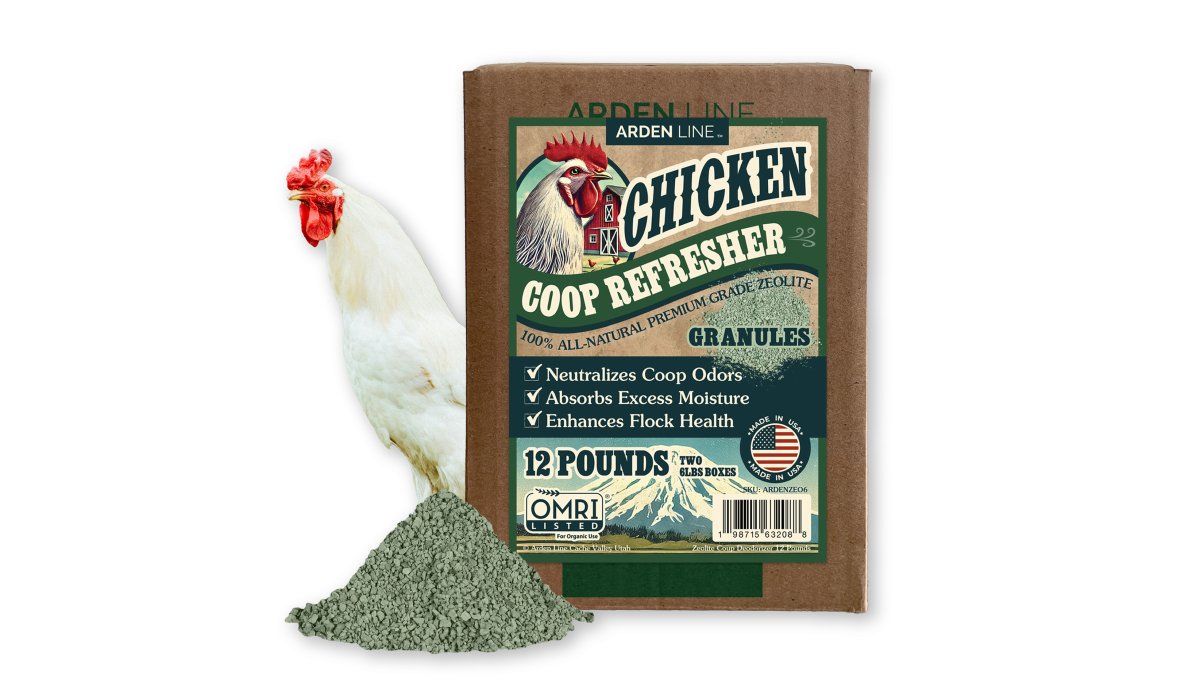
For moisture control specifically, the granule form of zeolite works better than powder. Arden Line's Chicken Coop Deodorizer is formulated as granules for this reason, they stay effective longer and integrate better with your existing bedding material.
Application is simple: mix zeolite into your fresh bedding at a ratio of roughly 1 part zeolite to 10-15 parts bedding material, or sprinkle directly over existing litter as needed.
Step-by-Step Coop Maintenance Routine Using Zeolite
A sustainable zeolite maintenance routine requires consistency but minimal complexity. The key is integrating zeolite into your existing cleaning schedule rather than treating it as a separate task.
Daily Inspection and Spot Treatment
Each morning or evening, spend 5-10 minutes inspecting your coop. Look for wet spots, soiled nesting boxes, and areas where chickens roost. These are ammonia hotspots where waste concentrates. Remove visible droppings and soiled bedding from nesting boxes. Sprinkle a light dusting of zeolite over any damp patches or high-traffic areas. This prevents ammonia buildup before it becomes a problem. A small container of zeolite near your coop entrance makes this habit effortless.
Weekly Application and Monitoring
Once per week, do a more thorough inspection. Remove any compacted or heavily soiled bedding. Add a fresh layer of zeolite across the coop floor, focusing on corners, under roosting bars, and around the waterer where moisture tends to gather. Aim for a light, even coverage, roughly a quarter-inch layer is sufficient. Check ventilation to ensure air is moving through the coop. Poor ventilation reduces zeolite's effectiveness because moisture cannot evaporate.
Observe your chickens' behavior and appearance. Healthy chickens in a well-managed coop show clean feathers, clear eyes, and normal activity levels. If birds appear lethargic or have soiled feathers, moisture or ammonia levels may be too high, increase your zeolite application or check coop ventilation.
Monthly Deep Maintenance
Once monthly, remove all bedding and replace it with fresh material. This is your opportunity to assess coop condition and make adjustments. Inspect for mold, pest activity, or structural issues that trap moisture. When adding fresh bedding, mix zeolite in at the ratio mentioned above (1:10 to 1:15) rather than applying it only to the surface. This distributes the mineral throughout the litter and extends its effectiveness.
Clean waterers and feeders thoroughly. Spilled water around these areas is a common moisture source. Ensure drainage around the coop exterior is working, standing water outside can seep into the coop and overwhelm your zeolite application.
How Often to Clean a Chicken Coop When Using Zeolite
The frequency of deep cleaning depends on flock size, coop ventilation, bedding type, and climate. Zeolite extends the interval between cleanings compared to untreated bedding, but it does not eliminate the need for regular maintenance.
For a small backyard flock of 8-12 chickens in a standard coop with good ventilation, zeolite can extend the interval between full bedding changes when used consistently. Spot cleaning (removing soiled areas) should happen 2-3 times per week regardless of zeolite use.
In larger setups or coops with poor ventilation, you may need to clean more frequently. Conversely, if your coop has exceptional ventilation and you apply zeolite weekly, you might stretch intervals to 6-8 weeks.
Climate matters significantly. In humid regions, moisture accumulates faster and zeolite works harder. In dry climates, zeolite's moisture-trapping benefit is less critical, but ammonia control remains valuable. Winter coop management often requires more frequent cleaning because reduced ventilation (necessary for warmth) traps moisture and ammonia more effectively.
Zeolite and the Deep Litter Method: A Practical Approach
The deep litter method, allowing bedding to accumulate and compost in place over months, is popular among chicken keepers seeking to reduce labor and create long-term soil amendments.
In a traditional deep litter setup, ammonia buildup can become severe. The deep litter method works by allowing beneficial microbes to decompose waste in place, but this process requires oxygen and moderate moisture, conditions easily disrupted by ammonia and excess dampness.
When you apply zeolite to deep litter, the mineral traps ammonia before it overwhelms the microbial ecosystem. This allows beneficial decomposition to proceed while keeping the environment breathable for your chickens.
To use zeolite with deep litter: apply a layer of zeolite (roughly 1-2 inches) as your base. Add your primary bedding on top. Each week, add fresh bedding and a light dusting of zeolite.
The finished compost from a zeolite-amended deep litter system is excellent for gardens, the mineral remains in the compost and continues to improve soil structure and moisture retention.
Safe Handling, Dust Exposure, and Ventilation
Zeolite is non-toxic and safe for chickens, but proper handling protects both you and your flock from unnecessary dust exposure. Understanding safe practices ensures you get maximum benefit without respiratory irritation.
Zeolite dust is fine and easily inhaled if you apply it carelessly. When sprinkling zeolite, do so gently and avoid creating clouds. Apply on calm days or in early morning when air is still.
Your coop ventilation directly affects zeolite's effectiveness and safety. Proper airflow removes ammonia and excess moisture while dispersing any zeolite dust. Inadequate ventilation traps both ammonia and dust, negating zeolite's benefits and creating respiratory stress for your birds.
When handling zeolite, keep it dry. Wet zeolite becomes heavy and loses effectiveness until it dries. Store it in a dry location in sealed containers to maintain potency and prevent moisture absorption before application.
Zeolite is safe for chicks once they have developed feathers (around 3-4 weeks old). Avoid applying it to very young chicks in brooders, as dust in an enclosed brooder environment can irritate their developing respiratory systems.
Measuring Results: How to Know Zeolite Is Working
Effective zeolite use produces observable changes in your coop environment and flock condition. Measuring these outcomes helps you adjust your application and confirm the mineral is delivering value.
The most immediate indicator is smell. Within days of consistent zeolite application, ammonia odor should noticeably decrease.
Bedding appearance is another clear signal. Zeolite-treated litter stays visibly drier and less compacted than untreated bedding in the same conditions.
Flock health reflects coop condition. Chickens in well-managed coops show clean, vibrant feathers, clear eyes, and alert behavior.
Reduced cleaning frequency is a practical outcome. If you are able to extend your deep cleaning schedule without odor or moisture problems, zeolite is performing its function.
Monitor fly populations as an indirect measure. Dry, well-managed litter with lower ammonia supports fewer flies than damp, odorous conditions.
Maintaining a healthy chicken coop requires consistent effort, but the right tools make the work manageable. Zeolite addresses the root causes of coop odor and poor conditions, ammonia and moisture, rather than masking them.
Frequently Asked Questions
How often should I reapply zeolite to my chicken coop?
Reapply zeolite weekly or as needed based on moisture and odor levels. For small backyard coops with 8 or fewer chickens, one application per week is typically sufficient. Spot-treat wet or soiled areas immediately. During wet seasons or in coops with poor ventilation, you may need to reapply more frequently. The key is monitoring bedding moisture, when it feels damp, it's time to add more zeolite.
What's the difference between zeolite and diatomaceous earth for chickens?
Zeolite and diatomaceous earth both control odor and moisture, but they work differently. Zeolite (clinoptilolite) absorbs ammonia and moisture through its porous mineral structure, actively trapping gases. Diatomaceous earth works primarily through physical action, absorbing moisture and helping control external parasites. Zeolite is more effective at ammonia reduction. Both are natural and chemical-free.
Can I use zeolite with the deep litter method?
Yes, zeolite works well with the deep litter method. It controls ammonia buildup and excess moisture in the composting bedding layer, which is critical for this method to function properly. Apply zeolite every 1-2 weeks throughout the litter layer, not just the surface. This helps maintain the right moisture balance for microbial decomposition while keeping ammonia levels manageable. The deep litter method can extend your full cleanout cycle, but zeolite applications still need to happen regularly.
How much zeolite do I need for my coop?
For a small coop with 8 chickens, a 12 lb bag of Arden Line Chicken Coop Deodorizer typically lasts 4-6 weeks with weekly applications. Apply at a rate of 1-2 pounds per 100 square feet of bedding, or sprinkle enough to lightly coat soiled and damp areas. A 24 lb bag is better for larger coops or if you want to extend your supply. Start with one application and adjust based on how quickly moisture and odor return.
Is zeolite safe to use around chickens every day?
Yes, zeolite is safe for daily use around chickens. Arden Line's Chicken Coop Deodorizer is 100% natural volcanic zeolite with no chemicals, fragrances, or additives. Sprinkle it directly on bedding, nesting boxes, and run areas where your birds spend time. It won't harm chickens if they ingest small amounts while foraging. Ensure adequate ventilation in your coop to minimize dust inhalation, and avoid creating clouds of powder when applying.
How do I know if zeolite is actually working in my coop?
Monitor these signs: bedding stays drier longer between cleanings, ammonia smell noticeably decreases, and your chickens show fewer signs of respiratory stress (clear eyes, normal breathing). Check bedding moisture by squeezing a handful, it should feel dry or slightly damp, not wet. Track how many days pass before strong odor returns; with zeolite, this interval should extend. If moisture or smell returns quickly, increase application frequency or check for ventilation problems.
What's the difference between zeolite powder and granules?
Powder forms (like Arden Line's Chicken Dust Bath) are finely milled and mix easily into bedding and dust bath areas. Granules are larger particles that may not absorb as efficiently but can be easier to apply without creating dust. Granules work for run areas and outdoor spaces where dust control is less of a concern.


Leave a comment
This site is protected by hCaptcha and the hCaptcha Privacy Policy and Terms of Service apply.