
Table of Contents
- Why Ammonia Buildup Harms Your Flock
- Step 1: Improve Ventilation to Control Ammonia
- Step 2: Manage Bedding Moisture Levels
- Step 3: Use Zeolite for Chicken Coops
- Step 4: Implement the Deep Litter Method for Ammonia Control
- Step 5: Establish a Routine Coop Cleaning Schedule
- Recognizing Signs of Ammonia Toxicity in Chickens
- Frequently Asked Questions
Last Updated: September 22, 2026
Why Ammonia Buildup Harms Your Flock
Ammonia builds up fast in chicken coops. Chicken droppings contain nitrogen compounds that break down into ammonia gas, which concentrates near where your birds breathe and damages respiratory health over time.
The problem worsens in winter when cold weather reduces ventilation, traps moisture, and spikes ammonia levels, causing respiratory stress, reduced egg production, and increased disease susceptibility.
High ammonia corrodes metal feeders and waterers, weakens wood structures, and creates unbearable odors for you and neighbors.
The good news: you can reduce chicken coop ammonia naturally. You don't need chemicals or harsh treatments. The strategies below work together to keep ammonia levels low and your flock healthy.

Step 1: Improve Ventilation to Control Ammonia
Ventilation is your first defense against ammonia. Moving air carries ammonia gas out and brings fresh air in; without proper air exchange, ammonia concentrates regardless of other efforts.
Install high vents to let ammonia-rich air escape and low vents to pull in fresh air, creating cross-ventilation that works even on calm days.
Key ventilation steps:
- Add roof vents or ridge vents for rising ammonia to escape
- Install side vents near the bottom for incoming fresh air
- Use hardware cloth or mesh to keep predators out while allowing airflow
- Clean vents monthly so dust doesn't block air movement
- Position vents to avoid direct drafts on roosting areas
Maintain winter ventilation while using deep litter methods to generate heat naturally; proper ventilation and insulation work together.
Step 2: Manage Bedding Moisture Levels
Wet bedding accelerates ammonia production by activating bacteria that convert nitrogen into ammonia gas; dry bedding slows this process dramatically.
Check bedding daily. It should feel dry to the touch. If you see wet patches or smell strong ammonia, moisture is too high. Remove wet bedding immediately and replace with fresh, dry material.
Moisture control methods:
- Use absorbent bedding materials like wood shavings or straw
- Spread bedding 4-6 inches deep to absorb more moisture
- Rake bedding daily to break up wet spots and expose damp material to air
- Ensure waterers don't leak or splash onto bedding
- Provide adequate ventilation to evaporate moisture
- Consider bedding additives designed to absorb moisture and neutralize ammonia
Step 3: Use Zeolite for Chicken Coops
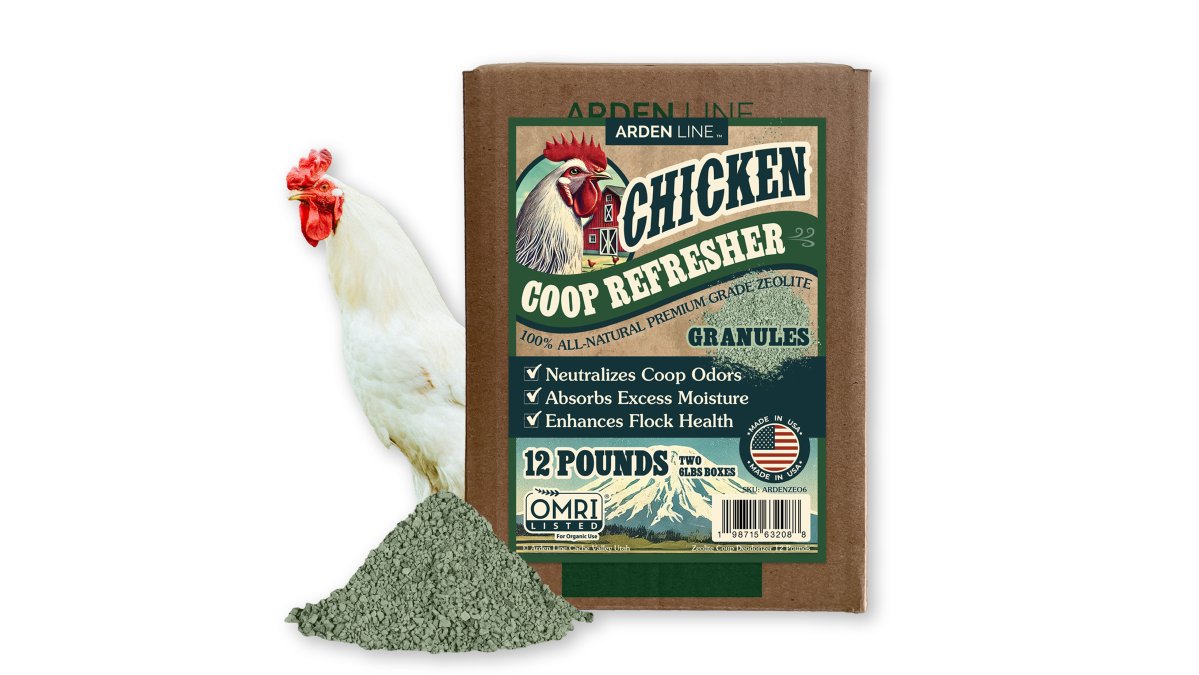
Zeolite is a naturally porous mineral that absorbs ammonia and moisture at the molecular level, unlike chemical deodorizers that only mask smell.
Ammonia molecules adsorb to zeolite particles, removing ammonia from the air (pubmed.ncbi.nlm.nih.gov).
Zeolite also absorbs excess moisture, reducing ammonia production and providing dual benefits: moisture control and ammonia neutralization.
How to use zeolite in your coop:
- Sprinkle zeolite powder over coop floors before adding bedding
- Mix zeolite into bedding at a ratio of 1 part zeolite to 10 parts bedding material
- Dust nesting boxes with zeolite weekly
- Reapply after each full bedding change
- Use approximately 1-2 pounds per 100 square feet of coop floor
Arden Line's Chicken Coop Deodorizer is 100% natural zeolite with no added chemicals or fragrances, safe for daily use and approved for organic production. Available in 12 lb and 24 lb bags.
Step 4: Implement the Deep Litter Method for Ammonia Control
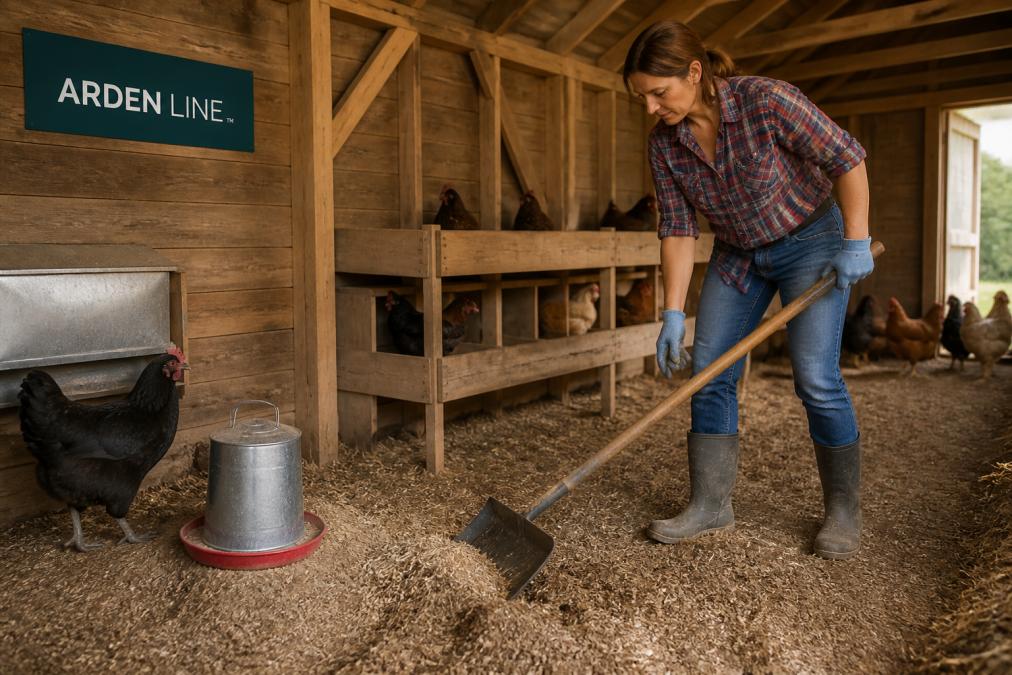
The deep litter method transforms your coop into a composting system that actively suppresses ammonia rather than simply removing it. Instead of removing bedding frequently, you add fresh material on top of existing bedding. Over time, the lower layers undergo aerobic decomposition, creating beneficial microbes that consume ammonia-producing compounds before they can volatilize into gas.
Composting bedding creates an environment where beneficial bacteria break down nitrogen compounds into forms that don't convert to ammonia gas. The process generates heat, further inhibiting ammonia-producing pathogens.
Why deep litter suppresses ammonia:
- Beneficial microbes consume nitrogen compounds before ammonia forms
- Active decomposition generates heat that kills ammonia-forming bacteria
- Finished compost is stable and ammonia-neutral
Deep litter method steps:
- Begin with 6-8 inches of absorbent bedding. Wood shavings are ideal; avoid cedar and pine, which inhibit beneficial bacteria.
- Rake the top 2-3 inches daily to aerate and prevent anaerobic pockets where ammonia-forming bacteria thrive.
- Add fresh bedding weekly as moisture accumulates on the surface. The goal is to keep the top layer dry while allowing the lower layers to decompose.
- Monitor ammonia smell weekly. A mild earthy smell indicates active composting; a sharp ammonia smell means the system is too wet, increase raking and add drier bedding.
- After 4-6 months, remove finished compost and start fresh.
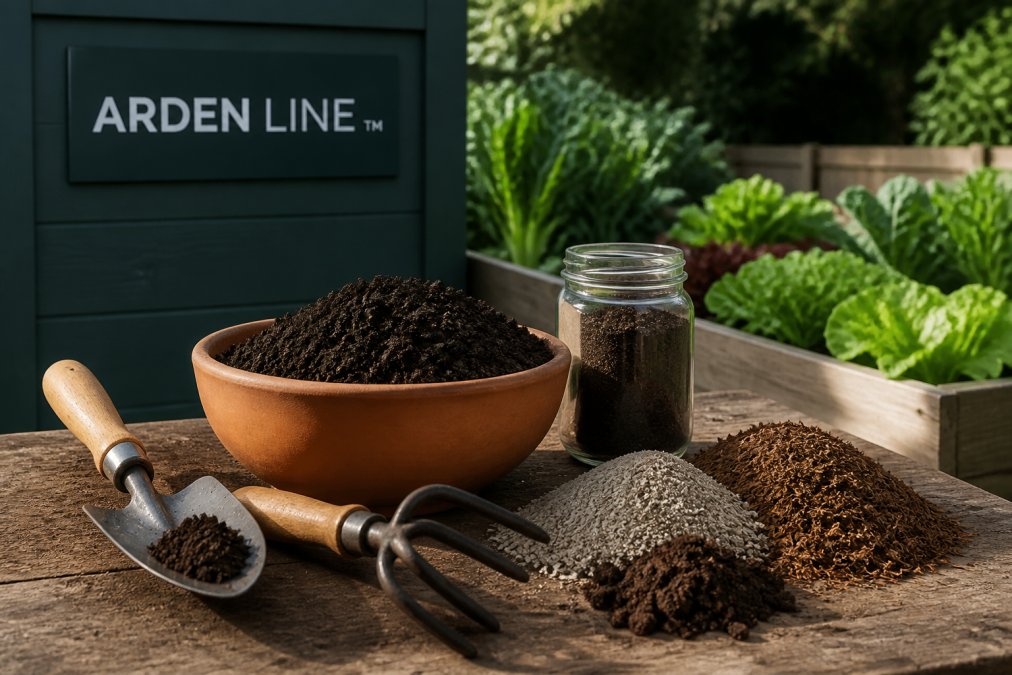
- Use the compost in gardens or flower beds. It's nitrogen-rich and safe for vegetables.
Troubleshooting deep litter ammonia problems:
- Strong ammonia smell within 2-3 weeks: The system is too wet. Increase ventilation, rake more frequently (daily instead of 2-3 times weekly), and add drier bedding material.
- Ammonia smell that improves then returns: You may have added too much fresh bedding at once, burying the active compost layer. Reduce weekly bedding additions to 1-2 inches instead of 3-4 inches.
- Ammonia smell in winter: Cold temperatures slow microbial activity. Ensure the coop is well-insulated (deep litter generates heat, but insulation retains it). Increase raking to 2-3 times daily to maintain aeration and heat generation.
- Ammonia smell despite good ventilation: The coop may be overcrowded. Deep litter requires at least 3-4 square feet of floor space per bird; overcrowding produces moisture faster than the system can process it.
The method requires good ventilation and at least 3-4 square feet per bird; overcrowded coops produce too much moisture for deep litter to manage.
Many keepers combine deep litter with zeolite during the first 2-3 weeks to accelerate composting and neutralize ammonia during the transition period.
Step 5: Establish a Routine Coop Cleaning Schedule
Regular cleaning prevents ammonia accumulation. A more effective approach is to clean based on measurable conditions, ammonia smell, bedding moisture, and humidity, rather than a fixed calendar.
Measuring when cleaning is needed: Monitor your coop for these signs rather than waiting for a scheduled cleaning day:
- Mild ammonia smell on entry: Ammonia is present but manageable. Daily raking and weekly bedding additions are sufficient.
- Noticeable ammonia smell within 2 feet of the door: Ammonia is approaching 15-20 ppm. Increase raking to twice daily and add fresh bedding more frequently.
- Strong ammonia smell throughout the coop: Ammonia likely exceeds 25 ppm. Perform a partial bedding change (remove and replace 25-50% of bedding) immediately and increase ventilation.
Ammonia test kits and digital meters provide precise readings and help optimize your cleaning schedule.
Humidity as a cleaning trigger: Relative humidity above 70% accelerates ammonia production. Use an inexpensive hygrometer to monitor coop humidity.
Daily cleaning tasks (non-negotiable):
- Remove visible wet bedding or droppings clumps from high-traffic areas and under roosting bars
- Check waterers for leaks or contamination; even small leaks create wet spots that accelerate ammonia
- Rake the top 2-3 inches of bedding to break up compacted material and expose damp areas to air circulation
- Inspect birds for signs of respiratory distress (wheezing, watery eyes, lethargy)
Weekly cleaning tasks (adjust frequency based on ammonia smell and humidity):
- Replace bedding in nesting boxes entirely; nesting boxes accumulate moisture and droppings faster than floor bedding
- Clean and refill waterers with fresh water; algae and biofilm in waterers harbor bacteria that produce ammonia
- Rake the entire coop floor thoroughly, paying special attention to corners and under roosting bars where droppings concentrate
- Add fresh zeolite or bedding additives if using them
- Check vents for blockages (dust, cobwebs, or debris reduce airflow)
Monthly cleaning tasks (or as needed based on conditions):
- Remove and replace 25-50% of bedding if not using the deep litter method; if using deep litter, skip this step
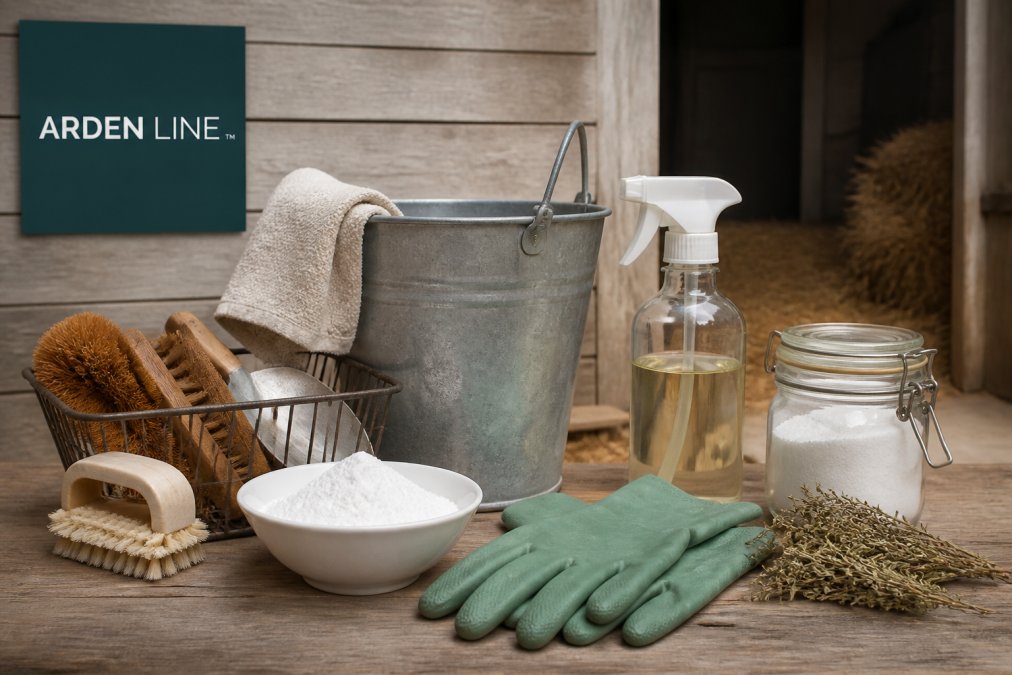
- Scrub waterers and feeders with mild soap and water; rinse thoroughly to remove soap residue
- Inspect coop structure for damage, rot, or gaps that reduce ventilation
- Clean vent openings thoroughly; dust accumulation reduces airflow
- Measure ammonia smell intensity and humidity; adjust your daily/weekly schedule if conditions are worsening
Seasonal adjustments:
- Winter: Increase raking frequency to 2-3 times daily. Cold temperatures slow evaporation, so moisture accumulates faster. Ensure ventilation remains adequate despite the urge to seal the coop for warmth.
- Summer: Increase ventilation and reduce bedding depth slightly (3-4 inches instead of 6 inches) to improve air circulation. Heat accelerates ammonia production, so daily raking may need to happen twice daily in peak heat.
- Spring and fall: These transition seasons often have high humidity. Monitor humidity levels closely and increase raking frequency if humidity exceeds 65%.
Flock-size adjustments:
Recognizing Signs of Ammonia Toxicity in Chickens
Ammonia toxicity develops gradually. Early signs are subtle. Catching them early prevents serious health damage.
Signs of ammonia toxicity:
- Wheezing, coughing, or labored breathing
- Watery or swollen eyes
- Nasal discharge
- Frequent sneezing
- Lethargy or reduced activity
- Reduced egg production
- Poor feather condition
- Increased susceptibility to respiratory infections
Frequently Asked Questions
How does zeolite reduce ammonia in a chicken coop?
Zeolite is a naturally porous mineral that traps ammonia gas and excess moisture at the source rather than masking odors. When sprinkled on bedding and coop floors, it adsorbs ammonia molecules into its porous structure, keeping the air fresher and bedding drier between cleanings. This works especially well in small backyard setups with 8-12 chickens, where concentrated waste buildup is common.
What are the signs of ammonia toxicity in chickens?
Chickens exposed to high ammonia levels may show respiratory distress, watery eyes, nasal discharge, or lethargy. In severe cases, ammonia damages the respiratory tract and increases susceptibility to secondary infections. If you notice your flock seems sluggish, coughs frequently, or avoids the coop during the day, ammonia levels are likely too high. Test air quality or increase ventilation immediately.
How long does one bag of zeolite last in a coop?
Reapply when bedding becomes visibly damp or odor returns. For consistent odor control, many keepers refresh zeolite during weekly spot-cleaning and add fresh mineral when changing bedding entirely. Track usage in your first month to plan reorder timing.
Can I use the deep litter method if my coop is small?
Yes, the deep litter method works in small coops and actually maximizes space efficiency. Layer 4-6 inches of absorbent bedding (pine shavings, leaves, straw), add zeolite, and let it compost in place. Turn it weekly to speed decomposition and ammonia neutralization. The composting process generates heat and beneficial microbes that break down nitrogen, reducing ammonia while building rich bedding for gardens.

Leave a comment
This site is protected by hCaptcha and the hCaptcha Privacy Policy and Terms of Service apply.