
Table of Contents
- Why Clay Soil Needs Improvement and What to Test First
- Best Amendments for Clay Soil: Organic Matter That Works
- How to Improve Clay Soil Drainage Without Damaging Structure
- How to Loosen Compacted Clay Soil: Breaking Up Hard Ground
- Using Deep-Rooted Plants and Cover Crops to Naturally Loosen Soil
- How Long It Takes to Improve Clay Soil and Measuring Progress
- Raised Beds and Mineral Amendments for Faster Results
- Plants That Thrive in Clay Soil While You Improve It
- Frequently Asked Questions
Last Updated: October 5, 2026
Why Clay Soil Needs Improvement and What to Test First
Clay soil is dense, heavy, and poorly draining. It compacts easily and holds water in ways that rot plant roots.
Test your soil first. A soil test reveals texture, pH, nutrients, and drainage rate; many county extension offices offer inexpensive testing.
Not all soil problems look the same: slow drainage may come from compaction, poor structure, or both, and nutrient deficiency may stem from pH imbalance.
Best Amendments for Clay Soil: Organic Matter That Works
The foundation of improving clay soil is adding organic matter. Organic material breaks up dense clay particles, improves water drainage, and creates space for air and roots. But not all organic amendments work equally well.
Compost and Leaf Mold
Finished compost is the gold standard: stable, nutrient-rich, and full of microbial life that binds clay particles into better structure.
Apply 2 to 4 inches of compost or leaf mold and work it in gently. No-dig gardeners can leave it on the surface for earthworms to incorporate.
Manure and Animal Bedding
Well-aged manure adds organic matter and nutrients. Fresh manure can burn plants and introduce pathogens, so use only fully composted manure aged at least six months.
Spread 1 to 3 inches of aged manure and incorporate gently. Avoid working wet soil, which crushes the structure you're building.
How to Improve Clay Soil Drainage Without Damaging Structure
Drainage is the core problem: clay particles are tiny and tightly packed, leaving almost no pore space, so water pools on the surface. The fix is not sand, sand mixed into clay creates a concrete-like hardpan harder to fix than the original clay. Instead, create pore space through organic matter, surface-applied amendments, and careful physical improvement.
Start With a Drainage Test
Before choosing a method, measure the problem. Dig a hole 12 inches deep and wide, fill it with water, let it drain, then refill and time the second fill:
- Less than 1 inch per hour: severely poor drainage, likely compaction plus heavy clay
- 1 to 2 inches per hour: moderate clay, improvable with organic matter
- More than 2 inches per hour: drainage is acceptable; focus on structure and fertility
Repeat in several spots; drainage varies across a yard due to compaction, slope, and original grading.
Raised Beds: The Fastest Fix
Raised beds are the fastest drainage fix: a loose, well-draining mix sits above your clay and drains freely, ideal for severely compacted or waterlogged soil. Build the frame 12 to 18 inches deep and fill with topsoil, compost, and a mineral amendment for long-term drainage and nutrient retention.
Surface-Applied Amendments for In-Ground Beds
For in-ground beds, add organic matter as above, then consider surface-applied amendments. A porous mineral such as zeolite improves drainage and aeration without sand's hardpan risk, creating tiny air pockets that let water move through while retaining nutrients. Apply 10 to 20 pounds per 100 square feet, worked into the top 6 inches; in raised beds, a granular grade blends more evenly.

What About Gypsum?
Gypsum is one of the most misunderstood clay-soil amendments. It helps only when clay is sodic, sodium has built up and caused particles to disperse and seal. It does not reliably improve drainage in ordinary heavy clay. A soil test reporting sodium levels or exchangeable sodium percentage is the only way to know if it will help; applying it to non-sodic clay wastes money and adds unnecessary calcium.
Timing and Compaction
Avoid digging or tilling wet clay, which compacts into brick-hard clods that take years to break down. Work the soil only when it crumbles in your hand, usually spring or early summer after rain. Stay off saturated beds and keep foot traffic to permanent paths; walking on wet clay can undo months of amendment work in an afternoon.
Low-Disturbance vs. Digging
For long-term structure, surface-applied compost and mulch outperform tilling: earthworms and roots incorporate material gradually, building aggregation rather than breaking it apart. Tilling relieves compaction quickly but burns organic matter and disrupts fungal networks. For most home gardens, low disturbance with annual compost topdressing is more durable.
How to Loosen Compacted Clay Soil: Breaking Up Hard Ground
Compacted clay blocks root growth and holds water. Breaking it up is sometimes necessary, but the method matters.
When and How to Till or Dig
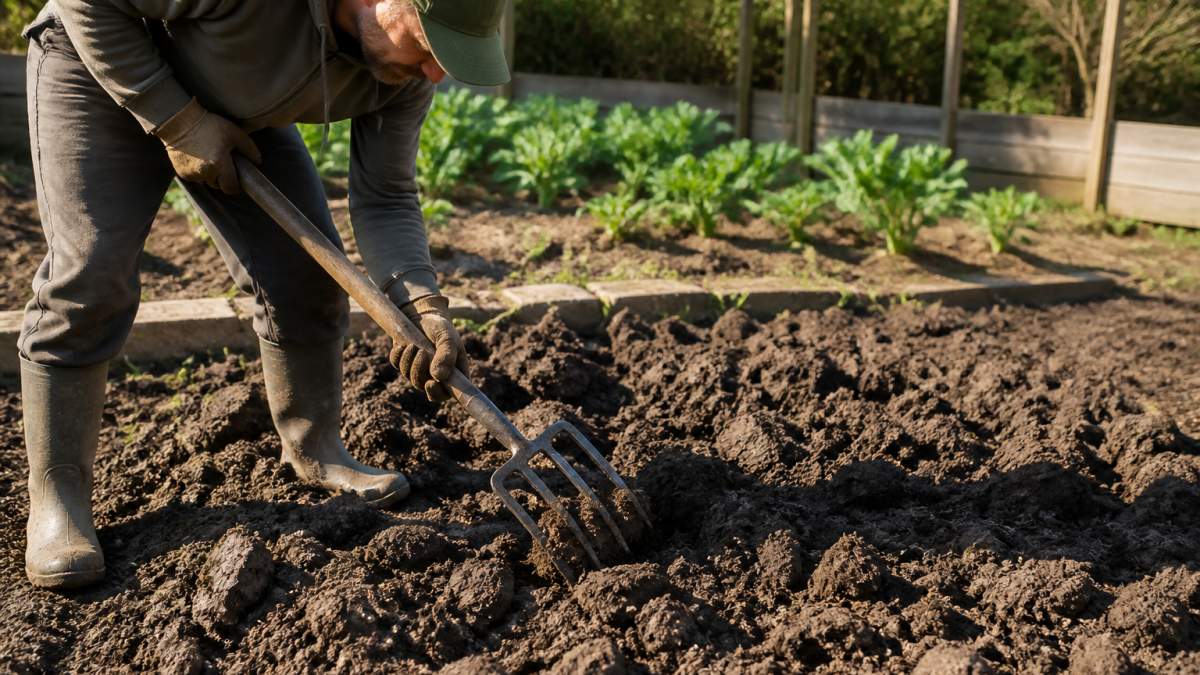
Tilling breaks up compacted clay quickly but damages structure if done at the wrong time or too aggressively.
Use a rototiller at a shallow 4 to 6 inches; deep tilling brings infertile subsoil up.
After tilling, immediately add organic matter and mineral amendments. This prevents the soil from re-compacting and gives microbes and roots material to work with.
The No-Dig Method for Clay
No-dig gardening avoids tilling: layer compost, aged manure, and leaf mold on top of the clay. Over one to two seasons, earthworms and microbes incorporate the layers into the clay below, and roots gradually penetrate the improving soil.
It is slower but gentler on structure. Add 4 to 6 inches of material and wait a full growing season before expecting major improvement.
Zeolite Mineral Lava Rocks (Regular) →
Using Deep-Rooted Plants and Cover Crops to Naturally Loosen Soil
Plants themselves can improve clay soil. Deep-rooted plants break up compaction as roots push through hard layers. Cover crops add organic matter and, in some cases, fix nitrogen from the air.
Cover Crops and Green Manure
Cover crops are grown specifically to improve soil. Legumes like clover, vetch, and field peas fix nitrogen, reducing fertilizer needs; grasses like winter rye and oats add organic matter and build structure.
Plant in fall or early spring, let them grow 8 to 12 weeks, then cut them down and work them into the top few inches.
Deep-Rooted Plants That Break Up Clay
Some plants drive roots deep into clay, creating channels for water and air. Daikon radish is popular: its taproot reaches 12 to 18 inches into hard clay, leaving a channel that persists after removal.
Plant daikon radish in fall, let it grow through winter, then remove it in spring; the channels improve drainage for next season's crops.
How Long It Takes to Improve Clay Soil and Measuring Progress
Major improvement takes time; the pace depends on how much organic matter you add, how often you avoid compaction, and whether you use cover crops. Most practitioners find clay becomes noticeably more workable after two to three seasons of consistent effort, with the biggest gains in years three through five.
A Practical Season-by-Season Schedule
Rather than promising an instant fix, work with the seasons. A simple schedule looks like this:
- Late winter to early spring: Test soil before amending. Spread 2 to 4 inches of compost on beds and let it sit. Do not till or dig if soil is wet.
- Spring: Plant cool-season crops and clay-tolerant species. Add aged manure at 1 to 3 inches where fertility is low. Keep off saturated beds.
- Late spring to early summer: Once soil crumbles in your hand, work amendments into the top 4 to 6 inches if needed. This is the safest window for any digging.
- Late summer: Sow cover crops such as clover, vetch, or winter rye so they establish before frost. Daikon radish can be sown in late summer to early fall for taproot channels.
Repeat for two to three years. The schedule matters as much as the amendments: clay responds to steady, low-disturbance additions, not one-time fixes.
How to Measure Progress
Instead of guessing, track a few simple indicators each season:
- Infiltration rate: Repeat the hole test described above. Water that once sat for hours should drain within 30 minutes after a few seasons of improvement.
- Aggregation: Dig up a handful of moist soil and gently press it. Improved clay holds together in crumb-like aggregates rather than smearing into a ribbon. A ribbon longer than 2 inches indicates still-heavy clay.
- Earthworm count: Count earthworms in a 12-inch by 12-inch by 6-inch block of soil. More worms generally signal better structure and biological activity.
- Soil organic matter: A laboratory soil test reports organic matter percentage. Tracking it every two years shows whether your additions are accumulating or breaking down.
- Root penetration: After a season, pull a plant and check how far roots reached. Deeper, more branching roots indicate the clay is loosening.
What to Expect Year by Year
Year one: add 2 to 4 inches of compost and mineral amendments.
Year two: with consistent organic matter and continued cover crops or deep-rooted plants, structure noticeably improves, infiltration speeds up, and roots penetrate deeper.
Years three to five: clay becomes genuinely workable, crumbling in your hand instead of forming hard clods.
Raised Beds and Mineral Amendments for Faster Results
If you need results sooner, raised beds skip the waiting. Build a frame 12 to 18 inches deep and fill with one part topsoil, one part compost, and one part mineral amendment like zeolite or aged bark chips.
Zeolite improves drainage and aeration while holding nutrients; its porous structure creates air pockets that keep roots healthy and reduce watering frequency. Arden Line's Zeolite Mineral Lava Rocks, in regular and granular grades, work well in raised beds and improve soil performance from year one.

For in-ground beds, surface-applied amendments work faster than tilling into heavy clay.
Plants That Thrive in Clay Soil While You Improve It
You don't have to wait for perfect soil, many plants tolerate or even prefer clay.
Avoid plants that demand sandy, well-draining soil until your clay improves, lavender, sedums, and Mediterranean herbs will struggle no matter how much you amend initially.
Plant clay-tolerant species while you improve the soil; they'll thrive as conditions improve, giving you a productive garden even in year one.
Frequently Asked Questions
What are the best natural amendments for clay soil?
Compost, leaf mold, and aged manure are the most effective natural amendments for clay soil. These organic materials improve soil structure, drainage, and nutrient retention over time. Mineral amendments like zeolite also help by increasing pore space and reducing compaction. Apply 2-4 inches of organic matter annually, working it into the top 6-8 inches of soil. Results improve gradually as organic matter breaks down and builds soil aggregation.
How long does it take to improve clay soil naturally?
Noticeable improvements typically appear within 6-12 months of consistent amendment, though full transformation takes 2-3 years of regular organic matter additions. Deep-rooted plants and cover crops speed the process by loosening soil from below. Raised beds with amended soil show results immediately, while in-ground clay improvement is slower but longer-lasting. Patience and consistent annual additions are key.
Can I just put compost on top of clay soil without tilling?
Yes, the no-dig method works well for clay. Layer 2-3 inches of compost on the surface and let soil organisms work it in over time. This method preserves soil structure and avoids compaction from heavy machinery. However, results are slower than working amendments into the top 6-8 inches. For faster improvement, gently fork compost into the upper soil layer without deep tilling, which can destroy soil aggregation.
What should I do if my clay soil is both compacted and poorly draining?
Address both issues together. Start with soil testing to confirm drainage problems. Break up compaction by forking or light tilling when soil is dry, then add 2-4 inches of organic matter. Plant cover crops like clover or rye to naturally loosen soil with their roots. For immediate results in problem areas, consider raised beds filled with amended soil while the surrounding clay improves. Mineral amendments like zeolite improve drainage and aeration in both approaches.
Improving clay soil is a multi-year project, but it's one of the highest-return investments you can make in your garden. Start with a soil test, add organic matter consistently, and choose amendments and methods that match your timeline and effort level. Arden Line's Zeolite Mineral Lava Rocks support this process by improving drainage and aeration without the risk of hardpan that comes with sand. Get started with Arden Line and build soil that grows healthier plants every season.

Leave a comment
This site is protected by hCaptcha and the hCaptcha Privacy Policy and Terms of Service apply.