
Table of Contents
- Why Mineral Amendments Matter for Soil Health
- Benefits of Zeolite for Soil: Drainage, Aeration, and Nutrient Retention
- How to Test Garden Soil pH Before Adding Amendments
- Essential Mineral Amendments for Garden Soil
- Organic Soil Amendment Schedule: When and How Much to Apply
- Safety, Toxicity Thresholds, and Cost-Benefit Analysis
- Frequently Asked Questions
Last Updated: September 24, 2026
Why Mineral Amendments Matter for Soil Health
Most gardeners fix a nutrient problem by adding more fertilizer, then watch the same deficiency return the following season. The real issue usually isn't a lack of nitrogen, phosphorus, or potassium, it's that the soil can't hold onto what's already there. A sustainable gardening mineral amendments guide starts with that distinction, because minerals address soil structure and chemistry rather than just topping up nutrients. At Arden Line, we work with growers who've hit this exact wall, and the fix is almost always structural.
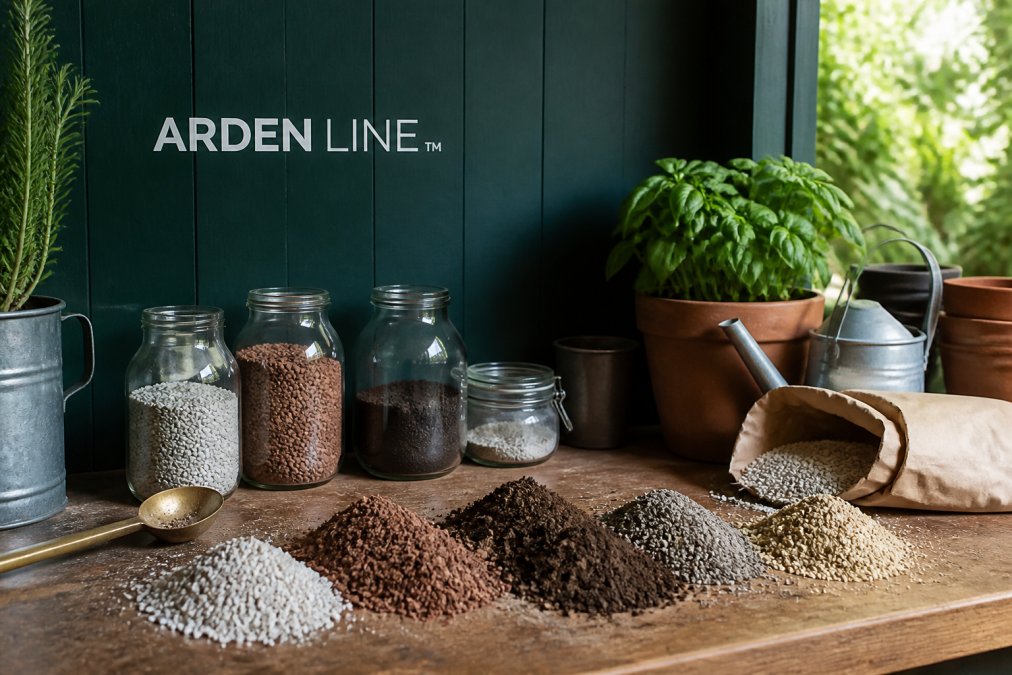
Mineral amendments are naturally occurring inorganic materials, such as zeolite, gypsum, lime, and rock dust, that improve soil structure, adjust pH, and hold nutrients in the root zone. Unlike compost or manure, they don't break down quickly. They persist for years, which is why they're central to regenerative gardening and long-term soil health.
Nutrient availability depends on soil chemistry, not just quantity: a soil with poor structure or off-target pH can test "adequate" and still starve plants. That's the case for treating minerals as infrastructure, not supplements.
The Difference Between Organic and Mineral Amendments
Organic amendments, including compost, leaf mold, and aged manure, feed soil biology: microbes break them down and release nutrients over a season or two. Mineral amendments work on a different timescale and mechanism, they change the physical and chemical environment soil biology operates in.
The two aren't competitors but complements: organic matter supplies carbon and microbial food, while minerals supply the structure, pH buffering, and cation exchange capacity that keep microbes and nutrients in place.
A common mistake is treating them as interchangeable. A gardener who spreads compost to fix clay soil will improve tilth slightly, but the compaction and drainage problem often persists without a mineral component.
Benefits of Zeolite for Soil: Drainage, Aeration, and Nutrient Retention
The benefits of zeolite for soil come down to one property: a rigid, porous structure with high cation exchange capacity. This naturally occurring volcanic mineral has a honeycomb lattice that holds water and positively charged nutrients like potassium and ammonium in the root zone, releasing them slowly instead of letting them leach away.

For clay soil, this means better drainage and less waterlogging. For sandy soil, it means water and nutrients stay available instead of running straight through.
How to Test Garden Soil pH Before Adding Amendments
Testing soil pH before you amend is the step most gardeners skip, and it determines whether your mineral application helps or backfires. Lime raises pH, sulfur lowers it, and zeolite sits on the alkaline side, applying any of them blind is guesswork.
You have three practical options:
- Home test strips or meters: Fast, cheap, and accurate enough to tell you whether you're in the acid, neutral, or alkaline range.
- Laboratory soil testing: Your state's cooperative extension service offers low-cost kits that report pH plus macronutrients, micronutrients, and cation exchange capacity.
- Professional soil lab panels: Best if you're managing clay soil, compaction, or a persistent deficiency you can't diagnose.
Essential Mineral Amendments for Garden Soil
The shortlist of essential mineral amendments covers pH adjustment, structure, and trace nutrient supply. Which one you reach for depends entirely on your soil test.
Zeolite Mineral Lava Rocks (Regular) →
| Amendment | Primary Role | Best For | Watch Out For |
|---|---|---|---|
| Zeolite | Nutrient and moisture retention | Sandy soil, containers, raised beds | Raises pH slightly (approx. 8.5) |
| Gypsum | Flocculates clay, adds calcium | Compacted clay soil | No pH effect |
| Lime | Raises pH, adds calcium | Acidic soil | Over-application locks nutrients |
| Sulfur | Lowers pH | Alkaline soil | Slow-acting, takes months |
| Rock dust | Trace minerals | Depleted, weathered soil | Not a macronutrient source |
Gypsum, Lime, and Sulfur: What Each One Does
These three get confused constantly, and the confusion causes real damage: each solves a different problem, and using the wrong one can take a season to correct.
Trace Minerals and Micronutrients
Trace minerals and micronutrients, including boron, zinc, manganese, copper, and iron, are needed in tiny quantities but govern everything from fruit set to chlorophyll formation. Deficiencies rarely show as obvious yellowing; more often they appear as poor flowering, cracked fruit, or stunted growth that no amount of nitrogen fixes.
Organic Soil Amendment Schedule: When and How Much to Apply
An organic soil amendment schedule works best when it follows soil temperature, moisture, and plant demand rather than a rigid calendar. The pattern below reflects what most growers settle into, but adjust every rate to your soil test and texture.
Safety, Toxicity Thresholds, and Cost-Benefit Analysis
Safety and toxicity thresholds are where mineral amendments differ most from organic ones. Organic matter is difficult to over-apply; minerals are not. Lime, sulfur, rock dust, and micronutrient blends all have upper limits beyond which they harm plants and soil life, and the damage is often slower and harder to reverse than a simple deficiency.
The practical thresholds to watch:
- pH drift: Keep pH within the range your plants actually want. Most vegetables prefer 6.0-7.0; acid-lovers like blueberries want 4.5-5.5. Repeated lime applications without testing push soil alkaline over a few seasons, and once iron, manganese, and zinc lock out, correcting back down takes months of sulfur applications.
- Micronutrient overload: Copper and boron are the two most common over-application problems. Boron's window between deficiency and toxicity is especially narrow, and it varies by crop. More is not better, and there is no fast fix once you've crossed the line.
- Heavy metals in rock dust: The safety issue most guides skip. Rock dust and other mined minerals can carry trace heavy metals, including lead, cadmium, and arsenic, depending on source geology. Risk is low at normal rates but accumulates over years in the same beds. Buying from suppliers who publish a heavy-metal assay or certificate of analysis is the simplest safeguard, and a strong argument for domestic sourcing where quality control is tighter.
- Salinity: Gypsum and some mineral blends add soluble salts. In containers, these accumulate because there's no drainage to leach them out. Flush containers with plain water a few times per season if you're using mineral amendments heavily.
- Dust inhalation: Dry rock dust and zeolite fines are respiratory irritants. Wear a mask when handling dry product, and dampen the material before mixing when practical.
Frequently Asked Questions
What are the best mineral amendments for sustainable gardening?
The best mineral amendments depend on your soil test results. Gypsum improves clay soil structure and drainage. Lime raises pH for acidic soil. Sulfur lowers pH for alkaline soil. Zeolite, a volcanic mineral, improves drainage, aeration, and nutrient retention in both sandy and clay soils. It holds water and nutrients in the root zone and releases them slowly, reducing watering and fertilizer needs. Start with a soil test to identify what your garden actually lacks before buying anything.
How do volcanic minerals like zeolite improve soil quality?
Zeolite has a porous, honeycomb-like structure that absorbs excess moisture while slowly releasing nutrients back into the soil. This helps prevent overwatering, reduces soil compaction, and supports healthy root development. Zeolite holds positively charged nutrients like potassium and ammonium in the root zone so they do not wash away. It has a naturally high pH of approximately 8.5, so it works best in acidic or neutral soils. Unlike organic matter, zeolite does not break down over time.
How often should you add mineral amendments to garden soil?
Most mineral amendments do not need annual reapplication. Zeolite is a long-lasting mineral that does not break down, so one application can last several seasons. Gypsum and lime typically need reapplication every two to three years based on soil tests. Sulfur breaks down faster and may need annual application for pH adjustment. Always retest your soil before adding more minerals. Over-application can throw off soil chemistry and harm plant growth.
What is the difference between organic and mineral soil amendments?
Organic amendments like compost, leaf mold, and manure come from living matter and break down over time, feeding soil microbes and building organic matter. Mineral amendments like zeolite, gypsum, lime, and sulfur come from rocks and geological deposits. They do not decompose but instead improve soil structure, adjust pH, or hold nutrients. Both types work together. Organic matter feeds soil biology, while minerals provide long-term structural and chemical benefits that organic matter alone cannot deliver.
How do I know which mineral amendments my soil needs?
A soil test is the only reliable way to know. Test for pH, cation exchange capacity, and nutrient levels. If your soil is compacted clay, gypsum and zeolite help with structure and drainage. If pH is too low, lime raises it. If pH is too high, sulfur lowers it. Sandy soil benefits from zeolite because it holds moisture and nutrients that would otherwise leach away. Your local cooperative extension office offers affordable soil testing with specific recommendations for your region.
Are mineral amendments safe for backyard ecosystems?
Natural mineral amendments like zeolite, gypsum, and lime are safe for backyard ecosystems when applied at recommended rates. Zeolite is OMRI Listed for organic production and contains no synthetic additives or chemicals. The main risk is over-application, which can shift pH too far or create nutrient imbalances. Always follow soil test recommendations and start with lower amounts. Avoid synthetic or chemically treated mineral products, and choose natural, unprocessed minerals when possible for the safest results.

Leave a comment
This site is protected by hCaptcha and the hCaptcha Privacy Policy and Terms of Service apply.