
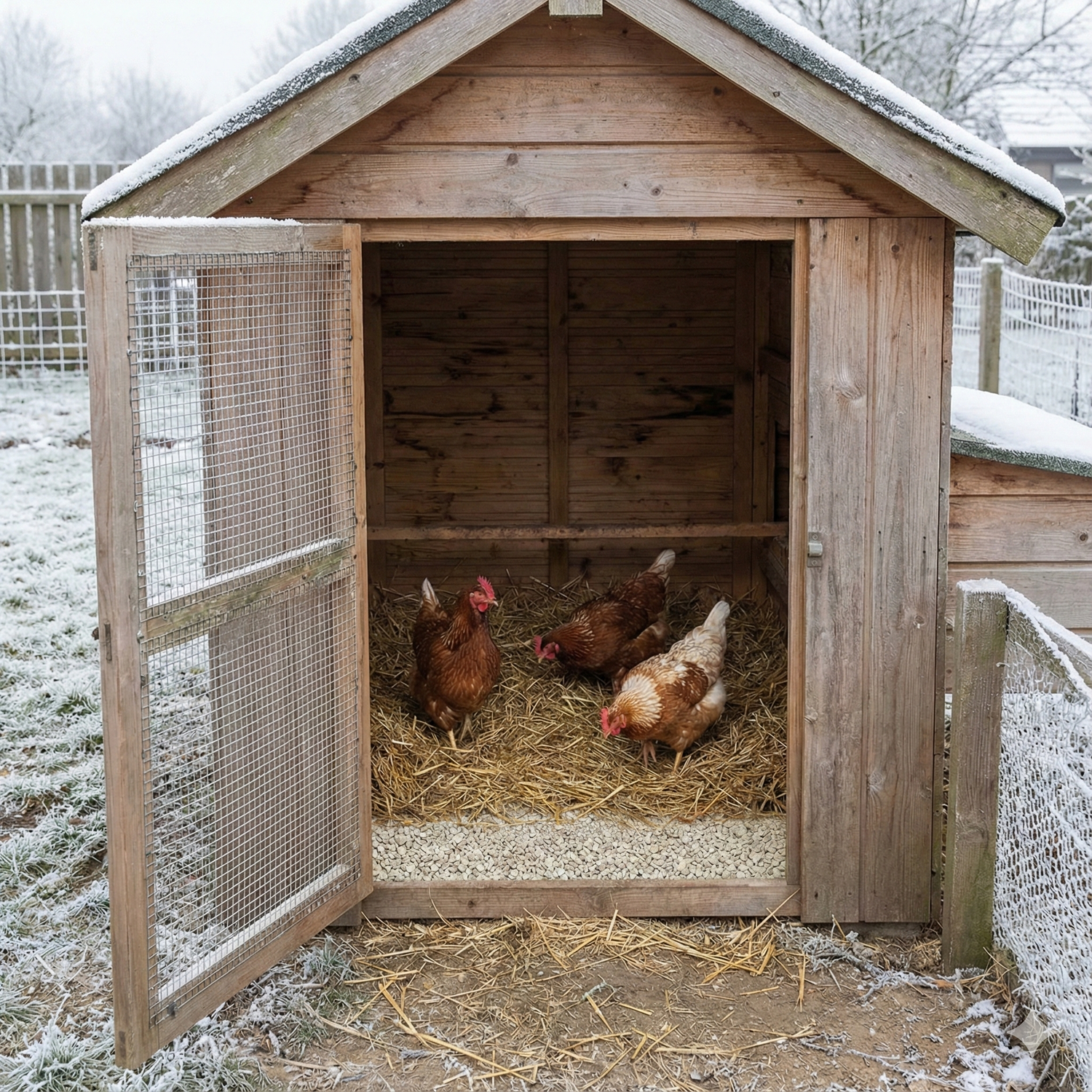
Moisture is one of the most persistent challenges in chicken coop management. Left unchecked, it contributes to odor, compacted bedding, and—during colder months—frozen or icy surfaces that make coops harder to maintain and less comfortable for birds.
One practical approach to managing these conditions is the use of granular zeolite, such as the natural zeolite offered by Arden Line, applied at the bedding level.
What Zeolite Is and Why It’s Used in Coops
Zeolite is a naturally occurring aluminosilicate mineral formed through volcanic and hydrothermal processes. Its defining feature is a microporous crystalline structure, which gives it a high internal surface area and the ability to absorb moisture and bind certain compounds, including ammonia.
Because of these properties, zeolite has long been used in agriculture, animal housing, and environmental management—particularly in settings where moisture and waste need to be controlled without chemicals or fragrances.
Why Winter Makes Moisture Management More Difficult
During winter, coops are often kept more enclosed to retain warmth. While this helps protect birds from cold drafts, it also reduces airflow. Combined with condensation, snow tracked in by chickens, and slower drying of bedding, moisture can accumulate quickly.
When damp bedding freezes, it can form hard or icy layers that are difficult to remove and uncomfortable for birds. Managing moisture before it freezes is key.
Granular zeolite helps by absorbing moisture at the floor and bedding interface, reducing the amount of free water available to freeze.
How Zeolite Supports a Drier Coop Environment
Moisture Control at the Source
When applied beneath bedding, zeolite absorbs excess moisture as it appears, helping keep litter drier and looser for longer periods.
Odor Management Without Additives
As droppings break down, ammonia is released. Zeolite is widely documented for its ability to bind ammonia molecules, helping reduce sharp odors without masking them or adding scent.
Bedding That Stays More Manageable
Drier bedding is lighter, more insulating, and less prone to compaction. This makes routine maintenance easier and reduces the frequency of full clean-outs.
What This Means for Chickens
While zeolite does not act directly on birds, it improves the environment they live in, which matters for comfort—especially in winter.
A drier coop:
-
Reduces prolonged contact with damp or frozen bedding
-
Helps feathers remain cleaner and better insulated
-
Supports normal movement and roosting behavior
-
Minimizes icy patches on the coop floor
Environmental comfort plays a significant role in how chickens rest and behave, particularly during cold weather.
How to Use Arden Line Zeolite in a Chicken Coop
-
Begin with reasonably clean bedding
Remove heavily saturated material before application. -
Apply the zeolite evenly
Sprinkle Arden Line zeolite directly onto the coop floor, focusing on high-moisture areas such as under roosts and corners. -
Cover with bedding
Add your usual bedding material on top so the zeolite works beneath the surface. -
Reapply as needed
Winter conditions, wet weather, or high-traffic coops may require more frequent application.
Consistent, moderate use is more effective than heavy, infrequent application.
From Coop to Compost
Used bedding that contains zeolite can be composted. In compost systems, zeolite may help retain nitrogen compounds and manage moisture during decomposition. When finished compost is applied to soil, the mineral can continue to support moisture and nutrient balance.
This creates a practical cycle:
Coop → Compost → Garden
A Simple, Mineral-Based Tool for Winter Coop Care
Zeolite is not a substitute for proper ventilation or bedding, but it is a valuable supporting tool—particularly in winter. By helping manage moisture and odor at the bedding level, Arden Line zeolite supports cleaner, drier coops and more manageable cold-weather maintenance.


Leave a comment
This site is protected by hCaptcha and the hCaptcha Privacy Policy and Terms of Service apply.