
Table of Contents
- What Is Zeolite and Why Does It Matter for Your Garden?
- The 5 Key Benefits of Zeolite in Garden Soil
- Understanding Cation Exchange Capacity in Garden Soil
- How to Improve Drainage in Clay Garden Soil with Zeolite
- How Much Zeolite to Add to Potting Mix and Garden Beds
- Zeolite vs. Other Soil Amendments: What to Use
- Common Mistakes to Avoid When Using Zeolite
- Final Thoughts on Adding Zeolite to Your Garden
- Frequently Asked Questions
Last Updated: September 8, 2026
What Is Zeolite and Why Does It Matter for Your Garden?
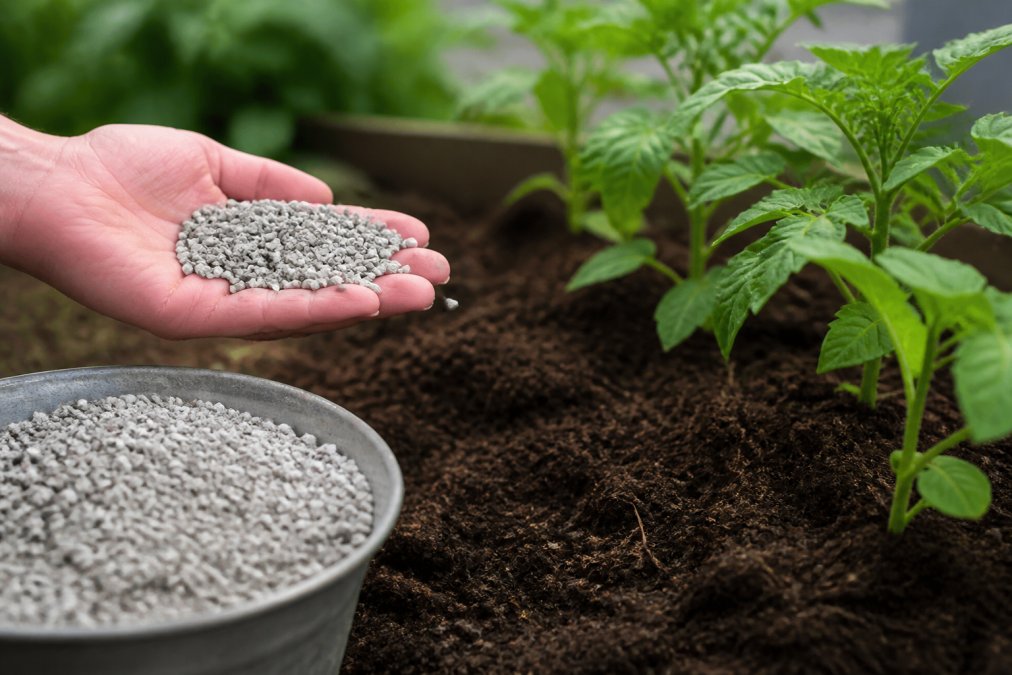
Zeolite is a naturally occurring volcanic mineral with a unique micro-porous structure that acts like a sponge for water and nutrients in your soil. Unlike synthetic amendments, it does not break down over time, so a single application continues working for years.
When volcanic ash reacts with alkaline groundwater, it forms a crystalline structure riddled with tiny pores and channels. These cavities create an enormous surface area that traps moisture, ammonium, and potassium while allowing excess water to drain freely. Most gardeners notice the difference within weeks: soil feels lighter, water pools less after rain, and plants require less frequent feeding.
The 5 Key Benefits of Zeolite in Garden Soil
The benefits of zeolite in garden soil extend far beyond simple moisture control. Here are the five most impactful advantages you will see after amending your beds:
- Improved water retention in sandy soils while simultaneously enhancing drainage in compacted clay
- Reduced nutrient leaching, meaning fertilizers stay in the root zone instead of washing away
- Better aeration at the root level, promoting stronger root zone development
- Natural ammonia and odor trapping, which keeps organic fertilizers from releasing unpleasant smells
- Long-term soil structure improvement that does not degrade like compost or peat moss
What makes zeolite stand out from organic matter is its permanence. Compost breaks down, peat moss decomposes, and perlite eventually crushes into dust. Zeolite maintains its structure indefinitely, regulating moisture and nutrients season after season without reapplication.
Understanding Cation Exchange Capacity in Garden Soil
Cation exchange capacity (CEC) measures your soil's ability to hold onto positively charged nutrients like calcium, magnesium, potassium, and ammonium. Soil with a low CEC loses these nutrients to leaching quickly, forcing you to fertilize more often. Zeolite naturally possesses an exceptionally high CEC, which is why it performs so well as a soil conditioner.
The practical effect of high CEC is simple: your fertilizer works harder. Zeolite's negatively charged surfaces attract and hold positively charged ions, releasing them slowly as plant roots demand them. This reduces feeding frequency and prevents nutrient spikes and crashes.
How to Improve Drainage in Clay Garden Soil with Zeolite
Clay soil holds too much water while providing almost no aeration to roots. Zeolite addresses this by introducing rigid, porous particles that physically prevent clay from packing together.
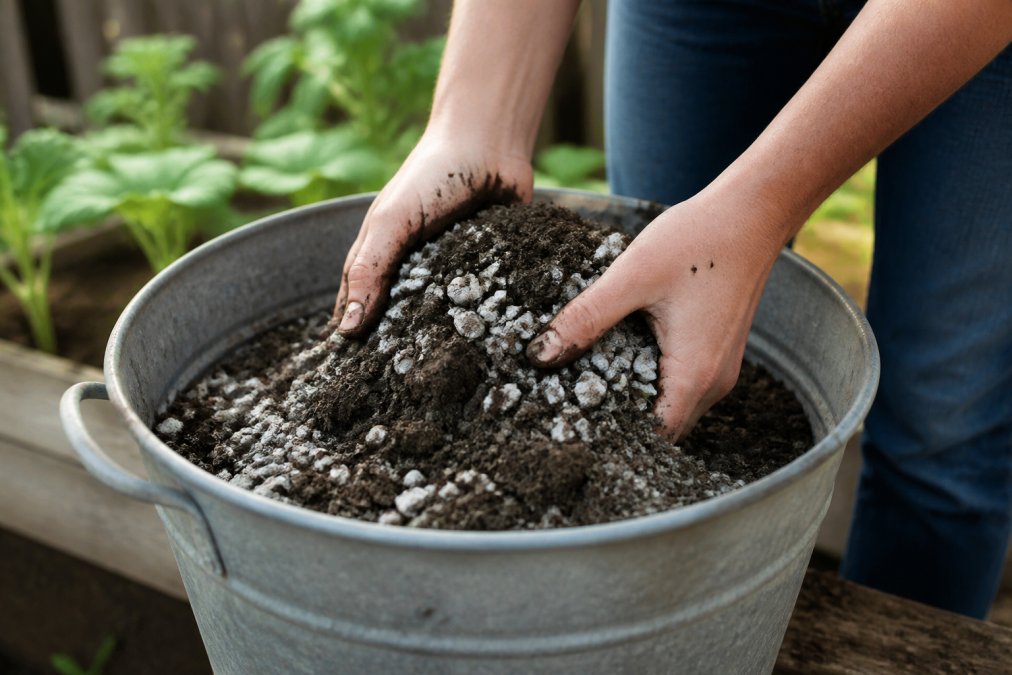
To improve drainage in clay garden soil, work zeolite into the top 6 to 8 inches of your existing beds at a rate of about 5 to 10 percent of the total soil volume. For a standard 4 by 8 foot raised bed, this translates to roughly 1 to 2 cubic feet mixed thoroughly with the native soil. The angular structure creates permanent pore spaces that allow water infiltration and root movement.
How Much Zeolite to Add to Potting Mix and Garden Beds
Knowing how much zeolite to add to potting mix depends on your growing medium and the plants you are cultivating. The most effective approach is to tailor your mix to the specific needs of your plants.
DIY Soil Mix Recipes for Specific Plant Types
Consider these targeted recipes for common gardening scenarios. Observe your plants and adjust as needed.
1. The 'Aroid & Tropical' Potting Mix (20% Zeolite)
Aroids (like Monstera and Philodendron) and tropicals prefer a chunky, well-aerated mix that retains some moisture but never stays soggy.
- Recipe: 2 parts high-quality potting soil, 1 part orchid bark, 1 part perlite, and 1 part zeolite (granular, 1.4-4 mm).
- Why it works: The zeolite acts as a nutrient reservoir for the steady fertilizer supply these fast-growing plants need, while the bark and perlite ensure drainage and air flow.
2. The 'Succulent & Cactus' Gritty Mix (30% Zeolite)
Succulents and cacti need a mix that dries out quickly with almost no water-holding capacity around the roots.
- Recipe: 1 part potting soil, 1 part coarse sand or poultry grit, and 1 part zeolite (regular, 1/8 to 1/4 inch).
- Why it works: Zeolite's high porosity wicks away excess moisture, preventing root rot. Its CEC still holds onto the sparse nutrients they receive, making them available over a long period.
3. The 'Heavy-Feeding Vegetable' Bed Mix (10-15% Zeolite)
Vegetables like tomatoes, peppers, and squash are heavy feeders that deplete soil nutrients quickly.
- Recipe: For an in-ground bed or raised bed, work zeolite into the top 6-8 inches of soil at a ratio of 1 part zeolite to every 6-7 parts native soil. For a 4x8 foot bed, this is roughly 1.5 to 2 cubic feet.
- Why it works: This rate maximizes nutrient retention, keeping fertilizer in the root zone and reducing feeding frequency while preventing leaching after heavy watering or rain.
4. The 'Indoor Potted Plant' Maintenance Mix (10% Zeolite)
For standard houseplants already in good quality potting mix, you don't need to repot immediately, you can top-dress.
- Recipe: Gently remove the top 1-2 inches of old soil from the pot and replace it with a 50/50 mix of fresh potting soil and zeolite (granular).
- Why it works: This refreshes the pot's nutrient-holding capacity without a full repot. As you water, the benefits filter down to the root zone.
When to Re-Apply: The Long-Term View
Unlike organic amendments, zeolite is permanent. However, its exchange sites can become saturated over time, especially in containers.
- In-Ground Beds: A single application can last 5-10 years or more. You only need to re-apply if creating a new bed or significantly altering the soil.
- Container Mixes: Because frequent watering flushes nutrients out, exchange sites will eventually deplete. Refresh zeolite in potting mix every 2-3 years by repotting or top-dressing as described above.
| Application Area | Zeolite Ratio | Best For | Re-application Frequency |
|---|---|---|---|
| Aroid & Tropical Potting Mix | 20% by volume | Monstera, Philodendron, Ferns | Refresh every 2-3 years |
| Succulent & Cactus Gritty Mix | 30% by volume | Succulents, Cacti, Lithops | Refresh every 2-3 years |
| Heavy-Feeding Vegetable Beds | 10-15% by volume | Tomatoes, Peppers, Squash | One-time deep amendment |
| Indoor Potted Plant Top-Dress | 10% of top 2" | General Houseplants | Annually as a top-dress |
| General Raised Beds | 5-10% by volume | Herbs, Flowers, Mixed Veggies | Every 5+ years |
| Clay Garden Soil | 10% by volume | Perennials, Shrubs | One-time deep amendment |
| Sandy Soil | 10-15% by volume | Drought-prone areas | Every 5+ years |
Zeolite vs. Other Soil Amendments: What to Use
Most gardeners reach for perlite, vermiculite, compost, or sand, but each has limitations. Perlite improves drainage but holds almost no nutrients. Vermiculite holds water but compresses over time. Compost adds nutrients but decomposes rapidly. Zeolite is the only common amendment combining permanent structure, high water retention, and active nutrient holding in a single mineral.
For organic gardeners, zeolite is valuable because it is approved for organic production and carries no synthetic chemicals. Many growers use it alongside compost, allowing compost to supply nutrients while zeolite prevents them from washing away.
Arden Line offers two particle sizes to suit different needs. Our Zeolite Mineral Lava Rocks Regular features 1/8 to 1/4 inch particles ideal for garden beds and outdoor soil amendment, while our Zeolite Mineral Lava Rocks Granular provides a finer 1.4 to 4 mm texture perfect for potting mixes and seed starting. Both are sourced and processed entirely in the United States.

Common Mistakes to Avoid When Using Zeolite
The most frequent error is applying zeolite to the soil surface without incorporating it. This mineral only works when it contacts the root zone, so top-dressing without tilling wastes the product. Always mix it thoroughly into the soil where roots will grow.
Another common mistake is over-amending. Adding more than 20 percent zeolite can reduce water retention because the mineral drains too freely. Stick to the recommended ratios and avoid using zeolite as a complete substitute for organic matter; it does not feed soil biology the way compost does.
Safety and Handling Precautions You Should Not Skip
While zeolite is natural and safe, handling it correctly is important for your health and for ensuring it works as intended.
1. Dust Inhalation Risks
Zeolite is a fine, crystalline mineral. When poured or mixed dry, it can create a cloud of fine dust. While not classified as a carcinogen like some other crystalline silicates, inhaling any mineral dust over a prolonged period is not good for your respiratory system (the CDC). The safest practice is to:
- Wear a simple N95 dust mask whenever you are handling dry zeolite, especially in enclosed spaces like a greenhouse or garage.
- Work outdoors or in a well-ventilated area.
- Wet the zeolite slightly before mixing. A light mist from a spray bottle will knock down the dust and make it much easier to work with.
2. Purity and Sourcing for Organic Gardens
Not all zeolite is created equal. For organic gardens, ensure the product is free from contaminants and mined without synthetic chemicals. Look for a product that is OMRI Listed (Organic Materials Review Institute). Unscrupulous sources may sell 'zeolite' that is not pure clinoptilolite or has been treated with additives. Always buy from a reputable supplier that verifies source and purity.
3. The pH Misconception
A common myth is that zeolite drastically alters soil pH. While some natural zeolites can be slightly alkaline, the amount you add (5-15% by volume) is generally not enough to cause a significant shift. It is not a substitute for lime. If concerned, test your soil's pH before and after amending.
4. Do Not Use It as a 'Filter' for Contaminated Soil
Zeolite is excellent at trapping heavy metals and ammonium, but this is a double-edged sword (PubMed). If added to soil already contaminated with heavy metals (e.g., from old industrial sites or near a busy road), it will bind those toxins and hold them in the root zone, it will not remove them. In this scenario, focus on remediation or use raised beds with clean, imported soil.
Final Thoughts on Adding Zeolite to Your Garden
The benefits of zeolite in garden soil make it one of the most reliable investments in long-term soil health. Unlike fertilizers requiring constant reapplication or organic matter that decomposes within months, zeolite offers permanent structural improvement that pays dividends for years. Whether battling heavy clay, nutrient-poor sand, or wanting better potting mix performance, this volcanic mineral delivers measurable results.
Arden Line provides 100 percent natural zeolite that is chemical-free, fragrance-free, and OMRI Listed for organic production. Our family-made products come in plastic-free kraft packaging, and we proudly source and process everything in the USA. If you are ready to improve your soil's drainage, aeration, and nutrient retention, explore our zeolite soil amendments and give your garden the mineral foundation it deserves.
Frequently Asked Questions
How long does zeolite last once mixed into garden soil?
Zeolite is a permanent soil amendment. Unlike organic matter that decomposes, the mineral structure of zeolite does not break down. A single application continues to provide benefits for years, making it a cost-effective choice for long-term soil health.
Is zeolite good for potted plants and potting mix?
Yes, zeolite is excellent for potted plants. Mixing it into your potting mix improves aeration and prevents soil compaction in containers. It also holds onto nutrients and water, releasing them as the plant needs them. A typical ratio is 10-20% zeolite by volume in your potting mix.
Can zeolite be used as a fertilizer?
No, zeolite is a soil conditioner, not a fertilizer. It does not contain significant plant nutrients. Instead, it works by trapping and holding nutrients like ammonium and potassium from fertilizers, preventing them from leaching away. This makes your fertilizer more efficient and reduces the need for frequent applications.
What are the disadvantages of using zeolite in soil?
The main disadvantage is the upfront cost, which is higher than other amendments like compost. However, since it does not break down, you do not need to reapply it. Another consideration is that it is a mined, non-renewable resource, though Arden Line sources its zeolite domestically in the USA.
Improving your garden soil does not have to mean endless cycles of amendment and reapplication. Zeolite offers a permanent, natural solution that keeps working beneath the surface, season after season. Get started with Arden Line and give your plants the stable, nutrient-rich growing environment they need to thrive.

Leave a comment
This site is protected by hCaptcha and the hCaptcha Privacy Policy and Terms of Service apply.