
Table of Contents
- Why Coop Zeolite Needs a Schedule, Not a Guess
- Zeolite Application Rate per Square Foot: Start Here
- How Often to Apply Coop Zeolite by Flock Size
- Using Zeolite with the Deep Litter Method
- How to Stop Chicken Coop Ammonia Smell at the Source
- Zeolite vs Lime for Chicken Coops: Which Works Better?
- Particle Size, Dust Safety, and Disposal
- Build Your Coop Maintenance Routine
- Frequently Asked Questions
Last Updated: September 9, 2026
Why Coop Zeolite Needs a Schedule, Not a Guess
Most backyard chicken keepers treat coop zeolite like a spice: a dash here, a sprinkle there, whenever the ammonia odor gets noticeable. That approach leaves your flock breathing poor air for days before you act. A consistent schedule keeps moisture and waste odors neutralized before they ever build up.
Coop zeolite is a natural volcanic mineral with a porous structure that traps ammonia, moisture, and odor at the molecular level. Unlike masking sprays, it physically locks those compounds away. The challenge is that its capacity is finite, which is why timing matters as much as quantity.
The honest answer is that it depends on your flock size, bedding depth, and cleaning routine. Below, we break down a practical schedule so you can stop guessing and start maintaining.
Zeolite Application Rate per Square Foot: Start Here
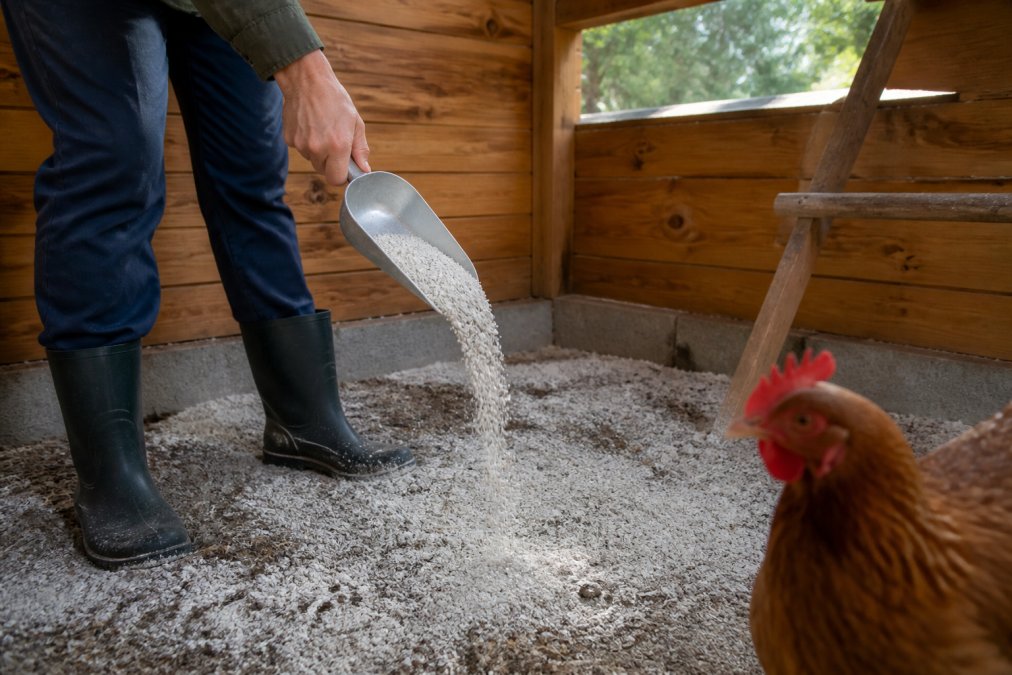
The zeolite application rate per square foot sets your baseline. For most coops, plan on roughly one pound of zeolite for every 10 square feet of floor space. That translates to about 1.5 to 2 ounces per square foot when you refresh bedding.
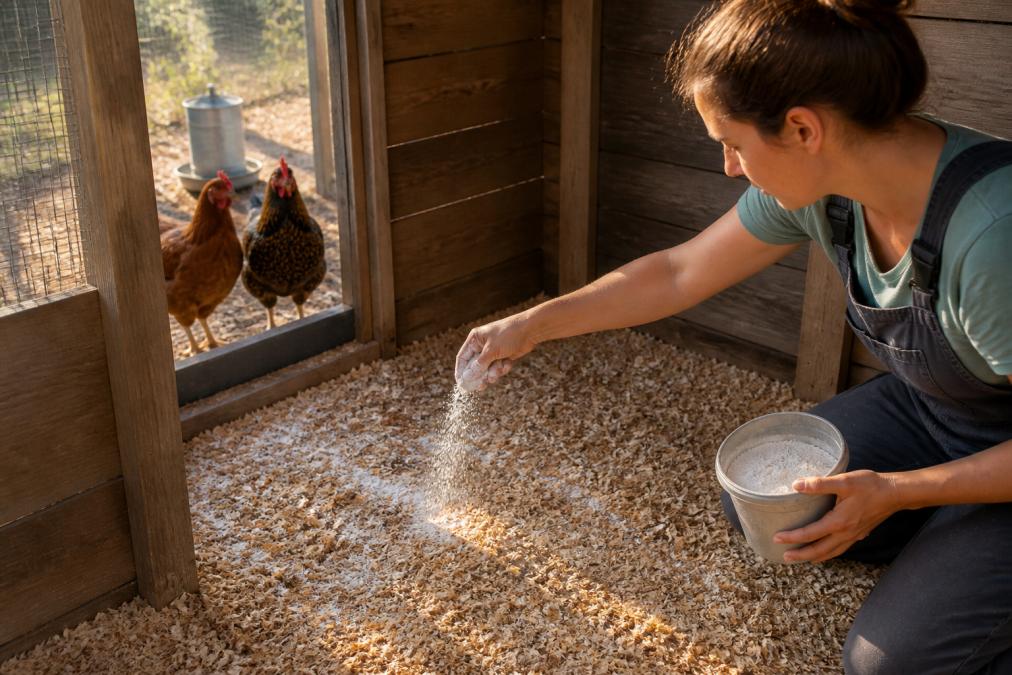
You can adjust this rate based on conditions. Humid climates and coops with poor ventilation may need a slightly heavier initial layer. The goal is a light, even dusting across the floor, not a thick crust. You should still see bedding through the mineral layer.
A 10-pound bag covers roughly 80 to 100 square feet at the standard rate. Measure your coop floor before ordering so you know how much to keep on hand for the season.
How Often to Apply Coop Zeolite by Flock Size
Flock size drives how quickly waste accumulates, and that determines your reapplication rhythm. Here is the schedule that works in practice.
Small Flocks (Up to 6 Birds)
Small flocks generate less daily waste, so a weekly application is sufficient. Sprinkle a fresh, light layer over the roosting area and high-traffic zones every seven days. A full clean-out every four to six weeks resets the system, at which point you apply a fresh base layer.
Medium Flocks (7 to 15 Birds)
With 7 to 15 birds, ammonia builds faster. Reapply coop zeolite every three to four days, concentrating on spots beneath roosts where droppings accumulate overnight. Plan a full bedding change every three to four weeks to keep moisture levels manageable.
Large Flocks (16+ Birds)
Large flocks demand the most frequent attention. Apply a fresh layer every two to three days, and check moisture content daily by feeling the bedding near droppings. If it clumps or feels damp, add zeolite immediately rather than waiting for the next scheduled application.
Using Zeolite with the Deep Litter Method
The deep litter method is a managed composting system: bedding accumulates over months, and aerobic bacteria and fungi break down manure into rich compost. The most common question we hear is whether zeolite inhibits that process. The short answer is no, zeolite does not sterilize bedding or kill the microbes driving decomposition. It works through physical adsorption, not chemical biocides, so the microbial community remains intact and active.
What zeolite actually does is remove two inhibitors that slow composting: excess moisture and ammonia nitrogen. High ammonia levels suppress the bacteria that break down waste. By adsorbing ammonia, zeolite keeps those microbes working at full efficiency. The mineral also holds moisture in its porous structure, releasing it slowly rather than letting bedding become waterlogged or dry out completely, both conditions that stall composting.
How to Integrate Zeolite into a Deep Litter System
The key difference from a conventional coop is that you do not strip out the bedding on a fixed schedule. Instead, you manage the carbon-to-nitrogen ratio and aeration. Zeolite supports this by buffering moisture and ammonia between turns.
Step 1: Base layer. Before starting a new deep litter cycle, apply 2 ounces of zeolite per square foot directly on the coop floor. This creates a moisture-regulating barrier that prevents the bottom layer from becoming anaerobic.
Step 2: Initial bedding. Add 4-6 inches of pine shavings on top. Do not mix the zeolite into the top layer yet; keep it as a base reserve.
Step 3: Weekly maintenance. Each week, when you turn the litter with a fork or rake to aerate, sprinkle 0.5 to 1 ounce of zeolite per square foot over the surface before mixing. This distributes the mineral through the active composting zone without creating a dense, impermeable layer.
Step 4: Monitoring moisture. The deep litter method fails when bedding exceeds 40% moisture content. Zeolite helps, but it cannot fix a flooded coop. If bedding feels damp to the touch or clumps when squeezed, add dry shavings and increase your zeolite dose by 50% for the next two weeks.
What Zeolite Does Not Do
Zeolite is not a substitute for the two non-negotiables of deep litter: carbon inputs and aeration. The composting process requires a carbon-to-nitrogen ratio of roughly 25:1 to 30:1. Manure is nitrogen-rich, so you must add fresh carbon (shavings, straw, leaves) regularly. Zeolite does not add carbon. Similarly, turning the litter weekly is essential to introduce oxygen. Zeolite adsorbs ammonia but does not create airflow. University extension guidance on poultry housing ventilation emphasizes that proper air exchange is essential for respiratory health in flocks, and this is doubly true in a deep litter system where the composting process itself generates heat and moisture.
When to Retire a Deep Litter Cycle
With zeolite in the mix, a deep litter cycle can often run 6 to 12 months, depending on flock size and bedding management. Signs that the cycle is done:
- Bedding has a sour, fermented smell that zeolite no longer controls
- The pile is consistently wet despite added carbon and zeolite
- Flies become a persistent problem
- The bedding volume has compacted to less than half its original depth
At that point, remove the entire contents and start fresh. Do not try to salvage a cycle that has gone anaerobic.
The Composting Advantage
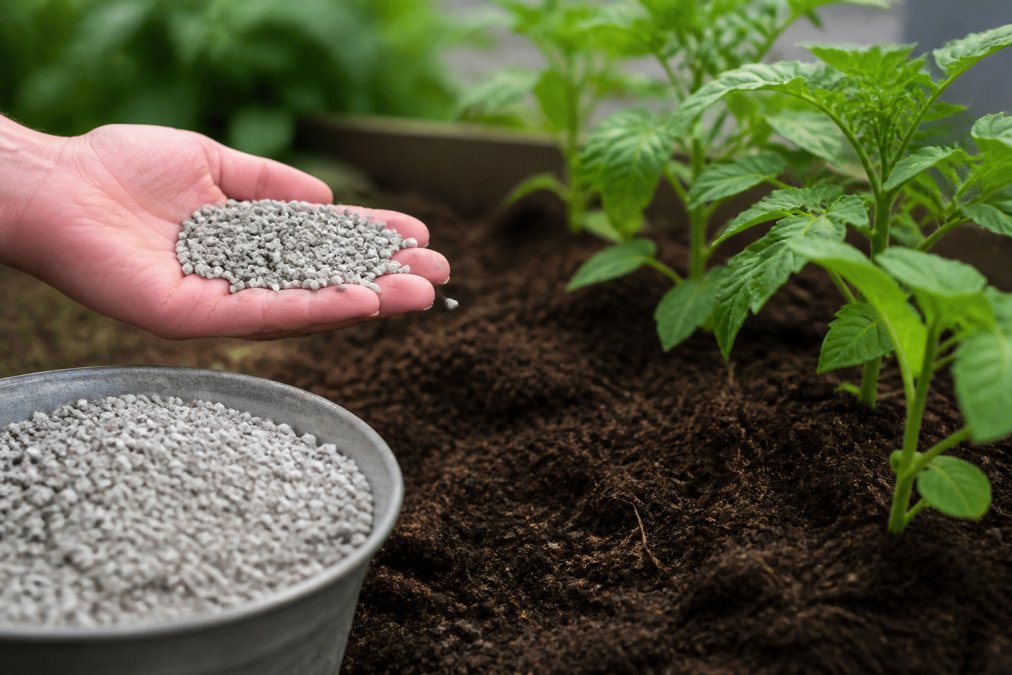
A properly managed deep litter cycle with zeolite produces a finished compost that is richer than conventional bedding waste. The zeolite retains ammonium that would otherwise volatilize as ammonia gas, holding it in a plant-available form. When you spread the finished compost on garden beds, that nitrogen becomes available to plants slowly over the season rather than leaching away in the first rain.
How to Stop Chicken Coop Ammonia Smell at the Source
To stop chicken coop ammonia smell effectively, you must address the source: the breakdown of uric acid in droppings. Zeolite adsorbs ammonia molecules into its porous structure before they volatilize into the air you and your birds breathe.

This is where zeolite outpaces simple odor masking. Research on clinoptilolite zeolite ammonia adsorption demonstrates the mineral's high cation exchange capacity, which is what allows it to bind ammonia so effectively.
For best results, pair zeolite with good hygiene fundamentals. Remove visible droppings daily, keep the coop dry, and ensure cross-ventilation. Zeolite handles the microscopic odor compounds; you handle the macroscopic clean-up.
Zeolite vs Lime for Chicken Coops: Which Works Better?
When comparing zeolite vs lime for chicken coops, hydrated lime raises pH to suppress bacteria, but it is caustic and can irritate respiratory tissues if inhaled by birds or humans during application. Zeolite works through physical adsorption rather than chemical reaction, so it remains safe around animals.
Zeolite also keeps working until its pores fill, whereas lime's effect diminishes as it reacts with moisture.
| Option | How It Works | Reapplication | Safety |
|---|---|---|---|
| Zeolite | Physically traps ammonia and moisture | Every 2-7 days depending on flock | Safe around birds and humans |
| Hydrated Lime | Raises pH to slow bacterial growth | Weekly, more frequent after rain | Caustic; respiratory irritant |
Particle Size, Dust Safety, and Disposal
Particle size matters more than most guides mention. Fine powders offer more surface area but create dust that can irritate both you and your flock during application. Coarser granules are easier to sprinkle and stay where you put them. Look for a balance that spreads evenly without billowing.
When applying, wear a basic dust mask if you are sensitive to mineral dust, and keep birds at a distance until the powder settles. Zeolite is non-toxic, but no one benefits from inhaling particulates.
For disposal, spent zeolite is fully compostable. Mix it into your compost pile or garden soil, where it continues to improve drainage and nutrient retention. USDA guidance on composting animal bedding supports composting poultry litter as a soil amendment, and zeolite enriches rather than contaminates that process.
Build Your Coop Maintenance Routine
A reliable routine combines daily spot-cleaning with scheduled zeolite applications. Remove droppings each morning, check bedding moisture, and add a light sprinkle where needed. Weekly, do a more thorough turnover of the litter and refresh the base layer.
Arden Line offers a Chicken Coop Deodorizer made from 100% natural volcanic zeolite. It is OMRI Listed for organic production, comes in plastic-free kraft packaging, and is family-made in the USA. One application keeps working for days, not hours.
Frequently Asked Questions
Is zeolite safe for chickens to peck at?
Yes. Zeolite is a natural volcanic mineral that is chemically inert and safe if ingested in small amounts. It is OMRI Listed for use in organic production. Unlike some chemical odor neutralizers, it does not release fumes or residues. When chickens peck at bedding, they may ingest a few granules without harm. The mineral passes through their system without being absorbed. For extra safety, focus application on the litter and roosting areas rather than directly on feed or water stations.
How often should I apply zeolite to my chicken coop bedding?
For small flocks (up to 6 birds), a weekly application is often sufficient. For medium flocks (7 to 15 birds), reapply every three to four days. Large flocks (16+ birds) may need a fresh layer every two to three days. The key trigger is odor: if you notice ammonia smell when you enter the coop, add another application right away rather than waiting for the calendar date.
Does zeolite neutralize ammonia better than lime?
Zeolite works differently than lime. Lime raises the pH of the litter, which slows bacterial activity but can also release trapped ammonia gas in a spike. Zeolite uses a porous structure to trap ammonia molecules inside its framework permanently. This is called cation exchange capacity. It does not create the caustic dust that lime does.
How much zeolite do I need per square foot of coop space?
For most coops, plan on roughly one pound of zeolite for every 10 square feet of floor space for the initial application. That translates to about 1.5 to 2 ounces per square foot when you refresh bedding. For maintenance, sprinkle a lighter layer as needed, adjusting based on flock size and moisture. Mix it into the top inch of bedding so it can contact moisture and droppings directly.
Building a zeolite schedule removes the guesswork from coop maintenance and keeps ammonia from ever reaching your birds' airways. Start with the rate per square foot, match your reapplication to flock size, and let the mineral do the odor control work. Get started with Arden Line and give your flock cleaner air with less effort.


Leave a comment
This site is protected by hCaptcha and the hCaptcha Privacy Policy and Terms of Service apply.