
Table of Contents
- What Volcanic Zeolite Is and How It Works in Soil
- Benefits of Zeolite for Plants and Soil Health
- How to Use Zeolite in Potting Soil and Garden Beds
- Zeolite Application Rate for Gardens by Soil Type
- Zeolite vs Perlite for Plants: Which Performs Better
- When Zeolite Is Not the Right Choice
- Long-Term Performance and Reapplication Schedule
- Frequently Asked Questions
Last Updated: October 12, 2026
What Volcanic Zeolite Is and How It Works in Soil
Volcanic zeolite is a naturally porous mineral formed from volcanic ash and lava that has crystallized over millions of years. When you add zeolite to garden soil or potting mixes, those pores absorb excess moisture while holding positively charged nutrients such as potassium and ammonium in the root zone, making them available to plants over time rather than washing away through drainage.
The structure that makes volcanic zeolite so effective is its high cation exchange capacity, a measure of how many nutrient ions the mineral can hold and exchange with soil (Zeolite Properties, Methods of Synthesis, and Selected Applications). This volcanic mineral origin matters because true zeolite forms under specific geological conditions that create a stable, long-lasting structure.
Understanding how zeolite works at a molecular level explains why use volcanic zeolite in gardens has become so common among gardeners who see such consistent results. The mineral's porous structure creates air spaces that improve soil infiltration and aeration around the root zone.
Benefits of Zeolite for Plants and Soil Health
Water Retention and Moisture Management
The most immediate benefit of adding zeolite to your soil is improved water retention without creating waterlogged conditions. Volcanic zeolite absorbs water into its porous structure and releases it slowly as soil dries, extending the time between watering. This is especially valuable for container plants, succulents, and herbs that are sensitive to overwatering, and for gardeners in dry climates where water conservation matters.
In potting mixes, zeolite prevents the "feast or famine" cycle where containers dry out completely between waterings. The mineral holds moisture in the root zone where plants can access it, reducing the stress of inconsistent watering. For garden beds, zeolite improves moisture management in sandy soils that drain too quickly, and in clay soils it prevents the compaction that leads to waterlogging.
Drainage, Aeration, and Root Health
While zeolite retains moisture, it simultaneously improves drainage and soil aeration, a balance that matters more than either benefit alone. The mineral's particle size creates air pockets in the soil structure, preventing compaction and allowing oxygen to reach roots. This is critical because roots need both water and air; too much of either causes problems.
In heavy clay soils, zeolite works by introducing porous particles that break up dense soil structure, improving infiltration so water moves through the root zone instead of pooling. In sandy soils, the opposite happens: zeolite fills pore spaces and slows drainage. The result in both cases is a more balanced root environment. Healthier root systems mean stronger plants that are more resistant to stress, disease, and pest pressure.
The aeration benefit extends to reducing root rot and crown rot in ornamental plants, vegetables, and trees. When soil stays compacted or waterlogged, anaerobic bacteria thrive and roots suffocate. Adding volcanic zeolite to the root zone improves oxygen availability and creates conditions where beneficial aerobic microbes dominate.
Nutrient Retention and Reduced Leaching
Volcanic zeolite's cation exchange capacity is what sets it apart from inert amendments like perlite or pumice. The mineral actively holds positively charged nutrient ions, particularly nitrogen in the form of ammonium, potassium, and calcium, and releases them slowly as plants need them. This reduces nutrient leaching, the process where water carries dissolved nutrients through soil faster than roots can absorb them.
In container gardening, this effect is dramatic. Potting mixes without zeolite can lose significant amounts of applied fertilizer in runoff, especially with frequent watering. Adding zeolite reduces that loss and extends the time between fertilizer applications. In garden beds, the benefit is more modest because organic matter and soil microbes also contribute to nutrient cycling, but zeolite still improves nutrient availability over the growing season.
The nitrogen retention benefit deserves emphasis because nitrogen is the nutrient most easily lost to leaching. By holding ammonium in the root zone, zeolite ensures that more of the nitrogen you apply or that occurs naturally in compost stays available to plants rather than draining away.
How to Use Zeolite in Potting Soil and Garden Beds
For potting mixes, mix zeolite thoroughly into your base soil before planting. The granular grade from Arden Line works well here because the smaller particles blend evenly without creating air gaps that could leave roots unsupported.
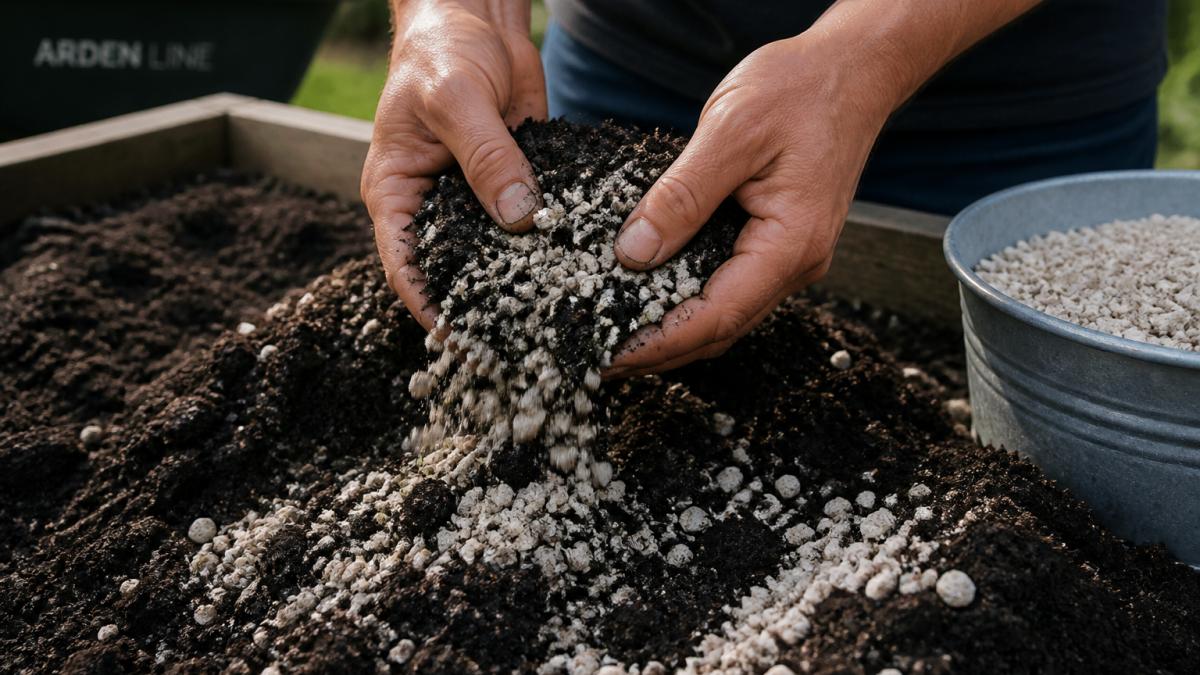
For garden beds, spread zeolite evenly across the planting area at a rate of 5-10% by volume (see application rates by soil type below), then work it into the top 6-8 inches of soil with a garden fork or tiller. This incorporation is important because zeolite works best when it's mixed throughout the root zone, not sitting on the surface.
For existing plants, zeolite can be worked gently into the top 2-3 inches of soil around the base, though this is less effective than incorporating it during initial planting. Water thoroughly after application to help settle the mineral and activate its moisture-holding properties.
Zeolite Application Rate for Gardens by Soil Type
| Soil Type | Zeolite Rate | Best Practice | Expected Benefit |
|---|---|---|---|
| Sandy soil | 10-15% by volume | Mix into top 8 inches | Improved water retention, reduced watering frequency |
| Clay soil | 5-10% by volume | Work in gently to avoid compacting | Better drainage, reduced waterlogging |
| Loamy soil | 5-10% by volume | Mix into top 6 inches | Enhanced nutrient availability, balanced moisture |
| Potting mix | 10-20% by volume | Blend thoroughly before planting | Extended watering intervals, reduced fertilizer runoff |
| Raised beds | 8-12% by volume | Incorporate when building bed | Improved water management across seasons |
| Container plants | 15-20% by volume | Mix with base soil | Optimal moisture and nutrient retention |
Application rates depend on your soil's starting point and your gardening goals. Sandy soils need more zeolite because they lack natural water-holding capacity. Clay soils need less because adding too much mineral can still result in poor drainage if the clay particles dominate. Loamy soils, which already balance water retention and drainage, benefit from a moderate rate that enhances nutrient cycling without disrupting existing soil structure.
For vegetable gardens, aim for the middle of each range. For ornamental plants that tolerate drier conditions (sedums, ornamental grasses, Mediterranean herbs), use the lower rate. For water-hungry plants like ferns, hostas, or hydrangeas, use the higher rate within your soil type's range.
Zeolite vs Perlite for Plants: Which Performs Better
Perlite and pumice are common alternatives to zeolite, and the choice depends on your specific needs. All three are volcanic minerals, but they work differently in soil.
Perlite is expanded volcanic glass that improves drainage and aeration but holds no nutrients and minimal water. It's lightweight, inexpensive, and excellent for increasing airflow in dense soils. However, perlite floats to the surface over time and offers no nutrient retention, so you're relying entirely on fertilizer applications to feed plants.
Zeolite Mineral Lava Rocks (Regular) →
Zeolite retains both water and nutrients, making it more active in the soil ecosystem. Unlike perlite, zeolite holds ammonium and potassium in the root zone, reducing nutrient leaching and extending the time between feedings.
Pumice is denser than perlite, doesn't float, and improves aeration without holding water. It's a good middle ground for orchids and succulents that need excellent drainage, but like perlite, it offers no nutrient retention.
For most gardeners, zeolite outperforms perlite in potting mixes because the nutrient-holding benefit justifies the slightly higher cost. For orchids, succulents, and plants that need very fast drainage, perlite remains the better choice.
When Zeolite Is Not the Right Choice
Zeolite works best in specific conditions, and recognizing when it's not appropriate saves money and prevents problems.
If your soil is already compacted clay that drains poorly, zeolite alone won't fix the problem. You need to address the compaction first by working in organic matter, aerating with a garden fork, or considering drainage improvements like French drains or raised beds.
For plants that prefer consistently wet conditions, such as bog plants, water-loving ferns, or plants in rain gardens designed to manage runoff, zeolite's water-retention benefit becomes a liability. These plants need free drainage and don't benefit from the mineral holding moisture longer.
If your soil pH is already high (above 7.5), adding zeolite may shift it higher because the mineral has a pH around 8.5. Most garden plants tolerate this, but acid-loving plants like blueberries, azaleas, and rhododendrons may struggle.
Zeolite is also unnecessary in soils that are already rich in organic matter and have good structure. Mature compost-amended beds, forest soils, and well-maintained perennial borders already have excellent water retention and aeration. Adding zeolite here provides minimal benefit and represents wasted expense.
Long-Term Performance and Reapplication Schedule
Volcanic zeolite doesn't break down or degrade like organic amendments, so it remains effective for years. In container gardening, a single application lasts the life of the potting mix, typically 2-3 years before the soil becomes depleted and needs refreshing.
In garden beds, zeolite persists indefinitely, but its effectiveness may decrease over time as soil organic matter builds and the mineral becomes buried deeper in the soil profile.
Reapplication isn't mandatory because the zeolite doesn't disappear, but it may become less accessible to roots as soil layers develop.
For best long-term results, combine zeolite with regular additions of compost or other organic amendments. The mineral handles water and nutrient retention while organic matter builds soil structure and feeds microbes. This combination creates a resilient growing medium that improves year after year.
Choosing the right soil amendment depends on understanding what your plants actually need. At Arden Line, we've formulated our Zeolite Mineral Lava Rocks in both Regular and Granular grades specifically for gardeners and plant enthusiasts who value natural, long-lasting soil improvement.

Frequently Asked Questions
Is volcanic zeolite good for gardens?
Yes. Volcanic zeolite improves soil drainage, aeration, and nutrient retention while reducing watering frequency. Its porous structure holds water and positively charged nutrients like potassium and ammonium in the root zone, releasing them slowly for steady plant growth. It's especially valuable in clay-heavy or sandy soils where drainage or water retention is uneven.
How much zeolite should I add to garden soil?
Application rates depend on soil type and use. For garden beds, a lighter application of 5-10% works well. For potting mixes, mix 10-20% by volume. Start conservatively and adjust based on how your plants respond over the first growing season.
Can I use volcanic zeolite in potting soil and compost?
Yes. Zeolite blends well into potting mixes, improving moisture retention and aeration for houseplants, succulents, and container vegetables. When adding to compost, use 5-10% by volume to enhance water-holding capacity without compacting the mix. It does not break down, so it provides long-term structural benefit.
Is volcanic zeolite safe for vegetables and edible plants?
Yes. Volcanic zeolite is 100% natural, chemical-free, and approved for use in organic production. It does not leach harmful substances into soil or food crops. Its high pH (approximately 8.5) is compatible with most vegetables, though acidic-soil plants like blueberries may require pH adjustment elsewhere in the soil.
How does zeolite compare to perlite for plant growth?
Both improve aeration, but they work differently. Perlite is lightweight and fast-draining, ideal for preventing compaction in potting mixes. Zeolite is denser, holds more water and nutrients, and lasts longer without breaking down. Choose zeolite for moisture retention and nutrient cycling; choose perlite for maximum drainage in high-water environments like propagation trays.
How long does zeolite last in soil, and when should I reapply it?
Volcanic zeolite is a permanent mineral that does not decompose. It remains effective for years. In container gardening, a single application lasts the life of the potting mix, typically 2-3 years before the soil needs refreshing. In garden beds, zeolite persists indefinitely, but its effectiveness may decrease over time. Reapplication isn't mandatory because the zeolite doesn't disappear, but it may become less accessible to roots as soil layers develop.

Leave a comment
This site is protected by hCaptcha and the hCaptcha Privacy Policy and Terms of Service apply.