
Table of Contents
- Why an OMRI Listed Poultry Dust Bath Belongs in Your Coop
- How to Stop Chicken Coop Ammonia Smell With Mineral Dust
- The Best Dust Bath Material for Chickens: A 2026 Comparison
- What to Look For in an OMRI Listed Poultry Dust Bath
- Setting Up a Dust Bath Station: Step-by-Step
- Diatomaceous Earth Safety: What Backyard Keepers Should Know
- Seasonal Dust Bath Management and Maintenance
- Frequently Asked Questions
Last Updated: September 26, 2026
Why an OMRI Listed Poultry Dust Bath Belongs in Your Coop
An OMRI Listed poultry dust bath is a mineral blend certified by the Organic Materials Review Institute for organic production, giving your flock a safe, natural way to clean feathers, manage pests, and stay comfortable. This guide from Arden Line covers what that certification means, which minerals work, and how to set up a station your birds will use daily.

What OMRI Listed Actually Means for Poultry Products
OMRI Listed means a product has been reviewed against USDA National Organic Program standards and approved for certified organic production, covering every input in the formula.
How a Mineral Dust Bath Fits Into Flock Hygiene
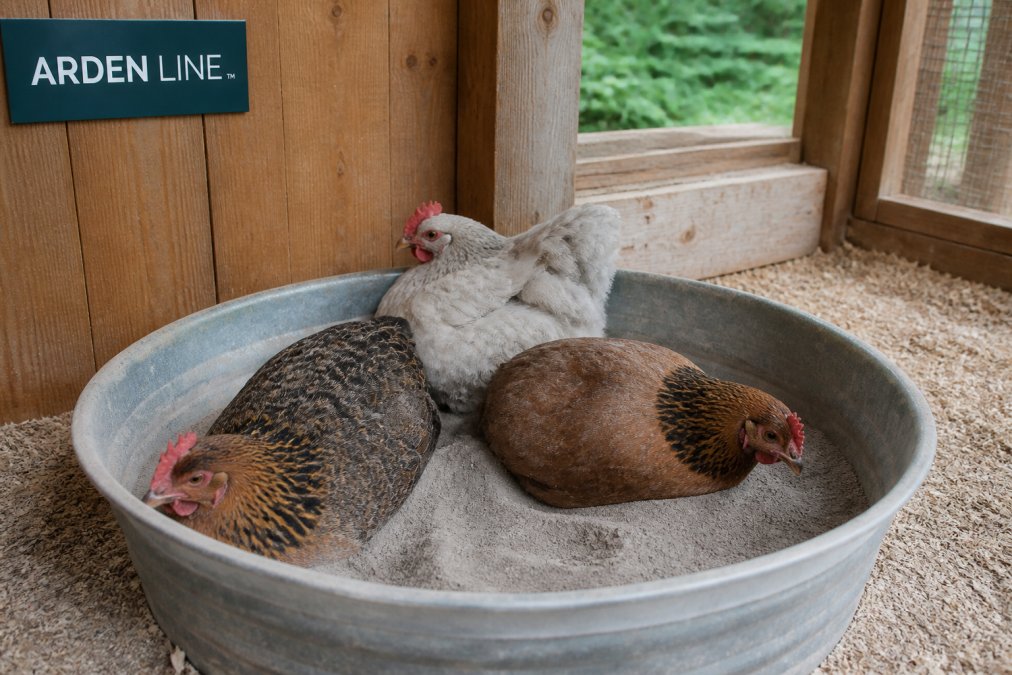
A mineral dust bath supports three jobs: coat cleaning, parasite prevention, and enrichment. Hens dust bathe recreationally as much as for hygiene, and watching them roll signals a secure flock.
How to Stop Chicken Coop Ammonia Smell With Mineral Dust
The fastest way to stop chicken coop ammonia smell is to remove the moisture ammonia needs to form. Ammonia comes from uric acid in droppings breaking down, which accelerates in damp bedding. Absorbent minerals attack the problem at the source instead of masking it.
Absorption, Not Masking: How Zeolite Traps Ammonia
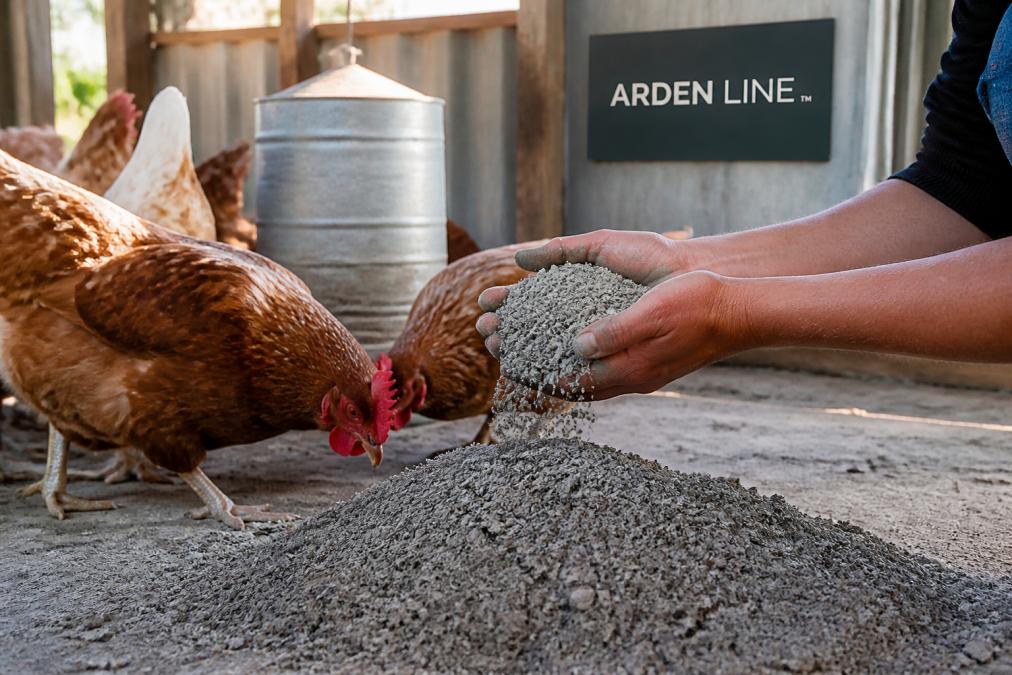
Zeolite is a volcanic mineral with a cage-like internal structure full of tiny pores that trap ammonia molecules and moisture until you remove the spent material. This is adsorption, not absorption: the gas clings to the mineral surface rather than soaking in.
A Simple Coop Odor Routine That Works
Consistency beats intensity.
- Remove wet bedding before adding any mineral
- Scatter a thin layer of zeolite across the coop floor and nesting boxes
- Refresh high-traffic spots weekly, not monthly
- Keep ventilation open year-round, even in cold months
- Check under waterers first, since spills drive most moisture problems
The Best Dust Bath Material for Chickens: A 2026 Comparison
The best dust bath material for chickens is finely milled zeolite, combining moisture absorption, odor control, and a particle size that will not irritate eyes or airways. Sand and wood ash are common alternatives, but each has trade-offs.
| Material | Absorbency | Pest Control | Dust Level | Best For |
|---|---|---|---|---|
| Zeolite | High | Moderate | Low | Year-round coop use |
| Calcium montmorillonite clay | Moderate | Low | Moderate | Mixing into blends |
| Sand | Low | Low | High | Draining wet runs |
| Wood ash | Low | Moderate | Very high | Occasional use only |
| Diatomaceous earth | Low | High (disputed) | Very high | See safety section |
Pros and Cons of Common Dust Bath Materials
Zeolite absorbs ammonia and moisture better than any single mineral, stays put in the box, and is safe for birds.
The Diatomaceous Earth Controversy
DE works best when dry. Once it absorbs moisture in a humid coop, its abrasive action drops sharply. That means the conditions where parasites thrive are the same conditions where DE stops working.
Seasonal Material Swaps
Shift your material choice with the seasons. In summer, a lighter, dustier mix (more sand, less clay) helps hens shed heat. In winter, a heavier zeolite blend stays dry longer and resists clumping from condensation. Many keepers keep two bins and swap them at the first frost, preventing the mud-box problem that ruins most outdoor stations by February.
If you are unsure which material your flock prefers, offer two shallow pans side by side for a week. Hens will vote with their feet, and the pan they ignore tells you as much as the one they use.
What to Look For in an OMRI Listed Poultry Dust Bath
Look for a short ingredient list, a particle size described as finely milled, and verifiable OMRI certification. If a bag lists synthetic fragrance, dyes, or unlabeled "proprietary" ingredients, walk away.
Ingredients to Avoid in Dust Baths
- Synthetic insecticides, which can be absorbed through preening
- Artificial fragrances and dyes, which add no functional value
- Crystalline silica in high concentrations, a respiratory irritant
- Anything labeled "proprietary blend" without a mineral breakdown
- Ash from treated or painted wood
Setting Up a Dust Bath Station: Step-by-Step
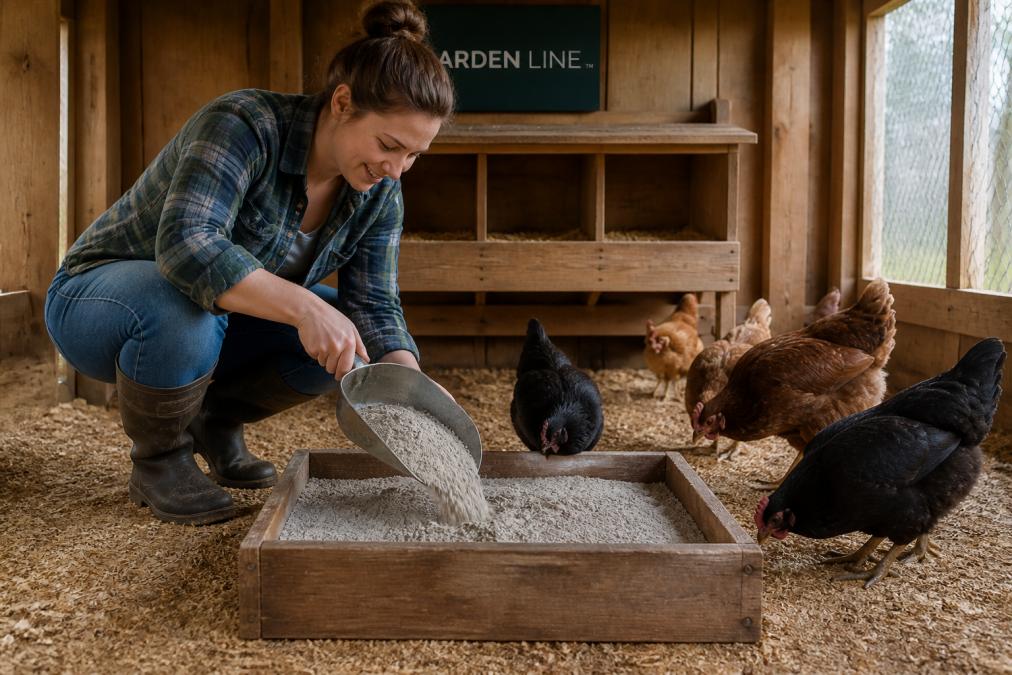
A dust bath station takes about 20 minutes to build and costs very little. The goal is a shallow, dry, covered container birds can step into and roll in without tipping. The difference between a station that lasts one season and one that lasts five comes down to three things most guides skip: weather-proofing, predator exclusion, and drainage.
Materials That Hold Up Outdoors
Pressure-treated lumber is a poor choice inside a coop because birds peck and ingest wood fibers. Better options:
- Cedar or white oak boards (1x6 or 1x8), naturally rot-resistant, safe if chewed
- Food-grade plastic tubs (bus tubs or mortar mixing trays), cheap, easy to hose out, no rot
- Rubber livestock feed pans, heavy enough not to tip, won't crack in freezing temperatures
- Half of a clean, unpainted tire, free, durable, but holds moisture if not drilled for drainage
Build Steps
- Choose a shallow box, tire, or plastic tub roughly 12 to 18 inches across and 4 to 6 inches deep. Wider than 18 inches and powder scatters; deeper than 6 inches and small birds struggle to climb in.
- If using wood, drill 1/4-inch drainage holes every 4 inches across the bottom to prevent the mud problem that ruins most outdoor stations.
- Add 2 to 3 inches of mineral powder, enough to coat a hen's body without burying her legs.
- Place it under a solid roof, coop overhang, or a plywood lid propped on two bricks. Rain is the number one killer of dust baths.
- Set it near a wall or corner, where birds feel protected from overhead predators.
- Introduce one hen and let the flock follow, curiosity spreads faster than training.
Expected result: within a few days, you should see hollowed-out craters in the powder where birds have bathed.
Predator-Proofing the Station
A dust bath is a stationary target. Raccoons, opossums, and rats will investigate a box of fine powder, especially if feed dust or feathers accumulate nearby. Three low-cost defenses:
- Elevate the station 6 to 12 inches off the ground on cinder blocks or a pallet. This alone stops most ground-level digging.
- Add a hardware cloth skirt (1/2-inch mesh) extending 12 inches outward from the base if the station sits on soil.
- Secure a hinged lid with a simple hook-and-eye latch. It keeps rain out and gives you a place to store a spare bag of powder.
Never use treated lumber, painted wood, or glued plywood for the box itself. Hens will peck at the edges, and the chemicals in these materials are toxic when ingested.
Depth beats width. A shallow box that is too wide lets powder scatter; a deeper layer keeps the material where the birds actually roll. A lid and drainage holes turn a one-season box into a permanent fixture.
Winter and Summer Adjustments
A station that works in April will fail in January. In cold months, move the box indoors or under a solid roof and stir the powder weekly to prevent clumping from condensation. In summer, shift it to afternoon shade, powder in direct sun can get hot enough to discourage hens. If your run floods seasonally, set the box on a pallet or bricks so the bottom stays dry.
Diatomaceous Earth Safety: What Backyard Keepers Should Know
Diatomaceous earth has a reputation problem. The common claim is that it kills parasites by cutting their exoskeletons, and that it is harmless to chickens. The first half is only partly true, and the second half deserves a closer look.
Seasonal Dust Bath Management and Maintenance
Dust bath maintenance changes with the weather, most keepers learn this after a wet spring turns their box into mud.
Keep a spare bag sealed and dry between refills. Mineral powder that absorbs humidity in storage loses some of its capacity before it ever reaches the coop.
Frequently Asked Questions
What does OMRI listed mean for poultry products?
OMRI stands for the Organic Materials Review Institute, a nonprofit that reviews products against USDA organic standards. When a poultry dust bath carries the OMRI Listed seal, it means the ingredients have been evaluated and found compliant for use in organic production. For backyard keepers, it is a quick way to confirm a dust bath contains no synthetic additives, pesticides, or prohibited substances. Always check the current OMRI certificate, since listings must be renewed and formulas can change.
What is the best dust bath material for chickens?
Finely milled natural minerals work best. Zeolite and calcium montmorillonite clay absorb moisture and trap ammonia, while staying gentle on skin and feathers. Zeolite is a volcanic mineral with a porous structure that holds moisture and odor molecules. An OMRI listed poultry dust bath made from pure zeolite gives your flock a safe grooming material without added chemicals or fragrances. Avoid anything with synthetic scents, clumping agents, or coarse sand that can irritate skin.
How do OMRI listed dust baths help with coop hygiene?
A mineral dust bath does two jobs at once. Chickens roll in it to clean oil and dirt from feathers, which supports skin maintenance and natural parasite prevention. The same mineral absorbs moisture and traps ammonia when it is also used as a coop amendment or sprinkled in bedding. Zeolite's absorbent properties reduce dampness that feeds odor and bacteria. Pairing a dust bath with regular coop maintenance keeps the whole space drier and easier to manage.
Can I use a mineral-based dust bath for chicks?
Yes, once chicks have developed their feathers. Arden Line's zeolite chicken dust bath is listed as safe for chicks after feathering, as well as for chinchillas, reptiles, and other small animals. Before that stage, chicks rely on down and are more sensitive to fine dust, so hold off until they are feathered out. Introduce the bath in a shallow tray and let them explore it on their own. Never force a bird into the dust.
Ammonia, moisture, and parasites are the three problems that quietly wear down a backyard flock, and they all trace back to what sits on your coop floor. Arden Line makes that decision simple with a 100% natural volcanic zeolite dust bath that traps ammonia and moisture, supports clean feathers, and comes in plastic-free kraft packaging made in the USA. Get started with Arden Line and give your hens a dust bath they will actually use.


Leave a comment
This site is protected by hCaptcha and the hCaptcha Privacy Policy and Terms of Service apply.