
Table of Contents
- What Volcanic Minerals Do for Poultry Health
- Zeolite for Chicken Coops: Ammonia Control and Odor Reduction
- Natural Ammonia Control for Poultry: How Mineral Absorption Works
- Immune Support, Growth Performance, and Disease Resistance
- Dosage, Safety, and Application Guidelines
- Volcanic Minerals vs. Other Coop Amendments
- Soil Amendment and Secondary Benefits for Your Garden
- Frequently Asked Questions
Last Updated: September 25, 2026
What Volcanic Minerals Do for Poultry Health
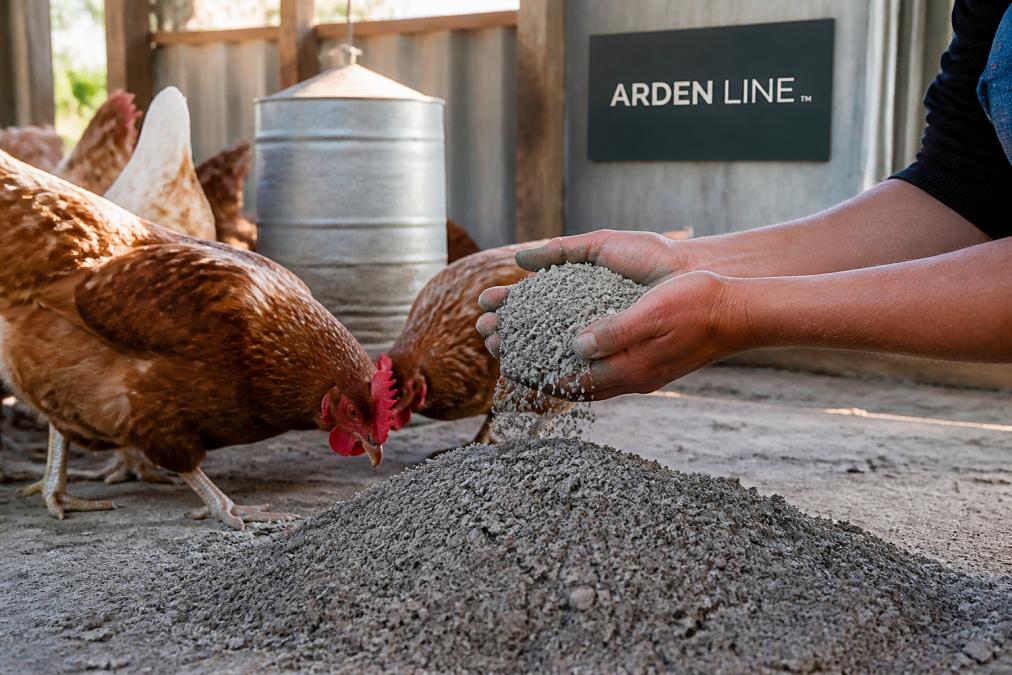
Volcanic minerals poultry applications, particularly zeolite, work as natural absorbents that trap ammonia, moisture, and odors at the molecular level. Zeolite's porous structure acts like a microscopic sponge, each particle contains tiny chambers that pull ammonia and water vapor out of the air and bedding, keeping your coop drier, fresher, and healthier without chemical treatments or fragrances that can irritate respiratory systems.

Volcanic minerals also support immune function and growth performance through trace minerals, which strengthen bone, feather, and tissue structure.
Zeolite for Chicken Coops: Ammonia Control and Odor Reduction
Ammonia buildup is the silent enemy of backyard flocks, accumulating in bedding as waste breaks down and creating an acidic environment that irritates eyes, respiratory passages, and skin.
Zeolite intercepts ammonia before it becomes airborne by bonding with ammonia molecules, allowing you to extend time between full bedding changes while maintaining cleaner air, healthier respiratory systems, and less stress on your flock.
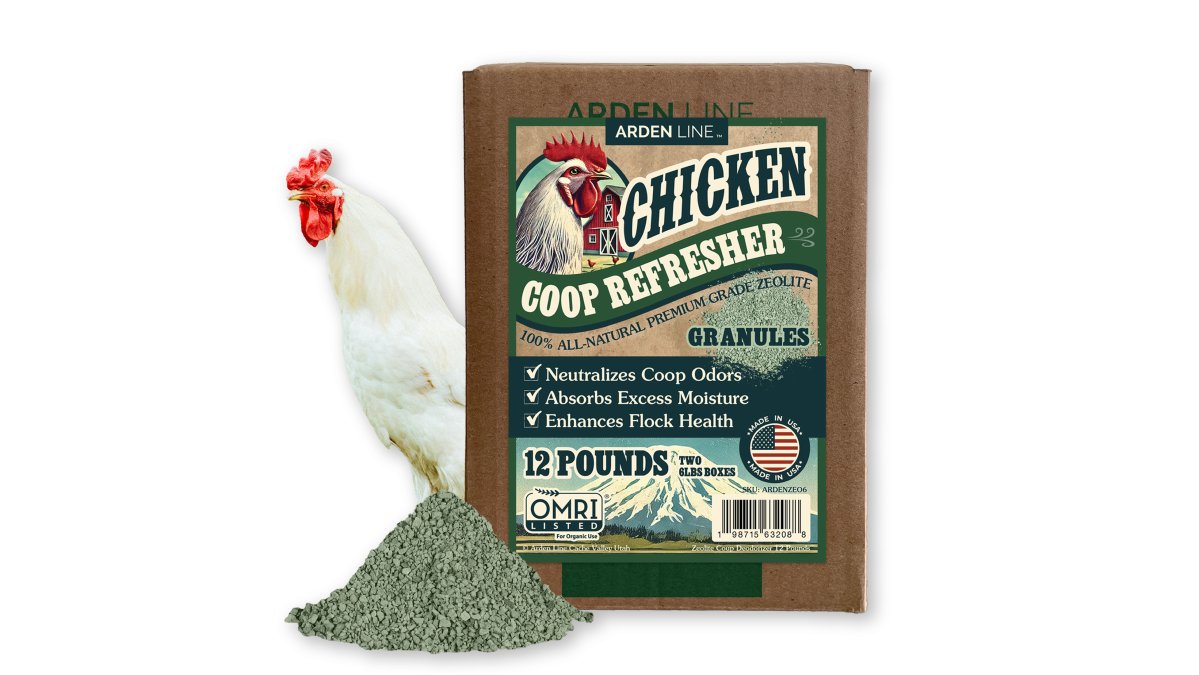
Application is simple: sprinkle zeolite over soiled bedding areas, nesting boxes, and the coop floor weekly or after heavy rain. The mineral begins working immediately and continues absorbing for weeks until saturated. When bedding is changed, compost the used zeolite-amended bedding, the mineral remains inert and beneficial to soil.
Natural Ammonia Control for Poultry: How Mineral Absorption Works
Ammonia control centers on adsorption: ammonia molecules stick to the zeolite crystal surface and are held without releasing back into the air.
When poultry waste decomposes, bacteria produce ammonia gas that accumulates in the breathing zone. Zeolite particles interrupt this by providing millions of binding sites where ammonia molecules attach and stay trapped through chemical bonding.
Moisture control amplifies the ammonia-trapping effect: zeolite absorbs excess moisture, creating a drier microclimate that slows bacterial activity and ammonia generation simultaneously.
This results in cleaner air and less respiratory stress.
Immune Support, Growth Performance, and Disease Resistance
Volcanic minerals support immune function through trace mineral supplementation and reduced environmental stress. Silica and micronutrients support collagen synthesis, bone density, and feather structure, strengthening disease resistance.
Dosage, Safety, and Application Guidelines
Volcanic minerals are safe for poultry at standard application rates. The mineral is inert, does not dissolve in water, does not degrade if ingested, and does not accumulate to toxic levels. Zeolite has been used in animal agriculture for decades without documented adverse effects.
Regulatory and Certification Status
Most commercial zeolite products marketed for poultry are OMRI Listed, meaning they comply with organic production standards and can be used in flocks certified for organic egg or meat production. However, certification status varies by product and supplier, verify OMRI listing or organic certification on the label before purchase if you are raising birds for organic certification. Some volcanic ash and pumice products are not OMRI-listed; these may still be safe but would disqualify your operation from organic certification if used.
Dosage for Bedding Application
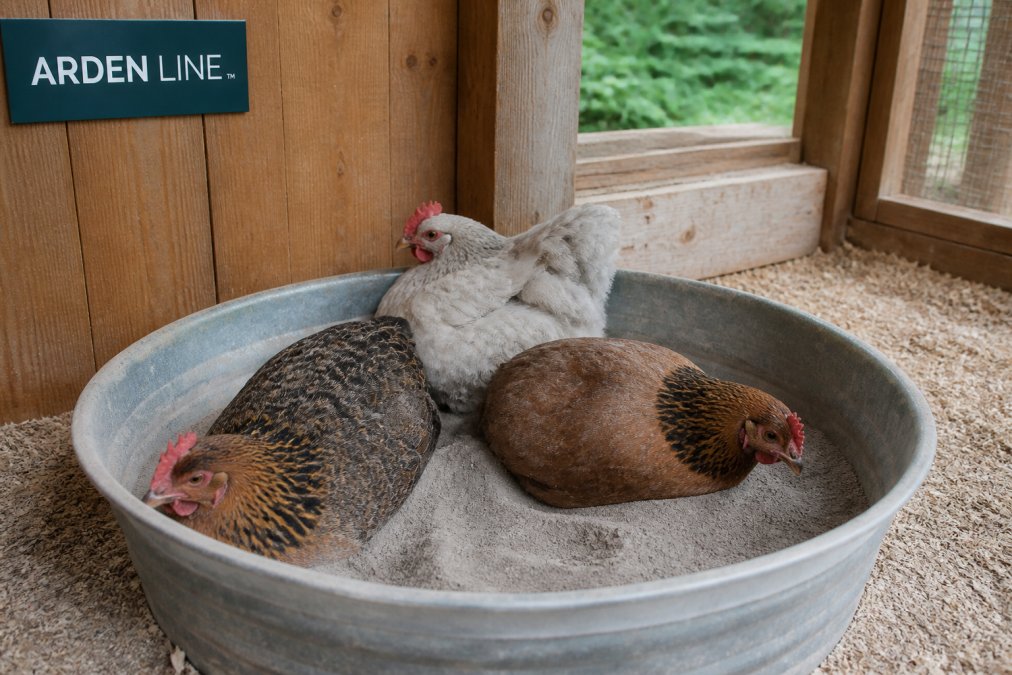
For a typical backyard coop housing 8-12 birds, apply 1-2 pounds of zeolite per 100 square feet of coop floor weekly, or more frequently during wet months. For dust bathing, provide a dedicated box with 5-10 pounds of finely milled zeolite that birds can access freely; birds will self-regulate intake through natural dust-bathing behavior.

Inclusion Rates for Feed Formulation
Safety Considerations
Zeolite dust is non-toxic if inhaled in normal use; wear a dust mask during application as a sensible precaution. The mineral does not irritate skin or eyes, is safe for feathered chicks, and poses no risk to soil organisms or insects. Decades of use in commercial agriculture support a wide margin of safety at recommended application rates.
Volcanic Minerals vs. Other Coop Amendments
Volcanic Mineral Types: Zeolite, Pumice, and Volcanic Clay
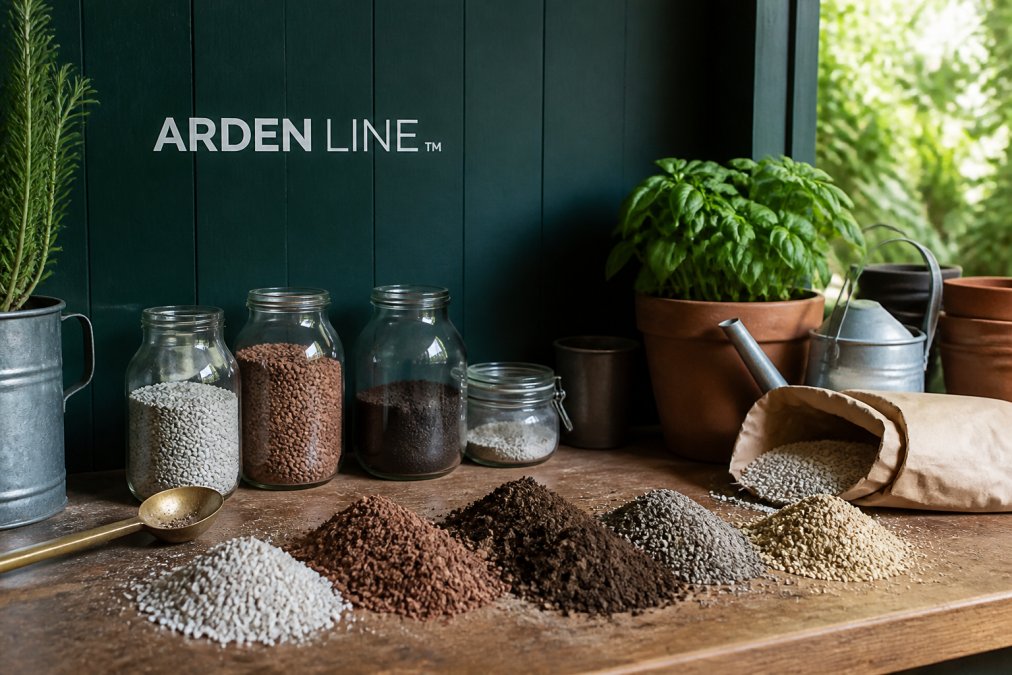
Not all volcanic minerals are identical. The three most common types used in poultry management each have distinct properties and trade-offs.
Zeolite is a microporous aluminosilicate mineral with a crystalline structure containing millions of tiny chambers. These chambers actively adsorb ammonia, moisture, and odors at the molecular level. Zeolite is the most effective ammonia binder among volcanic minerals and is the most widely available in commercial poultry products. It is also the most likely to be OMRI-listed for organic use.
Pumice is a less-dense volcanic rock with larger, more irregular pores than zeolite. It absorbs moisture and improves drainage but is less effective at binding ammonia because its pore structure is less selective. Pumice works well as a bedding amendment in wet climates where drainage is the primary concern, but it does not provide the same level of odor control as zeolite.
Volcanic Clay (including bentonite and montmorillonite) has excellent moisture absorption but minimal ammonia-binding capacity. Clay-based minerals are often used as flow agents in feed or for dust control, but they are not ideal primary amendments for ammonia management in litter. Some volcanic clays can alter pH or create dust issues if not properly formulated.
Zeolite vs. Diatomaceous Earth
Diatomaceous earth (DE) works through a different mechanism, it damages the exoskeleton of parasites like mites and lice, but does not control ammonia or absorb moisture as effectively as zeolite. Many keepers use both together for comprehensive pest and odor management. DE also creates more dust during application, which can irritate respiratory systems if not handled carefully.
Zeolite vs. Lime-Based Amendments
Zeolite vs. Sand and Perlite
Choosing the Right Volcanic Mineral
For maximum ammonia control and trace mineral support in volcanic minerals poultry management, zeolite is the best choice. For organic certification, verify OMRI listing before purchase. The key difference between volcanic minerals and other amendments is that volcanic minerals address the root problem (ammonia and moisture) rather than symptoms, while also supporting bird health through trace mineral availability and improved air quality.
Soil Amendment and Secondary Benefits for Your Garden
After use in the coop, zeolite-amended bedding becomes valuable compost for gardens and landscaping. The mineral improves soil structure, drainage, and nutrient retention, benefits that persist for years after application.
Zeolite's porous structure creates air pockets in compacted soil, improving aeration and root penetration. This is particularly valuable in clay-heavy soils where drainage is poor. The mineral also increases water-holding capacity in sandy soils, reducing irrigation needs and improving nutrient availability to plants.
As a soil amendment, zeolite captures and slowly releases nutrients, reducing leaching losses and extending the availability window for fertilizers. This benefit is especially pronounced in organic gardens where nutrient retention is critical. The mineral also supports beneficial microbial populations in soil, improving overall soil health over time.
For vegetable gardens, flower beds, and houseplants, compost made from zeolite-treated poultry bedding delivers dual benefits: organic matter from the composted bedding plus the structural and moisture-retention benefits of the mineral itself. This makes it a complete soil improvement solution that extends well beyond the coop.
| Benefit | Coop Use | Garden Use |
|---|---|---|
| Ammonia control | Primary | N/A |
| Moisture management | Primary | Secondary (drainage) |
| Trace mineral support | Secondary (birds) | Primary (plants) |
| Soil structure | N/A | Primary |
| Nutrient retention | N/A | Primary |
| Duration of benefit | Weeks | Years |
Volcanic minerals address the core challenges of backyard flock management, ammonia, moisture, and bird health, while delivering lasting benefits to your garden through composted bedding. Arden Line's zeolite products are formulated specifically for this dual purpose, with the Chicken Coop Deodorizer designed for weekly coop application and the Chicken Dust Bath providing finely milled mineral for natural dust bathing behavior. Both products are OMRI Listed for organic use, made from 100% natural volcanic zeolite, and packaged plastic-free in kraft materials. Start with the dosage guidelines above, observe your flock's response over two weeks, and adjust application frequency based on your specific climate and coop conditions.
Frequently Asked Questions
Are volcanic minerals safe for backyard chickens?
Yes. Volcanic zeolite is completely safe for poultry when used as directed. It is fragrance-free, chemical-free, and OMRI listed for organic production. Always ensure proper ventilation in the coop and apply minerals to bedding and floors, not directly to feed.
How often do I need to reapply zeolite in my chicken coop?
Reapply zeolite when you refresh bedding, typically every 1-2 weeks depending on flock size and coop conditions. A single application can manage moisture and odor for several days, but regular reapplication ensures consistent ammonia control. For a small backyard coop with 8 chickens, one bag of coop deodorizer will last several weeks with routine maintenance.
Can I use volcanic minerals in chicken feed or drinking water?
Volcanic zeolite is used externally in dust baths, coop bedding, and nesting boxes to control pests, manage moisture, and support feather health. If you have questions about mineral supplementation for poultry diets, consult a veterinarian or poultry nutritionist.
What's the real difference between zeolite and diatomaceous earth for coop management?
Zeolite works through adsorption, trapping ammonia and moisture in its porous structure, rather than relying on abrasive action.

Leave a comment
This site is protected by hCaptcha and the hCaptcha Privacy Policy and Terms of Service apply.