
Table of Contents
- Why Clay Garden Soil Drains Slowly
- How to Test Soil Drainage Before You Amend
- Step 1: Aerate and Break Up Compaction Layers
- Step 2: Work in the Best Organic Amendments for Clay Soil
- Step 3: The Benefits of Zeolite for Garden Soil Drainage
- Step 4: Build Raised Beds and Mulch to Keep Water Moving
- Step 5: Seasonal Maintenance and Chemical vs. Physical Amendments
- Common Mistakes That Keep Clay Garden Soil Waterlogged
- Frequently Asked Questions
Last Updated: September 15, 2026
Why Clay Garden Soil Drains Slowly
Clay garden soil drains slowly because its particles are microscopic and flat, packing tightly together into a dense mass with very little pore space. Water has nowhere to go, so it sits on the surface or moves down at a crawl. At Arden Line, we hear this complaint from home gardeners constantly, and the fix starts with understanding structure, not with buying a bag of sand.
Clay Particles and Aggregate Structure
Aggregate structure is the arrangement of individual soil particles into larger, crumb-like clusters. Good aggregates create pore space between them, and those pores are what actually move water.
Clay particles carry a negative electrical charge that binds them to each other and to water molecules. When soil is compacted or low in organic matter, those particles collapse into flat, stacked layers. The result is a soil with high water-holding capacity but terrible permeability. Waterlogging follows, and with it, root rot.
The good news: clay is not a defect. It holds nutrients better than sand and responds well to the right amendments.
How to Test Soil Drainage Before You Amend
Before you spend a dollar on amendments, run a drainage test. Guessing is how gardeners end up amending the wrong problem.
The Perk Test: A 30-Minute Drainage Check
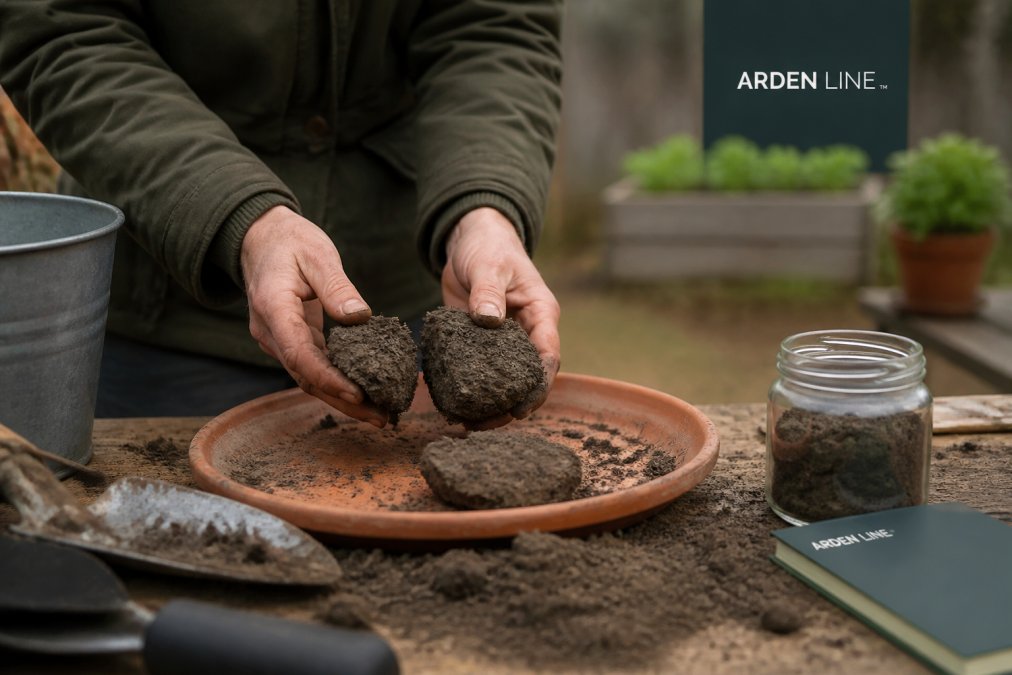
A perk test measures how fast water moves through your soil, and it costs nothing but time.
- Dig a hole roughly 12 inches deep and 6 inches wide.
- Fill it with water and let it drain completely. This saturates the surrounding soil.
- Refill the hole and measure the water level with a ruler.
- Check the level every hour for four hours.
- If the water drops less than 1 inch per hour, you have a drainage problem.
Do this in two or three spots across the bed. Drainage varies more than most gardeners expect, and a single test can send you in the wrong direction.
USDA Natural Resources Conservation Service soil health guidance
Step 1: Aerate and Break Up Compaction Layers
Compaction layers are dense zones that form from foot traffic, tilling at the same depth year after year, or heavy equipment. They block water like a floor.
Break them up with a garden fork, pushing it in 8 to 10 inches and rocking it back and forth. Work when the soil is moist but not wet. Digging wet clay creates compaction layers faster than it removes them, a mistake that sets gardeners back a full season.
For established beds, a broadfork does this with less disruption to soil biology. Go over the area twice, perpendicular to your first pass. You are loosening structure, not turning the soil over.
Step 2: Work in the Best Organic Amendments for Clay Soil
The best organic amendments for clay soil are compost, aged manure, and leaf mold worked into the top 6 to 8 inches. Organic matter is the single most effective long-term fix, because it glues clay particles into aggregates and feeds the microbes that build soil tilth.
Spread 2 to 3 inches of finished compost over the bed and work it in with a fork (extension.psu.edu). Repeat every spring and fall. Humus accumulates gradually, and that slow build is the point: each season, microbial activity increases and aggregate structure improves.
A common mistake is adding a thin dusting of compost and expecting change. Clay needs volume. Aim for a 2-inch layer minimum, and expect two to three seasons before drainage shifts noticeably.
Why Adding Sand Makes Clay Worse
Adding sand to clay is the most repeated bad advice in gardening. Mix sand into clay and you get something closer to concrete than soil.
The reason is particle size. Sand grains are large and clay particles are tiny, so the clay fills the gaps between sand grains and locks everything into a dense, brick-like mass. Unless you add enough sand to completely reverse the ratio, you make drainage worse, not better. Skip it.
Step 3: The Benefits of Zeolite for Garden Soil Drainage
The benefits of zeolite for garden soil come down to its structure: zeolite is a volcanic mineral with a rigid, honeycomb-like lattice full of tiny channels. Those channels hold water and nutrients and release them slowly, which is exactly what heavy clay needs.
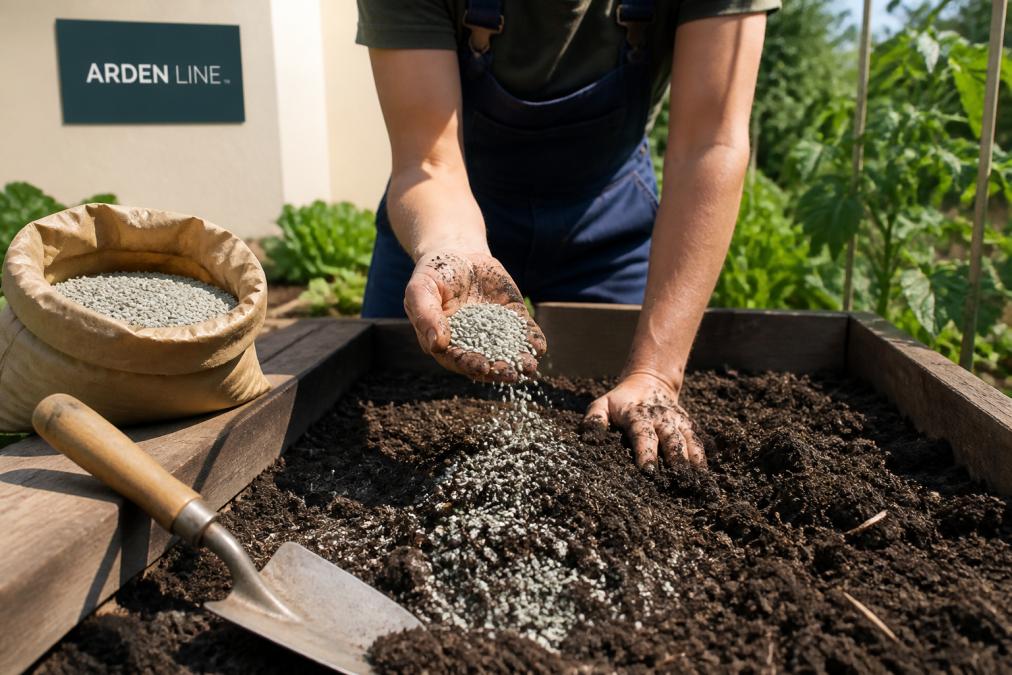
Unlike compost, zeolite does not break down. It stays in the soil and keeps working, improving aeration and percolation rate season after season. For clay that stays wet well into spring, that permanence matters.
Arden Line's Zeolite Mineral Lava Rocks (Granular) at $21.97 is sized 1.4 to 4 mm, which mixes easily into the top few inches of a bed. The regular grade at $19.99 runs 3 to 6 mm and suits larger beds and raised planters. Both are 100% natural volcanic zeolite, chemical-free, and OMRI Listed for organic production.


Work in roughly 10 to 15 percent zeolite by volume in the top 6 inches. In practice, that is about one 3-gallon scoop per 4 square feet of bed.
Step 4: Build Raised Beds and Mulch to Keep Water Moving
Raised garden beds solve drainage by lifting the root zone above the problem layer entirely. Fill them with a mix of topsoil, compost, and a mineral amendment, and you control the growing medium instead of fighting what is already there.
Mulching handles the surface. A 2 to 3 inch layer of straw, shredded leaves, or wood chips keeps rain from crusting the soil surface and slows evaporation. Keep mulch a few inches back from plant stems to avoid holding moisture against them.
No-dig gardening pairs well with both approaches. Layering compost on top and letting worms incorporate it preserves the aggregate structure you have worked to build, rather than shattering it with a tiller each spring. Tilling is the fastest way to undo a season of progress.
Step 5: Seasonal Maintenance and Chemical vs. Physical Amendments
The chemical versus physical amendment question trips up a lot of gardeners, and it is worth separating the two categories clearly before you buy anything.
Chemical Amendments: What They Actually Do
Chemical amendments change the chemistry of clay particles so they repel each other instead of stacking. The classic example is gypsum (calcium sulfate). Gypsum works by exchanging calcium for sodium on the clay's exchange sites (Simulation and Prediction of Ion Transport in the Reclamation of Sodic Soils with Gypsum...).
Other chemical amendments follow the same logic:
Physical Amendments: What Most Gardens Need
Biochar: A Middle Case
A Month-by-Month Rhythm for Clay
| Month | Task | Notes |
|---|---|---|
| Late winter | Order soil test; plan amendments | Test before you buy |
| Early spring | Top-dress 2 inches compost; fork top 6-8 inches when soil is moist but crumbly | Never work wet clay |
| Mid spring | Apply zeolite to beds and planters | Every 2-3 years, not annually |
| Late spring | Plant; mulch 2-3 inches, pulled back from stems | Straw, leaves, or wood chips |
| Summer | Replenish mulch as it breaks down; water deeply and less often | Deep watering pushes roots down |
| Early fall | Add leaf mold or aged manure on the surface | Let worms incorporate it |
| Mid fall | Sow a cover crop, crimson clover, winter rye, or hairy vetch, on empty beds | Roots and residue both feed structure |
| Late fall | Leave spent plant material in place where disease allows | Feeds soil biology over winter |
| Winter | Stay off saturated beds; no walking, no tilling | One wet pass can undo two seasons |
When to Consider Drainage Tile
Common Mistakes That Keep Clay Garden Soil Waterlogged
Frequently Asked Questions
What is the fastest way to improve drainage in clay soil?
The fastest fix is aerating the top 6 to 8 inches and working in 2 to 3 inches of finished compost. This opens pore space and feeds soil biology that builds aggregate structure. For a quicker boost, mix in granular zeolite, which holds water in its internal pores and releases it slowly. A perk test before and after shows whether drainage has actually improved.
Does adding sand to clay soil help drainage?
No. Sand plus clay creates a concrete-like mix unless you add enormous amounts of sand. Clay particles fill the gaps between sand grains and lock the soil tight. Organic matter and minerals like zeolite are safer choices. If you already added sand, keep working in compost and gypsum, and consider raised beds for the worst spots.
Can zeolite help improve drainage in heavy clay soil?
Yes. Zeolite is a porous volcanic mineral that absorbs excess water and releases it as the soil dries. It also improves soil aeration and holds nutrients like ammonium so they do not wash away. Arden Line Zeolite Granular (1.4 to 4 mm) mixes easily into clay and is OMRI Listed for organic production. Apply 10 to 20 percent by volume in the root zone.
How do I know if my garden soil has poor drainage?
Dig a 12-inch deep, 6-inch wide hole, fill it with water, and let it drain. Refill and time how long the water takes to drop. Less than 1 inch per hour means poor drainage. Standing water after rain, yellowing leaves, and moss or algae on the surface are other signs. A soil test also reveals compaction layers and nutrient imbalances.

Leave a comment
This site is protected by hCaptcha and the hCaptcha Privacy Policy and Terms of Service apply.