
Table of Contents
- What a Coop Bedding Amendment Actually Does
- How to Stop Chicken Coop Ammonia Smell with the Right Amendment
- Bedding Materials Compared: Pine Shavings, Straw, Hemp, and Sawdust
- The Deep Litter Method: How Amendments Fit Into the Cycle
- Benefits of Zeolite for Chicken Coops: Moisture, Odor, and Flock Health
- Matching Your Amendment to Climate, Coop Size, and Season
- Composting Spent Bedding: Garden Safety and Soil Benefits
- Frequently Asked Questions
Last Updated: September 12, 2026
What a Coop Bedding Amendment Actually Does
A coop bedding amendment is a material added to your existing bedding to actively manage moisture, ammonia, and odor rather than simply covering the floor. This guide from Arden Line explains how to match the right amendment to your flock, climate, and coop setup.
Most keepers treat bedding as a single decision: pick shavings, spread them, replace when dirty. That works until ammonia creeps back within days and bedding clumps into wet patches. The missing piece is the right coop bedding amendment.
Bedding vs. Amendment: The Key Difference
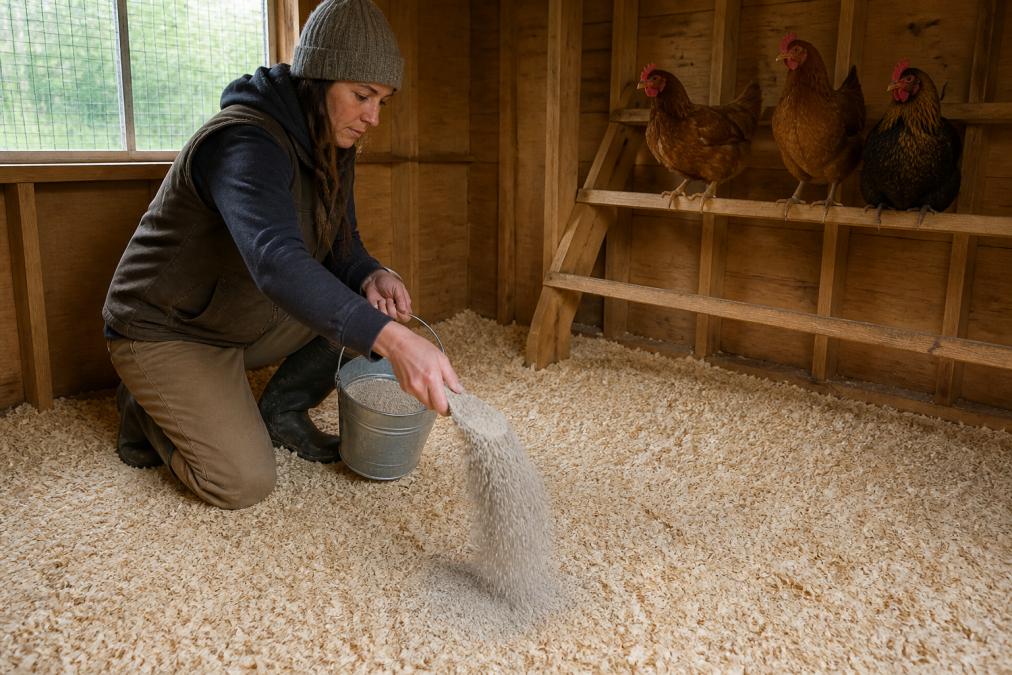
Bedding is the bulk material that gives chickens a soft, dry surface to stand and scratch on, pine shavings, straw, hemp hurd. An amendment is a smaller additive mixed into or layered under that bedding to boost absorbency, trap ammonia, or speed decomposition.
Think of bedding as the mattress and an amendment as the moisture-wicking layer underneath. You can run a coop on bedding alone, but keeping ammonia low and the floor dry gets much easier with an amendment.
How to Stop Chicken Coop Ammonia Smell with the Right Amendment
The fastest way to stop chicken coop ammonia smell is to remove the moisture that lets ammonia form. Ammonia comes from uric acid in droppings breaking down, and that breakdown accelerates in a wet, warm, low-airflow environment (usda.gov). Dry the floor and you starve the reaction.
That's why absorbency rate matters more than scent. A pine shaving pile that looks clean can still be damp two inches down, producing ammonia all night. A high-absorbency amendment pulls that moisture away and holds it, keeping the floor dry between cleanings.
Three practical levers control ammonia:
- Moisture absorption: the amendment's ability to soak up and hold liquid
- Ventilation: airflow at the top of the coop carries ammonia gas out before it builds
- Frequency: how often you turn or top up the bedding layer
Get all three right and odor control becomes maintenance, not a battle. Miss the moisture piece and no amount of ventilation keeps up. For a deeper look at coop air quality standards, the USDA poultry facility guidance is a useful reference point even for backyard setups.
Bedding Materials Compared: Pine Shavings, Straw, Hemp, and Sawdust
No single bedding wins everywhere. Each material trades off absorbency, dust, particle size, cost per cubic foot, and composting. Here's how the common options stack up.
| Material | Absorbency | Dust Level | Composts Well | Best For |
|---|---|---|---|---|
| Pine shavings | Moderate | Low-moderate | Yes | Most backyard coops |
| Straw | Low | Low | Slowly | Nesting boxes, mild climates |
| Hemp hurd | High | Low | Yes | Damp climates, deep litter |
| Sawdust | High | High | Yes | Mixed into deep litter only |
| Chopped straw | Moderate | Low | Yes | Floor bedding in dry climates |
| Sand | None (drains) | Very low | No | Arid coops, easy scooping |
Pine shavings remain the default: widely available, affordable, and low enough in dust for most coops. Kiln-dried shavings are standard because the drying process volatilizes most aromatic oils that can off-gas compounds irritating avian respiratory tissue. The flakes interlock and leave air gaps, keeping the surface dry longer than fine particles that mat down.
Straw is cheaper per bale but far less absorbent. The hollow stems shed liquid rather than wicking it, so straw works better in nesting boxes than as a floor substrate. In a humid climate or small coop, straw alone smells faster than shavings because moisture sits on the surface.
Hemp hurd absorbs more per pound than shavings and breaks down faster in compost, though it costs more upfront. The naturally porous woody inner core holds several times its weight in liquid, so in damp climates or deep litter setups the higher upfront cost is often offset by fewer full cleanouts.
Sawdust is highly absorbent but dusty, which matters for avian respiratory health. Fine particles stay airborne longer and settle deep in the respiratory tract, so use it sparingly, never in a poorly ventilated coop, and ideally mixed into deep litter rather than spread as a top layer.
Sand is a niche option. It doesn't absorb anything; it drains. In arid coops, a coarse sand floor lets droppings dry out and can be scooped like cat litter, but it's heavy, expensive to deliver, and a poor fit for humid regions where it stays damp.
Pros and Cons of Pine Shavings vs. Straw
Pine shavings are the better floor bedding for most keepers: they absorb moisture reasonably well, resist compaction, and are easy to source. The drawback is they don't trap ammonia on their own, so you'll still need to manage moisture actively or add an amendment. Straw's advantage is cost and availability, but it mats down, holds surface moisture, and provides little absorbency underneath.
A common mistake is choosing bedding purely on price per bale. The cheaper option often means more frequent full cleanouts, costing time and stressing the flock. Compare cost per cubic foot of usable bedding plus how many weeks it lasts before the floor stays damp, the cheaper bale frequently loses.
Particle Size, Dust, and Respiratory Health
Dust is the most underrated variable in bedding choice. It comes from fine particles in the material itself and dried manure that crumbles as birds scratch; both become airborne when the flock moves and can irritate the respiratory tract over time.
Particle size drives dust: large flakes and chunks stay put, while fines and powder float. That's why sawdust is the dustiest common option and whole straw the least. If you keep birds in a small, poorly ventilated coop, or notice sneezing, watery eyes, or rattling breath, favor low-dust materials and add ventilation before more bedding.
A practical test: squeeze a handful of bedding over a dark surface. The dust that falls tells you what your birds breathe every time they scratch. If it looks like a cloud, switch materials or lightly damp the top layer during dry spells.
Cost Per Use, Not Cost Per Bale
Bale price is misleading because materials differ in floor coverage and longevity. Compare cost per cubic foot of loose bedding, then divide by the weeks it stays dry. Hemp hurd usually wins on weeks-per-dollar despite the higher sticker price; pine shavings win on availability and predictability; straw wins only when essentially free and used in a dry climate or nesting box. For a small backyard coop the difference is often a few dollars a month, but for a larger flock it compounds, and the material that stays dry longest usually costs the least over a year.
The Deep Litter Method: How Amendments Fit Into the Cycle
The deep litter method builds up a thick layer of bedding and lets it compost in place, turning it periodically instead of removing it. Amendments make the cycle work. Start with a carbon-rich base layer and add over time: droppings supply nitrogen, bedding supplies carbon, and the carbon-to-nitrogen ratio determines whether the pile composts cleanly or turns into a wet, smelly mess. Too much nitrogen gives ammonia; too much carbon stalls decomposition.
This is where a mineral amendment earns its place. Materials that trap ammonia and moisture keep the carbon-to-nitrogen ratio balanced while litter breaks down, reducing odor and supporting composting microbes. Turn the litter regularly to introduce oxygen and prevent compaction, keeping the floor dry enough to hold pathogen pressure down.
Benefits of Zeolite for Chicken Coops: Moisture, Odor, and Flock Health
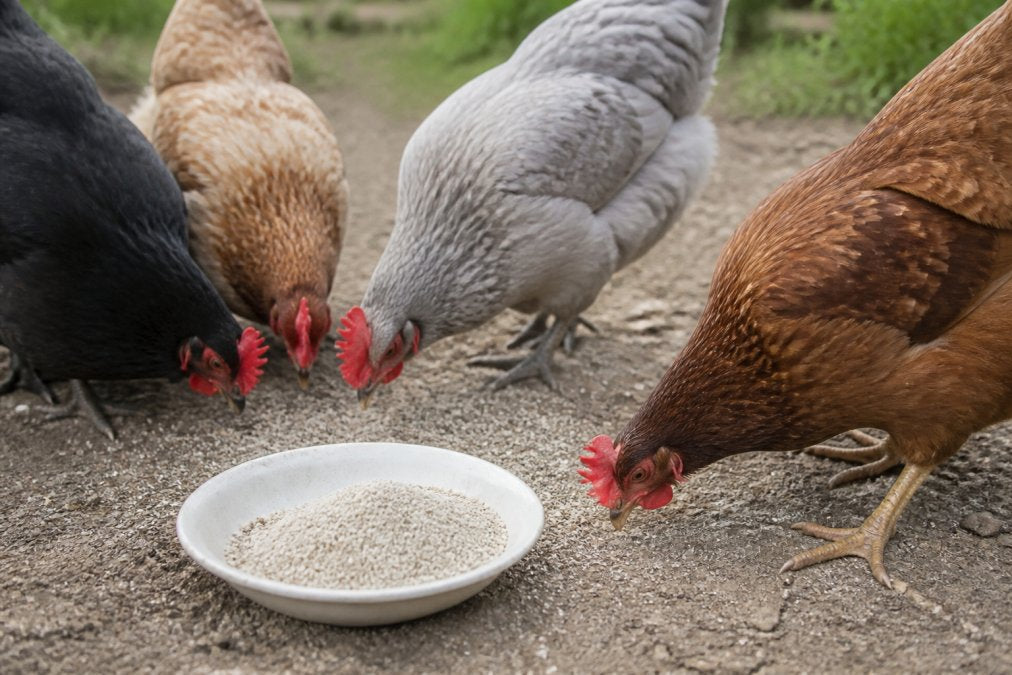
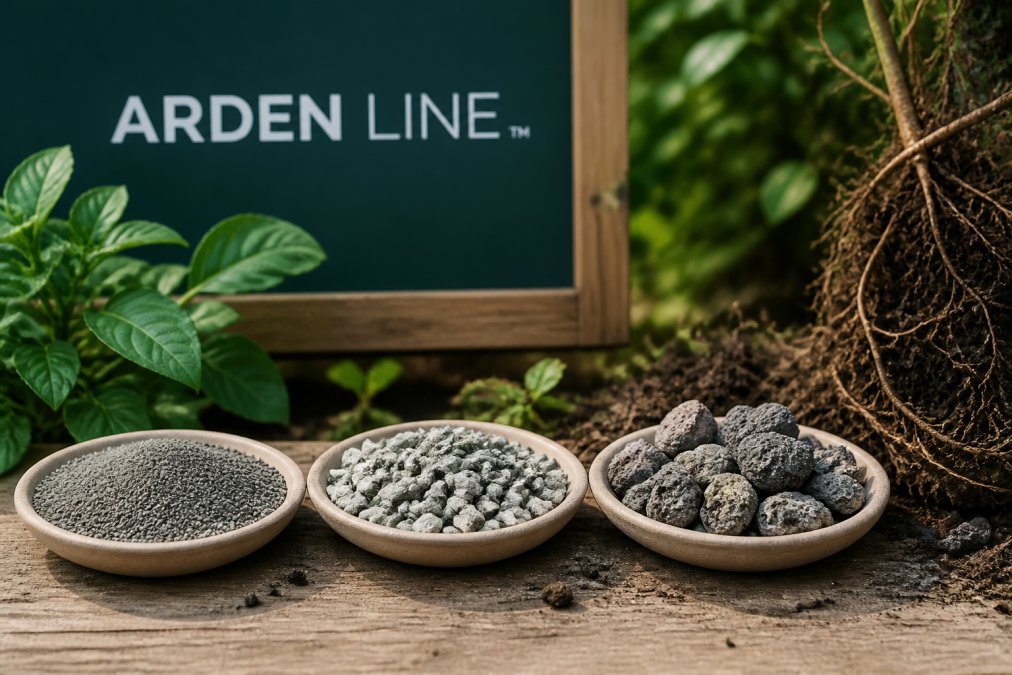
Zeolite is a naturally porous volcanic mineral that traps ammonia and moisture in its structure instead of masking odor. For backyard coops, the benefits of zeolite for chicken coops come down to three things: it holds moisture, captures ammonia at the source, and stays put where you spread it.
Unlike scented products that cover up smell, zeolite works by adsorption. Its cage-like structure pulls ammonia molecules and water into tiny pores and holds them, so ammonia never reaches the air your flock breathes. Lower airborne ammonia is easier on birds' lungs and eyes.
Arden Line's zeolite coop deodorizer is made from 100% pure volcanic zeolite and is OMRI Listed for use in organic production. It's chemical-free and fragrance-free, so there's nothing added that your birds or your garden soil don't need. Because the mineral is dense rather than fluffy, it tends to stay where you spread it, which keeps tracking through the house and garden to a minimum.

Zeolite also does double duty in the garden. Once spent bedding is composted, the mineral continues to improve soil drainage and aeration and holds nutrients near plant roots, useful in both slow-draining and compacted soils.
Matching Your Amendment to Climate, Coop Size, and Season
The right amendment depends less on brand and more on your conditions. A humid coastal coop and a dry high-desert coop have opposite problems, and the same bedding won't serve both. The three variables that matter most: regional climate, coop size and stocking density, and a year-round rotation calendar.
Climate: Match the Amendment to Your Region's Problem
Start with what your climate does to moisture. The two failure modes are opposite, and the fix for one worsens the other.
Humid regions (Southeast, Gulf Coast, Pacific Northwest): damp bedding is the enemy. Ammonia accelerates in warm, wet litter, and mold colonizes bedding that never fully dries. Prioritize high-absorbency materials like hemp hurd, add a mineral amendment that traps moisture and ammonia, and increase airflow at the top of the coop. Avoid sand and thick, undisturbed layers that stay wet at the bottom.
Arid regions (Southwest, high plains): dust moves to the front. Fine bedding and dry manure crumble into airborne particles that irritate respiratory tissue. Favor low-dust materials, avoid sawdust, and lightly damp the top layer during dry spells. Sand floors work here in a way they don't in humid regions.
Cold winters (Upper Midwest, Northeast, mountain West): bedding doubles as insulation, so a thicker layer holds warmth while managing moisture. The trap is sealing the coop to keep heat in, which traps ammonia and humidity. Ventilate above the birds' heads so warm, moist air escapes without drafting the flock.
Mild, wet winters (Mid-Atlantic, coastal California): persistent damp without hard freezes to dry things out. Rotate litter more often than in a dry climate, and lean on amendments that hold moisture rather than just absorb it at the surface.
Coop Size and Stocking Density
Coop size sets your application rate, and stocking density matters more than floor area alone. A small backyard coop with a handful of hens needs less volume but more frequent attention, because there's less air to dilute ammonia. Larger coops buffer better but need even coverage across a bigger floor.
A useful rule of thumb: the more birds per square foot, the faster ammonia builds and the more often you turn or top up bedding. Crowded coops benefit most from a mineral amendment because it does work airflow alone can't keep up with. For a small setup, a light regular sprinkle is usually enough. For a larger flock, apply evenly across the full floor rather than concentrating it under the roosts, since birds distribute droppings as they move.
Seasonal Rotation Strategies: A Year-Round Calendar
Rotating your approach by season prevents problems that build up when you use one method year-round. A full calendar is more useful than "best bedding for winter," because each season sets up the next.
- Late winter / early spring: Deep clean before laying season ramps up. Strip the coop, refresh the full bedding layer, and start compost piles with spent material so it finishes before fall garden use. Inspect for damp corners that went unnoticed in cold weather.
- Spring: Build the deep litter base with carbon-rich bedding. Add a mineral amendment at the recommended rate and begin weekly turning. Watch for the first warm-weather ammonia spike.
- Summer: Increase ventilation and turn litter more often, since heat speeds ammonia production and microbial activity. In humid regions, add fresh carbon material more frequently. In arid regions, manage dust and avoid over-drying litter until it crumbles.
- Early fall: Add fresh carbon material before the wet season arrives. This is the most important prep step for humid and mild-wet-winter regions, because a dry, well-built litter layer handles winter moisture far better than a thin one.
- Late fall / winter: Thicken the layer for insulation and reduce full cleanouts to preserve warmth. Keep turning litter, but less aggressively than in summer. Ventilate above the birds to release moisture and ammonia without chilling the flock.
- Year-round: Top up with thin layers of fresh carbon material every week or two rather than one thick dump. Frequent thin additions keep the surface dry and the pile aerated, which controls smell.
The goal isn't a rigid calendar. It's matching your amendment and bedding depth to what the season does to moisture and airflow inside the coop, letting each season's work set up the next.
Composting Spent Bedding: Garden Safety and Soil Benefits
Spent coop bedding is one of the best garden amendments you can make, provided you compost it properly first. Fresh manure is too hot for plants and can carry pathogens, but finished compost is safe, nutrient-rich, and improves soil structure.
The key is a genuine compost cycle. Pile the spent bedding with its carbon material, keep it as moist as a wrung-out sponge, and turn it so the center heats up. That heat breaks down pathogens and weed seeds. Once the pile cools and looks like dark, crumbly soil, it's ready to work into beds.
Mineral amendments fit neatly into this loop. Zeolite stays in the compost and continues improving drainage, aeration, and nutrient retention once it hits the soil, so the same material that managed coop odor helps your garden. Compostable bedding plus a soil-improving mineral turns a waste product into an asset.
EPA composting guidance is worth reading if you're new to managing manure and want to get the pile temperature and balance right.
Frequently Asked Questions
What is the best bedding to put in the bottom of a chicken coop?
The best coop bedding depends on your climate and maintenance habits. Pine shavings are the most popular choice because they are absorbent, affordable, and easy to find. Straw works well in colder regions but breaks down faster. Many keepers add a mineral amendment like zeolite on top of their bedding to trap ammonia and moisture before they become a problem. Arden Line's Chicken Coop Deodorizer is a chemical-free option that works with any bedding type.
How do coop bedding amendments help manage ammonia levels?
Ammonia builds up when chicken manure breaks down, especially in coops with poor ventilation or high moisture. Mineral-based amendments like zeolite have a porous structure that traps ammonia molecules and holds excess moisture, reducing the smell at the source rather than masking it. This matters for flock health because sustained ammonia exposure can irritate a chicken's respiratory tract. Applying a thin layer over your existing bedding is usually enough to see a difference within a day or two.
How often do you need to change the bedding in a chicken coop?
For a standard coop with 6 to 10 birds, plan to remove and replace bedding every two to four weeks. Deep litter setups can go six months or longer if you turn the litter regularly and add fresh carbon material. Using a mineral amendment between full changes extends the window by controlling moisture and odor. Check your coop weekly: if you smell ammonia at nose height, it is time to add amendment or do a partial change.
Can coop amendments improve the quality of my garden compost?
Yes, when you use a mineral-based amendment like zeolite, the spent bedding becomes a valuable compost input. Zeolite holds onto nitrogen from manure and releases it slowly into the soil, which reduces nutrient loss during composting. It also improves soil drainage and aeration in heavy clay. Avoid composting bedding treated with chemical deodorizers or non-biodegradable materials. Arden Line's zeolite is OMRI Listed and approved for organic production, so it is safe for garden use.
Keeping a coop fresh is less about finding one perfect material and more about managing moisture, airflow, and ammonia together. That's the work Arden Line was built for. Our zeolite coop deodorizer traps ammonia and moisture at the source, is chemical-free and fragrance-free, and is OMRI Listed for organic production, so it fits both your flock and your garden. When you're ready to make coop maintenance simpler, get started with Arden Line and give your birds a drier, cleaner space.

Leave a comment
This site is protected by hCaptcha and the hCaptcha Privacy Policy and Terms of Service apply.