
Table of Contents
- Why a Chicken Dust Bath Belongs in Every Coop
- 7 Natural Additives for a Backyard Chicken Dust Bath
- How to Build a DIY Dust Bath Enclosure
- How to Stop Chicken Coop Ammonia Smell
- Natural Mite Prevention for Chickens
- Managing Moisture in Backyard Chicken Coops
- Safety and Maintenance: What to Avoid in a Dust Bath
- Conclusion
- Frequently Asked Questions
Last Updated: October 1, 2026
Why a Chicken Dust Bath Belongs in Every Coop
A chicken dust bath is a shallow mix of dry, loose materials where hens roll and work dust through their feathers. It looks like play but is healthcare: hens use it to smother mites and lice, soak up excess oil, and keep feathers clean and insulating.
7 Natural Additives for a Backyard Chicken Dust Bath
The best dust bath blends a dry base with fine grit and pest-fighting minerals. Below are seven additives, what each does, and how to use it safely.
| Additive | Main Job | Best For |
|---|---|---|
| Food-grade diatomaceous earth | Cuts parasite shells | Mite and lice control |
| Volcanic zeolite | Traps ammonia and moisture | Odor and damp control |
| Wood ash and charcoal | Dries and deodorizes | Odor, moisture |
| Construction or play sand | Base structure | Drainage, bulk |
| Peat moss and topsoil | Softens, adds volume | Digging comfort |
| Dried herbs | Repels pests, smells clean | Natural pest control |
| Wood shavings | Loosens, adds texture | Fluffiness |
1. Food-Grade Diatomaceous Earth
Food-grade diatomaceous earth is a fine powder made from fossilized algae. Its sharp edges scratch the waxy shell of mites and lice, drying them out. Use only food-grade, pool-grade DE is heat-treated and unsafe for birds. Wear a mask and keep the dust light; heavy clouds irritate chicken lungs.
- Apply a thin layer over the base
- Reapply after rain or heavy use
- Store in a sealed, dry container
2. Volcanic Zeolite
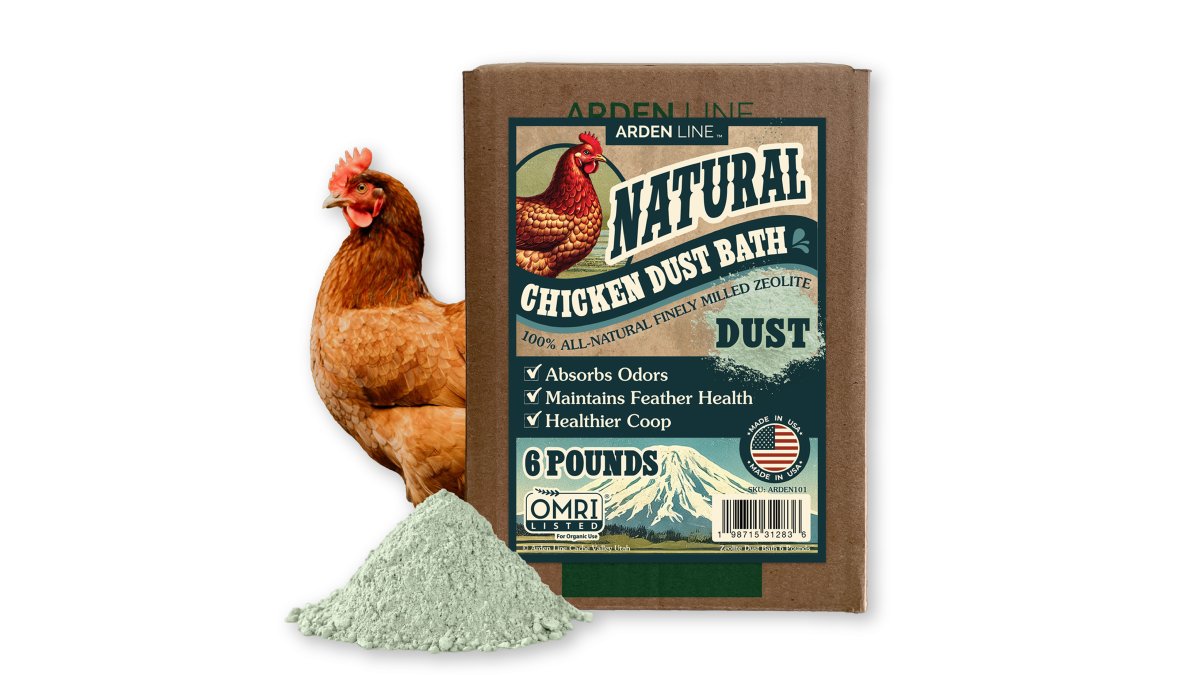
Volcanic zeolite is a porous mineral that traps ammonia, moisture, and odor. Its cage-like structure holds molecules so they don't escape into the air. This is where [Arden Line's Chicken Dust Bath](https://ardenline.com/products/chicken-dust-bath) fits: 100% natural, finely milled zeolite in plastic-free kraft packaging, made in the USA, and a safer alternative to pumice for feather care and natural pest control.

- Traps ammonia before it smells
- Absorbs moisture that feeds mites
- Safe for chicks once feathered
3. Wood Ash and Charcoal
Wood ash dries out damp feathers and adds fine grit. Charcoal absorbs odor and moisture. Together they make a cheap, effective base.
- Sieve ash to remove sharp chunks
- Mix one part ash to four parts sand
- Skip ash if your flock has open wounds
4. Construction Sand or Play Sand
Sand is the backbone of most dust baths. It drains fast and gives hens something to fluff through. Go with construction sand or play sand, and avoid fine builder's sand that clumps when wet, it turns to concrete and traps moisture.
- Play sand is clean and screened
- Construction sand is coarser and cheaper
- Never use silica-heavy fine dust without a mask
5. Peat Moss and Topsoil
Peat moss softens the mix and holds light moisture without turning soggy; topsoil adds bulk and a natural scent hens like. Keep peat to a small share, too much holds damp and can grow mold. Look for peat alternatives or use it sparingly.
- One part peat to five parts sand
- Break up clumps before mixing
- Replace if it smells musty
6. Dried Herbs: Lavender, Mint, and Rosemary
Dried herbs add scent and mild pest-repelling power. Lavender, mint, and rosemary are the classic trio.
- Lavender calms and scents
- Mint repels insects
- Rosemary adds a clean, woodsy note
7. Wood Shavings
Wood shavings loosen a packed mix and add texture. They keep the bath airy so hens can dig easily.
- Adds fluff and airflow
- Stir in to prevent clumping
- Replace when broken down
How to Build a DIY Dust Bath Enclosure
Build a dust bath in about 15 minutes with a shallow box, a dry base, and a covered spot. The container just needs low sides and good drainage.
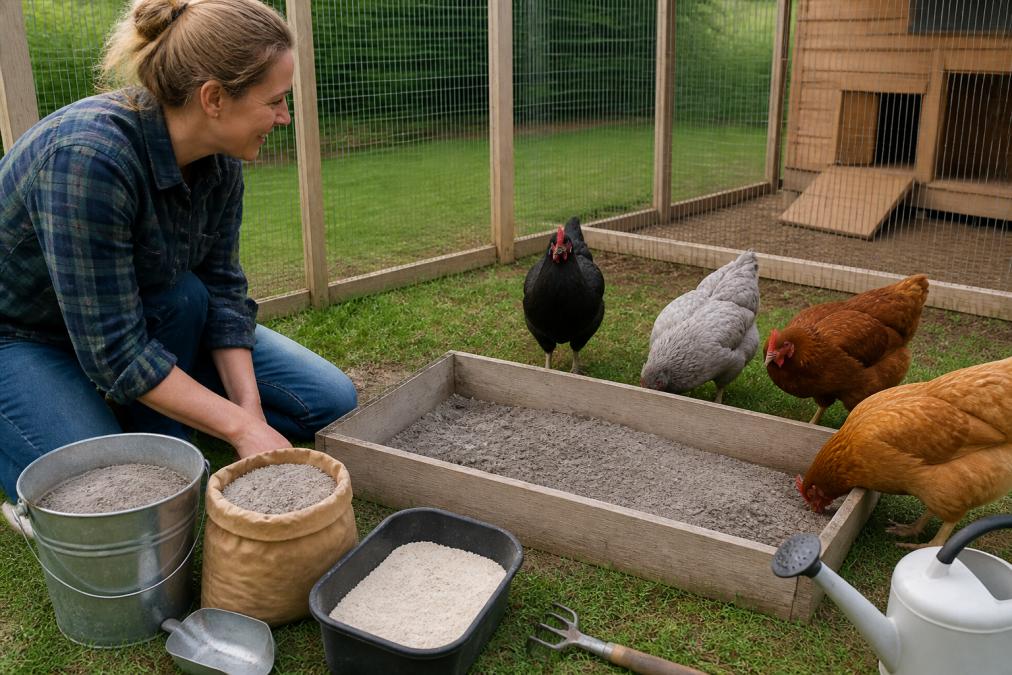
What you'll need:
- A shallow box, tire, or kiddie pool
- Construction or play sand
- One or two additives from the list above
Steps:
- Pick a dry, sheltered spot near the coop
- Add a 3-4 inch layer of sand as the base
- Mix in your chosen additives
- Stir until loose and even
- Let the hens inspect it
How to Stop Chicken Coop Ammonia Smell
- Increase airflow without creating drafts
- Remove wet bedding often
- Add an ammonia-trapping mineral to the floor or bath
- Keep waterers from spilling
Natural Mite Prevention for Chickens
Mite prevention starts with dry feathers and a working dust bath. Mites and lice thrive in damp, dirty conditions, so moisture control is pest control.
- Keep the bath dry and topped up
- Add food-grade DE and zeolite
- Treat the coop, not just the birds
- Quarantine new birds before they join the flock
Managing Moisture in Backyard Chicken Coops
Moisture is the root cause behind most coop problems: damp bedding grows mold, feeds mites, and drives ammonia. It comes from four distinct sources, each needing a different fix, treating them all the same way is why so many coops stay damp no matter how much bedding gets added.
The four moisture sources
- Respiration and droppings. Ten hens release a surprising amount of water vapor just by breathing and excreting. This baseline load is unavoidable, the only fix is ventilation.
- Spilled water. A single leaky waterer can raise coop humidity more than the birds do.
- Groundwater and runoff. A coop in a low spot, or with a muddy run, wicks water up through the floor and walls.
- The dust bath itself. A saturated bath is a moisture reservoir inside the coop; if it never dries, it keeps the whole space humid.
Fix them in that order. Ventilation first, then waterers, then drainage, then the bath.
Ventilation without drafts
The goal is air exchange at the top of the coop, not a breeze across the birds. High vents, ridge openings, and soffit gaps let warm, moist air escape while the birds sit below the airflow. A common target is about one square foot of vent opening per ten square feet of floor, split between high and low vents.
- Keep vents screened against wild birds and rodents
- Do not block vents with bedding or stored feed
- Check that air moves on still days, not just windy ones
Waterer management
- Raise nipple waterers so cups sit at back height, not floor level
- Set waterers on a drip tray or gravel so spills drain away
- Fix leaks immediately, a slow drip is a constant humidity source
- In freezing weather, use a heated waterer rather than an open pan that splashes
Drainage and site
- Raise the coop on blocks or a gravel pad so the floor sits above grade
- Grade the run so water flows away from the coop
- Add coarse wood chips or gravel to muddy high-traffic areas
- Keep gutters or a roof overhang so rain does not run down the walls
Absorbent minerals as a second line
Once ventilation and drainage are handled, absorbent minerals catch what is left. Volcanic zeolite is the workhorse, its cage-like structure traps ammonia molecules and holds moisture so it does not escape into the air. A thin layer under the bedding or mixed into the dust bath base makes a measurable difference in smell and surface dampness.
- Zeolite under bedding: traps ammonia at the source
- Zeolite in the dust bath: keeps the mix dry and free-flowing
- Refresh when the mineral is saturated, it does not release what it has captured
The dust bath as a moisture variable
A dust bath is part of coop moisture management: a wet bath is a humidity source, a dry one a humidity sink. Adjust by climate:
- Humid climates: use more sand and zeolite, less peat and ash. Cover the bath or bring it under the coop roof, and stir after every rain to break the crust.
- Arid climates: use more peat and ash without clumping, but mist the surface lightly to keep dust down and top up more often.
- Freezing climates: keep the bath under cover, or use a shallow tray you can bring inside the run on the coldest days. Frozen, clumped sand is useless to the birds.
A simple moisture check
Once a week, press your hand into the bedding and the dust bath. If either feels damp or clumps in your fist, moisture is winning. Fix the source before adding more absorbent material, otherwise you are just buying time.
Safety and Maintenance: What to Avoid in a Dust Bath
Most dust bath guides hand you a shopping list and stop there. The additives themselves are rarely the problem, the dose, the particle size, and the bird's underlying health are. Here is what to leave out, why it matters, and how to keep the bath working instead of turning into a hazard.
Respiratory risk is the real safety issue
Chickens have a highly efficient but unforgiving respiratory system. Their air sacs extend into the bones, so fine particles a mammal would cough out can lodge deep and stay there. Any additive that throws a visible cloud when poured is a candidate for trouble.
- Diatomaceous earth: food-grade DE is amorphous silica, far less fibrogenic than the crystalline form in pool-grade DE, but still a mechanical irritant. Add it low and slow, mix it into the base rather than dusting it on top, and wear an N95 or P100 respirator.
- Fine sand and silica dust: play and construction sand are screened to remove the respirable fraction, but sweeping or dumping a dry bath can still loft particles. Mist the surface before stirring, or mix additives in a bucket outside the coop.
- Wood ash: sifted hardwood ash is fine grit, but unsifted ash contains sharp char fragments and can be caustic when wet. Sieve through a 1/4-inch screen and never use ash from pressure-treated, painted, stained, or composite wood, those carry copper, arsenic, or chromium residues toxic on contact and ingestion.
- Charcoal: use plain hardwood charcoal, not briquettes, which are bound with coal dust, sodium borate, and sometimes lighter-fluid residue.
Breed and health contraindications
Not every bird should get the same bath:
- Silkies, frizzles, and other feather-footed or soft-feather breeds have less protective feather structure and can pick up grit in their foot feathers. Keep their mix finer and skip sharp ash.
- Birds with open wounds, vent gleet, or active respiratory infection should be pulled from the shared bath until healed. A communal bath is a fomite, it moves mites, bacteria, and fungal spores between birds faster than almost anything else in the coop.
- Chicks under about six weeks are still building feather coverage and tolerate dust poorly. Give them a shallow tray of dry sand only, and add minerals once fully feathered.
- Molting hens have exposed pin feathers and sensitive skin. A plain sand bath is kinder than a mineral-heavy mix during a hard molt.
Sourcing without the waste
You do not need to buy everything. Free or low-waste sources that work:
- Wood ash: from a clean fireplace or wood stove burning untreated hardwood. Let it cool completely and sieve it.
- Sand: leftover play sand from a sandbox, or all-purpose construction sand from a home improvement store.
- Topsoil: from a yard area you know has not been sprayed or treated with herbicides.
- Herbs: stems and leaves left over after drying your own lavender, mint, or rosemary.
Maintenance routine
A dust bath is a living system, it collects moisture, droppings, and feather dander. Keep it working with a simple cadence:
- Weekly: stir to break up clumps and bring dry material to the surface. Check birds for mites at the same time.
- After rain: dump standing water, break up the crust, and top up with dry sand. If the whole bath is saturated, replace it, do not just add more on top.
- Monthly: sift out feathers, droppings, and large debris. Refresh the additive layer.
- Every few months, or when it smells sour: replace the entire mix. A sour smell means anaerobic bacteria and mold are already established.
Climate adjustments
One mix does not fit every yard. In humid regions, lean heavier on sand and zeolite and lighter on peat and ash, which hold moisture. In arid regions, use more ash and peat without worrying about clumping, but mist lightly to keep dust down.
Conclusion
Keeping a dust bath dry, stocked, and safe takes a little routine, but it pays off in calmer birds and fewer pests. The hard part is moisture: damp bedding and wet sand undo everything else you do.
Frequently Asked Questions
What is the best thing to put in a chicken dust bath?
A good chicken dust bath mixes a dry base with additives that support skin and feather health. Start with construction sand or play sand for structure, then add food-grade diatomaceous earth or zeolite for moisture and pest control. Wood ash, peat moss, and dried herbs like lavender or rosemary are optional additions. Avoid clumping cat litter and any ingredient that stays damp, since moisture encourages mold and parasites rather than preventing them.
Can I put diatomaceous earth in a chicken dust bath?
Yes, food-grade diatomaceous earth is a common additive and is safe for chickens to dust in. Use only food-grade DE, never the pool-grade version, which is heat-treated and carries respiratory risks. Wear a mask when adding it, since the fine powder irritates human lungs too. Mix it into sand or topsoil rather than pouring it in as a standalone layer, and reapply after rain or heavy use.
How often should chickens dust bathe?
Most chickens dust bathe daily or every few days, often in the warmest part of the afternoon. The behavior is instinctive and supports preening, feather maintenance, and natural pest control. You do not need to schedule it, but you do need to keep the bath dry and topped up. If your flock stops using the bath, check for clumping, moisture, or a buildup of droppings, then refresh the material.
Are there any ingredients to avoid in a chicken dust bath?
Skip clumping cat litter, which expands and can cause crop or digestive issues if ingested. Avoid pool-grade diatomaceous earth, chemically treated wood ash from pressure-treated lumber, and any sand that stays wet. Do not add scented or synthetic products, and never use insecticide dusts in a bath your birds breathe in daily. Fresh, dry, food-safe ingredients are the standard to aim for.


Leave a comment
This site is protected by hCaptcha and the hCaptcha Privacy Policy and Terms of Service apply.