
Table of Contents
- Why Your Chicken Coop Smells Like Ammonia
- Signs of Ammonia Toxicity in Chickens
- Chicken Coop Ventilation Tips That Prevent Gas Buildup
- Best Coop Bedding for Odor Control and Moisture
- Use Zeolite for Chicken Coop Odor at the Source
- Daily and Weekly Maintenance Routine
- Conclusion
- Frequently Asked Questions
Last Updated: September 6, 2026
Why Your Chicken Coop Smells Like Ammonia
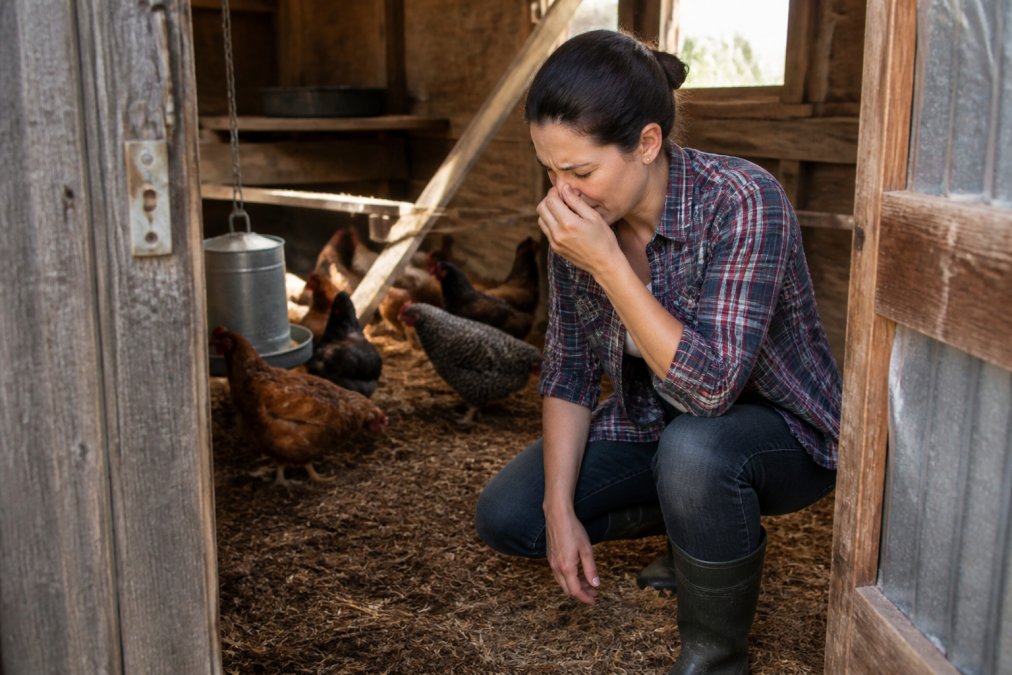
That sharp, burning smell in your coop is a sign of ammonia gas, a byproduct of waste decomposition that forms when uric acid in droppings breaks down in warm, moist conditions. You're not fighting odor alone; you're managing a chemical process tied to moisture and airflow. The gas is heavier than air, so it settles low near the litter where your birds spend most of their time.
The key drivers are simple: fecal matter mixed with high humidity creates the perfect environment for bacteria to release ammonia gas. When bedding stays wet or the coop lacks proper ventilation, those toxic fumes accumulate rapidly. This guide walks through proven fixes, from ventilation and bedding choices to a mineral additive that neutralizes the gas at its source.
Signs of Ammonia Toxicity in Chickens
Ammonia toxicity is a serious respiratory health threat, and chickens are far more sensitive to it than humans. If you can smell ammonia, the concentration is already high enough to damage your flock's airways (the CDC). Here's what the gas does at different concentrations.
Understanding Ammonia Levels in Parts Per Million
Ammonia concentration in the air is measured in parts per million (ppm). Most backyard keepers never measure this, which is why problems go unnoticed until birds show visible distress. Here's what research and poultry extension guidance indicate about exposure levels:
- Under 10 ppm: Generally considered safe for continuous exposure. You likely won't smell it at this level.
- 10-25 ppm: You may notice a faint odor when entering the coop. Birds may experience mild eye irritation after prolonged exposure, but symptoms are easy to miss.
- 25-50 ppm: The smell becomes obvious. At this range, chickens begin showing measurable signs of distress, watery eyes, sneezing, and increased respiratory effort (uky.edu). The University of Kentucky poultry extension guidance notes that prolonged exposure at this level predisposes birds to respiratory infections.
- Above 50 ppm: This is the danger zone. Growth rates slow, feed conversion drops, and birds become susceptible to secondary infections like infectious bronchitis. In severe cases, corneal damage and respiratory failure can occur.
Ammonia levels often spike overnight when the coop is closed up and birds are roosting. By morning, the concentration can easily exceed 50 ppm in a poorly ventilated coop, even if it seems fine when you open the door mid-day.
How to Test Coop Air Quality Yourself
You don't need expensive lab equipment. Handheld ammonia detectors, the same devices used by HVAC technicians and poultry farmers, are available for roughly $20 to $40 at hardware stores or online. Look for a unit that reads in the 0-100 ppm range with a resolution of at least 1 ppm.
To get an accurate reading:
- Close the coop up as you normally would at night.
- Wait at least 8 hours, or test first thing in the morning before opening any vents.
- Hold the detector at bird head height, about 12 to 18 inches above the litter, since ammonia is heavier than air and settles low.
- Wait 60 seconds for the sensor to stabilize, then record the reading.
If your detector reads above 25 ppm, you have a ventilation or moisture problem that needs immediate attention. If it reads above 50 ppm, remove the birds temporarily, open all vents, and strip out wet litter before making any other changes.
What Toxicity Looks Like in Practice
Chickens breathe faster than mammals, so they inhale more contaminated air relative to their size. Common signs of toxicity include watery or swollen eyes, sneezing, wheezing, reduced appetite, and a drop in egg production. In severe cases, birds may develop respiratory distress or refuse to enter the coop entirely.
A quick test is to kneel at bird level; if your eyes water or your nose burns after a few seconds, the air quality is dangerous. Address the problem immediately by opening vents and removing wet litter. For a long-term solution, add an ammonia detector to your toolkit and check levels weekly, especially during seasonal transitions.
Chicken Coop Ventilation Tips That Prevent Gas Buildup
Ventilation is the single most effective tool for stopping ammonia accumulation. The goal isn't to create a draft that chills your birds, but to establish continuous air circulation that removes moist, ammonia-laden air and replaces it with fresh air. Have openings near the roofline so warm, humid air escapes while cooler, drier air enters lower down.
For most backyard coops, aim for at least one square foot of ventilation opening per chicken, distributed across opposite walls to encourage cross-flow. Ridge vents, gable vents, and windows that open from the top all work well. A common mistake is sealing the coop tight during winter; this traps moisture and makes ammonia far worse. Keep ventilation open year-round, chickens tolerate cold far better than poor air quality.
Best Coop Bedding for Odor Control and Moisture
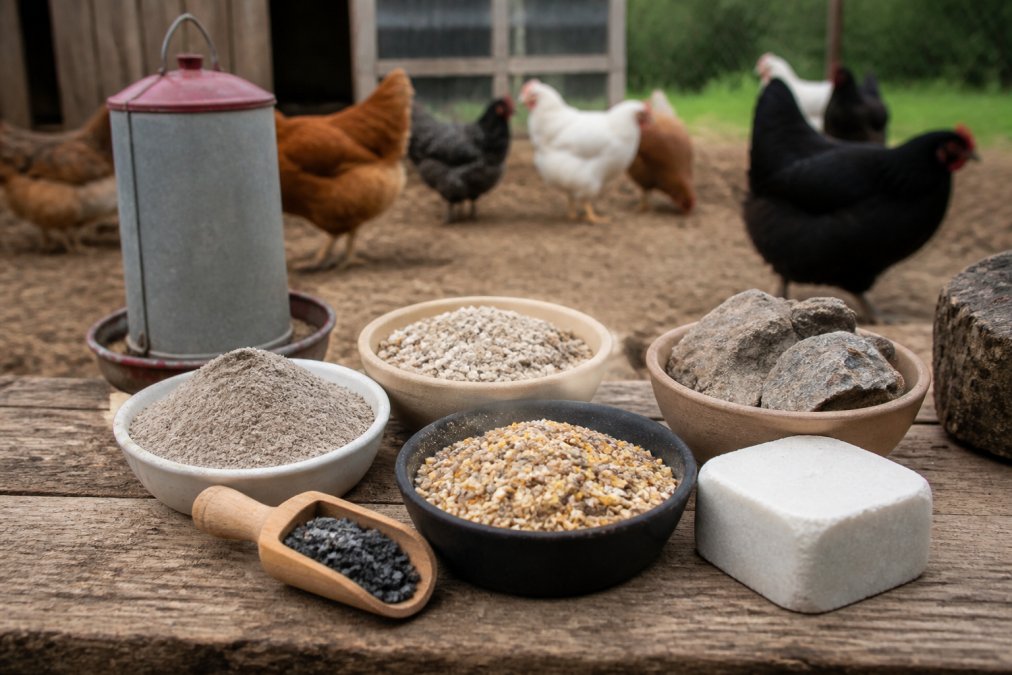
Choosing the right bedding is your first line of defense against ammonia. The best bedding excels at absorbing moisture while staying loose enough to allow aeration. Pine shavings are the industry standard because they are highly absorbent, inexpensive, and break down well in compost. Avoid cedar shavings, as the aromatic oils can irritate a chicken's respiratory system.
Other absorbent materials include hemp bedding, which is highly absorbent and dust-free, and straw, though straw holds less moisture and needs more frequent changes. The key is depth: apply at least 4 to 6 inches to create a cushion that absorbs droppings before they reach the floor. Dry bedding naturally suppresses the bacteria that produce ammonia. If you use the deep litter method, turn the litter regularly to keep the pile aerobic rather than anaerobic.
Use Zeolite for Chicken Coop Odor at the Source
Fans and fresh bedding handle moisture, but to truly stop coop ammonia smell, you need to neutralize the gas itself. Zeolite is a naturally occurring volcanic mineral with a porous, honeycomb structure that physically traps ammonia molecules and moisture. Unlike masking agents or essential oils, zeolite locks the ammonia inside its structure, preventing it from releasing into the air your birds breathe.
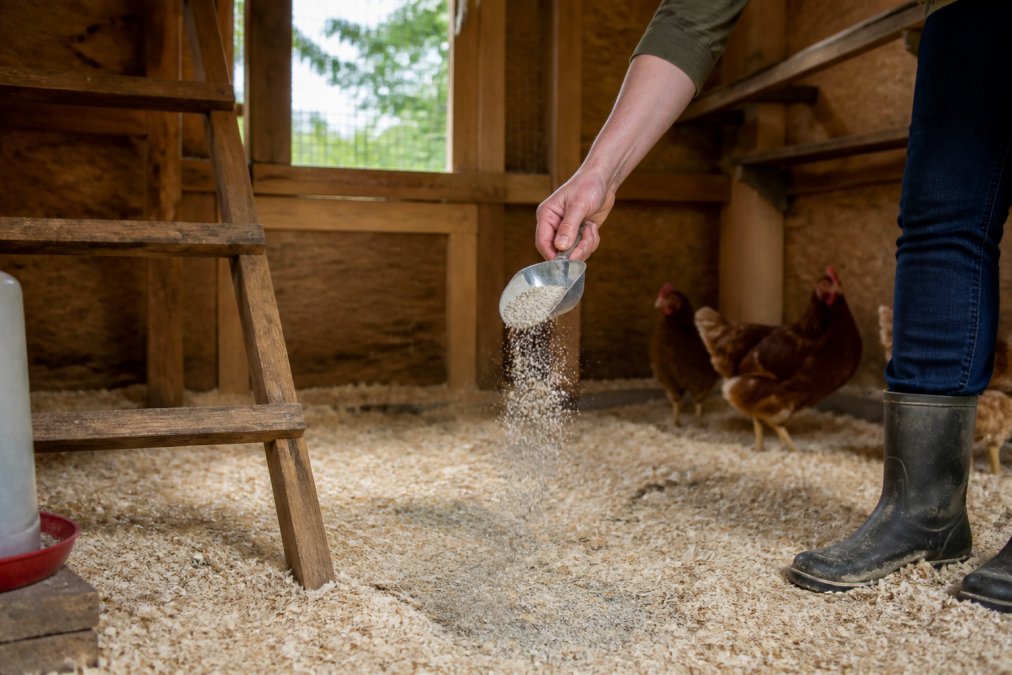
Our top pick is the Arden Line Chicken Coop Deodorizer because it is made from 100% pure zeolite with no chemicals or artificial fragrances. It is OMRI Listed, approved for use in organic production, and comes in plastic-free kraft packaging. For a standard 4-foot by 6-foot coop, sprinkle about one pound of zeolite evenly over the bedding every one to two weeks, working it lightly into the top layer with a rake.

The mineral also provides natural pest control and supports clean, healthy feathers. For birds that like to dust bathe, the Arden Line Chicken Dust Bath offers the same finely milled zeolite in a format that helps control mites and lice while keeping feathers conditioned.

Daily and Weekly Maintenance Routine
A consistent maintenance routine prevents ammonia from ever becoming a problem. Two factors, how your waterer is designed and what you do with the litter you remove, separate keepers who constantly fight ammonia from those who rarely think about it.
Waterer Design: The Overlooked Moisture Source
Waterer design matters more than most keepers realize. A poorly designed waterer that leaks or allows spillage adds significant moisture to the litter, the single biggest driver of ammonia production. Here's how different waterer types compare:
- Open trough or pan waterers: These are the worst offenders. Chickens drink by scooping water and tipping their heads back, which means water drips off their beaks with every sip. A flock of six birds can spill several cups of water per day from an open pan. Additionally, birds will sometimes step into shallow pans, tracking water and droppings back into the bedding.
- Cup waterers: These attach to a water line and fill a small cup only when the bird pecks at a trigger. They reduce spillage significantly compared to open pans, but cups can still overflow if a bird holds the trigger down.
- Nipple waterers: These are the gold standard for moisture control. The bird pecks at a stainless steel pin, which releases a single drop of water directly into its mouth. Spillage is nearly zero. A study pattern among commercial poultry operations is near-universal use of nipple systems for this exact reason, moisture control is the foundation of ammonia management.
If you're using an open trough waterer and struggling with ammonia, switching to a nipple system is the single highest-impact change you can make. A basic 5-nipple kit for a PVC pipe setup costs around $15 to $25 and can be installed in an afternoon. If you must use an open pan, place it on a wire stand or perforated platform so spilled water drains away from the bedding.
Composting Ammonia-Heavy Litter Without Burning Your Garden
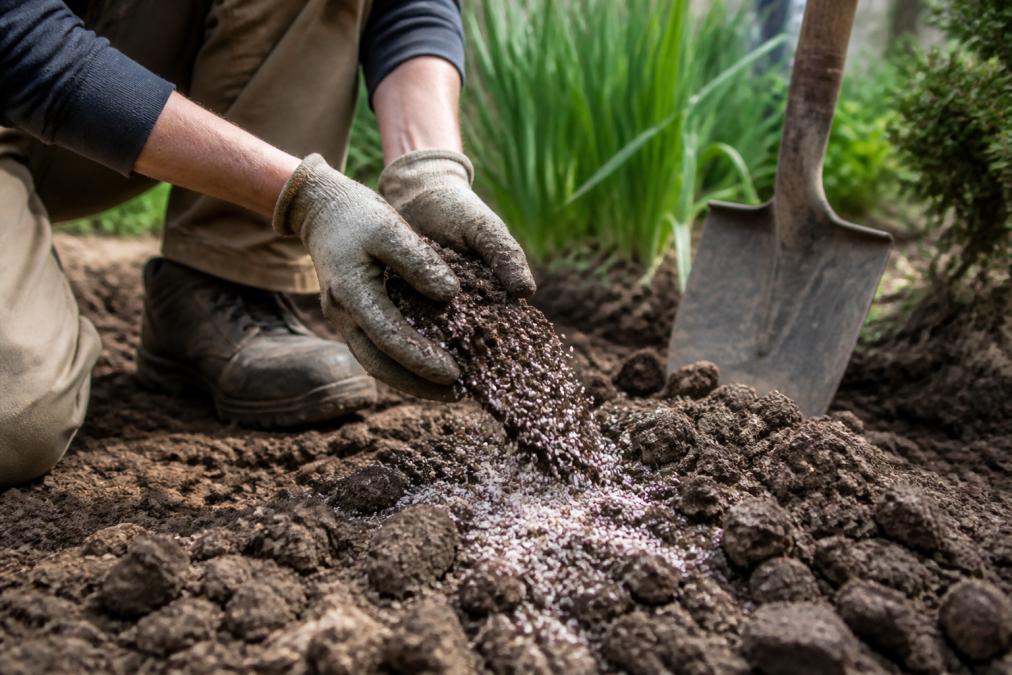
Monthly, you'll remove all bedding and start fresh. What you do with that ammonia-laden litter matters, both for your garden and for your neighbors. Fresh chicken litter is extremely high in nitrogen, and applying it directly to growing plants will burn roots and release a powerful odor as it breaks down.
To compost it safely:
- Mix with carbon-rich material immediately. For every 1 part fresh litter, add 2 to 3 parts of brown material, dry leaves, straw, shredded cardboard, or wood shavings. This balances the carbon-to-nitrogen ratio and prevents the pile from going anaerobic.
- Turn the pile weekly. Aeration keeps the bacteria aerobic, which produces far less odor than anaerobic decomposition. If the pile smells like ammonia when you turn it, add more brown material.
- Let it cure for 3 to 6 months. The pile will heat up to 130-150°F in the first few weeks, which kills pathogens and weed seeds. After the pile cools and no longer smells like ammonia, it's safe to use as a soil amendment.
- Locate the pile away from your coop and neighbors. Place it at least 50 feet from the coop and any property line to avoid odor complaints. If odor becomes an issue, cover the pile with a tarp or a 2-inch layer of finished compost to trap the smell.
The Routine That Works
Daily, take two minutes to check for wet spots under waterers and remove visible droppings from roosts and nesting boxes. Weekly, stir the bedding thoroughly to aerate it and break up clumps, essential for a deep litter system. Every two weeks, add a fresh layer of zeolite. Monthly, remove all bedding, scrub the coop floor and walls with a vinegar-water solution, and allow it to dry completely before adding fresh bedding.
| Task | Frequency | Time Needed | Primary Benefit |
|---|---|---|---|
| Check for wet spots and spills | Daily | 2 minutes | Prevents moisture buildup |
| Stir and aerate bedding | Weekly | 10 minutes | Keeps bacteria aerobic |
| Apply fresh zeolite layer | Every 1-2 weeks | 5 minutes | Traps ammonia at the source |
| Full coop cleanout | Monthly | 1-2 hours | Resets the litter system |
By pairing the right waterer with a proper composting routine, you close the two loops that most backyard keepers leave open, moisture entering the system and nitrogen leaving it.
Conclusion
Managing ammonia in your chicken coop comes down to a simple equation: remove moisture, provide airflow, and neutralize the gas before it reaches your birds. Ventilation and absorbent bedding handle the bulk of the work, while zeolite closes the gap by locking ammonia into the mineral structure. Ignoring the smell directly compromises the respiratory health of your flock.
At Arden Line, we built our zeolite products to give backyard keepers a chemical-free way to manage moisture, odor, and soil health. Whether you are refreshing a small urban coop or managing a larger hobby flock, the Chicken Coop Deodorizer offers a simple, OMRI-listed solution that keeps your birds healthy and your coop fresh. Get started with Arden Line and give your flock the clean, ammonia-free environment they deserve.
Frequently Asked Questions
What cancels out the smell of ammonia in a chicken coop?
You cannot just mask ammonia; you must absorb it. Zeolite is a volcanic mineral that traps ammonia gas and moisture inside its porous structure. Sprinkling zeolite on the bedding and droppings board neutralizes the smell at the source rather than covering it with fragrance. It keeps working for weeks and also dries the litter, which slows the bacterial breakdown that creates ammonia in the first place.
Will the smell of ammonia hurt my chickens?
Yes. Ammonia gas is heavier than air and sits close to the floor where chickens breathe. Levels as low as 25 ppm can cause respiratory distress, watery eyes, and reduced appetite. Chronic exposure damages the lining of their airways, making them more prone to illness. If your eyes water when you enter the coop, the air is already unsafe for your flock. Immediate action with ventilation and odor control is required.
How often should I clean my coop to prevent ammonia buildup?
Daily spot cleaning is the minimum for a healthy coop. Remove wet spots and droppings under roosts every morning. A full bedding change depends on your method: with the deep litter method, you add fresh bedding and turn it weekly, replacing everything every few months. With thin bedding, change it completely every 2 to 4 weeks. The key is moisture control. If bedding feels damp or clumps, you are not cleaning often enough for your flock size.
Does moisture contribute to ammonia smell in coops?
Moisture is the primary trigger. Ammonia forms when bacteria break down uric acid in droppings, and this process requires water. A single hen produces about a cup of moisture per day through droppings and respiration. Spilled water from open troughs adds more. High humidity prevents bedding from drying out, accelerating waste decomposition. Managing moisture through ventilation, absorbent bedding, and waterer design is the most direct way to stop ammonia before it starts.

Leave a comment
This site is protected by hCaptcha and the hCaptcha Privacy Policy and Terms of Service apply.