

Table of Contents
- Why Bedding Matters for Respiratory Health in Chickens
- Managing Ammonia Levels in Chicken Coops
- Signs of Respiratory Distress in Chickens
- Five Natural Bedding Materials for Respiratory Health
- How to Prevent Respiratory Illness in Backyard Flocks
- Deep Litter Method vs. Frequent Cleaning
- Frequently Asked Questions
Last Updated: October 2, 2026
Why Bedding Matters for Respiratory Health in Chickens
Poor bedding compromises respiratory health in chickens, making natural bedding respiratory chickens a critical consideration for flock wellness.
Birds have air sacs extending throughout their bodies, making them highly sensitive to airborne irritants.
Respiratory problems can decline sharply when keepers switch to better bedding and management. The difference comes down to moisture control, ammonia absorption, and air quality.
This guide covers five natural bedding materials chosen for respiratory health support, plus management practices to maximize their effectiveness.
Managing Ammonia Levels in Chicken Coops
Ammonia forms when urine and feces break down in bedding that doesn't absorb moisture. Birds exposed to high ammonia develop inflamed air sacs, increased infection susceptibility, and chronic respiratory distress.
A small coop with eight chickens can reach dangerous ammonia levels within days if bedding isn't absorbing moisture.
Effective ammonia management requires bedding that traps ammonia gas and ventilation that removes it. Many keepers focus only on ventilation and neglect bedding quality.
Zeolite physically adsorbs ammonia molecules into its porous structure, removing them from the air and keeping bedding dry. Arden Line's Chicken Coop Deodorizer uses 100% natural volcanic zeolite to trap ammonia and excess moisture between cleanings.

Signs of Respiratory Distress in Chickens
Recognizing early respiratory problems saves lives. A bird with mild respiratory irritation might be quieter than usual or spend more time resting.
Watch for these indicators that your flock is struggling:
- Labored breathing or tail bobbing, The bird's tail moves with each breath, signaling effort
- Wheezing, rattling, or crackling sounds, Audible respiratory noise when the bird breathes
- Nasal discharge or swollen sinuses, Discharge around nostrils or puffed-up face
- Lethargy and reduced appetite, The bird isolates and eats less than usual
- Ruffled feathers held close to the body, A sign of illness or discomfort
Early detection improves recovery chances. Birds in early stages respond quickly to improved bedding, ventilation, and reduced ammonia. Advanced illness requires veterinary care.
Five Natural Bedding Materials for Respiratory Health
The best natural bedding respiratory chickens absorbs moisture aggressively, traps ammonia effectively, and produces minimal dust. Not all natural bedding performs equally.
Each material is rated across four respiratory-critical dimensions: dust production, ammonia absorption, mold resistance, and moisture wicking.
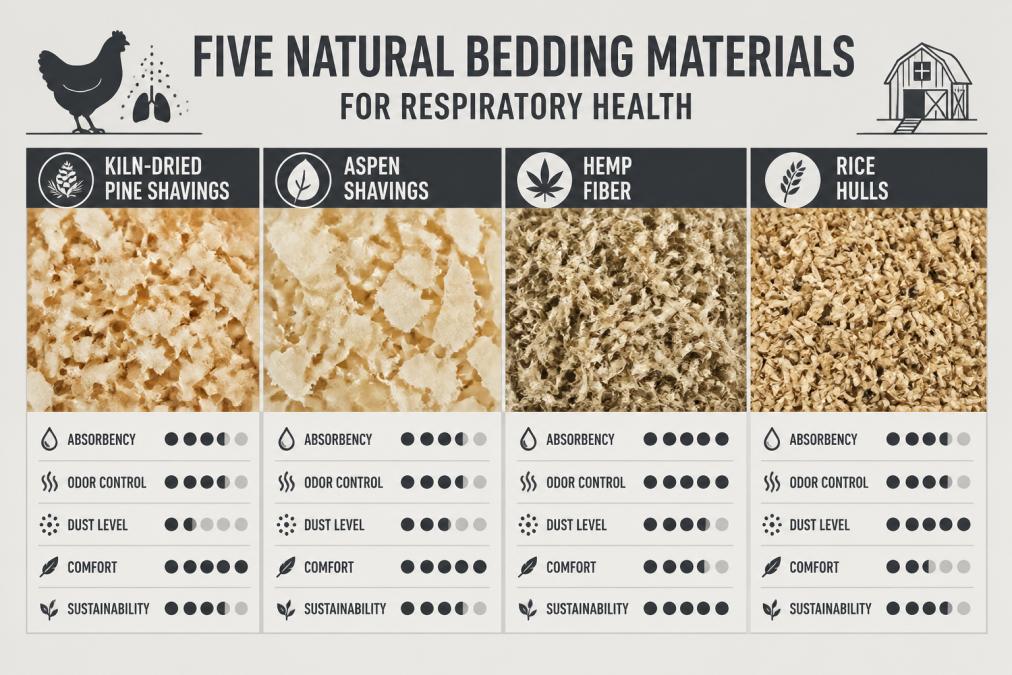
Kiln-Dried Pine Shavings
Respiratory Safety Rating: Excellent | Dust: Very Low | Ammonia Absorption: High | Mold Resistance: Good | Moisture Wicking: Excellent
Kiln-dried pine shavings are the gold standard for respiratory health.
Kiln-dried versions eliminate phenol irritation. The light, fluffy shavings stay distributed across the coop floor rather than compacting into wet clumps.
Storage and mold prevention: Store kiln-dried pine in a dry location with good air circulation, on pallets rather than concrete floors.
Check bags for explicit "kiln-dried" labeling; if absent, assume it's fresh pine and avoid it.
Aspen Shavings
Respiratory Safety Rating: Good | Dust: Very Low | Ammonia Absorption: Moderate-High | Mold Resistance: Good | Moisture Wicking: Good
Aspen shavings offer a solid alternative with lower phenol levels than pine.
Aspen absorbs moisture well, produces minimal dust, and breaks down slowly, extending time between bedding changes.
Storage and mold prevention: Store aspen in a dry, well-ventilated space and inspect bags for mold or musty odor before use.
Aspen is harder to source than pine, but offers excellent respiratory health support where available.
Hemp Bedding
Respiratory Safety Rating: Excellent | Dust: Virtually None | Ammonia Absorption: Very High | Mold Resistance: Excellent | Moisture Wicking: Excellent
Hemp fiber is highly absorbent, naturally antimicrobial, produces virtually no dust, and resists compacting to maintain airflow.
Hemp's natural antimicrobial properties inhibit bacterial and fungal growth, resisting mold better than most alternatives. It's also biodegradable and compostable.
Hemp is less widely available, but keepers report fewer respiratory issues and longer intervals between cleanings.
Rice Hulls
Respiratory Safety Rating: Very Good | Dust: Minimal | Ammonia Absorption: High | Mold Resistance: Moderate | Moisture Wicking: Excellent
Rice hulls are naturally hard, don't compact, maintain excellent airflow, absorb moisture effectively, and produce almost no dust.
Rice hulls are lightweight, compost quickly, and are often the most affordable quality bedding option.
Storage and mold prevention: Rice hulls are more mold-prone in humid environments.
Rice hulls break down faster than other materials, requiring more frequent refreshing, but respiratory benefits often justify the extra maintenance.
Pelletized Bedding
Respiratory Safety Rating: Very Good | Dust: Very Low | Ammonia Absorption: Very High | Mold Resistance: Good | Moisture Wicking: Excellent
Pelletized bedding absorbs moisture rapidly and expands, creating a fluffy, absorbent layer that resists compacting and maintains excellent airflow.
Pelletized bedding produces minimal dust, spreads evenly, and is compact for storage and transport.
Storage and mold prevention: Pelletized bedding resists mold during storage if bags remain sealed and dry.
Pelletized bedding requires occasional stirring to maintain even drying.
How to Prevent Respiratory Illness in Backyard Flocks
Prevention is easier than treatment. Choose one of the five bedding materials above and maintain consistent conditions that suppress ammonia and mold.
Ventilation and Air Quality
Your coop needs air movement that removes moisture and ammonia without creating chilling drafts. High wall vents allow warm, moist air to escape while fresh air enters lower down. Aim for at least 0.5 cubic feet per minute (CFM) of air exchange per bird.
In humid seasons or wet climates, increase ventilation beyond baseline. Poor air exchange allows moisture to accumulate and mold to grow. If your coop smells musty or feels damp, ventilation is inadequate.
Moisture Management and Mold Prevention
Wet bedding is the fastest path to respiratory illness. Check bedding daily, remove wet patches, and replace the entire layer before saturation.
Mold prevention requires active intervention. Mold colonizes bedding when moisture and organic material combine. To suppress mold growth:
- Inspect bedding before use. Discard any showing signs of mold, especially wood shavings and rice hulls.
- Store bedding correctly. Keep bags in a dry, well-ventilated space on pallets, not concrete floors.
- Use zeolite to suppress moisture and spores. Sprinkle Arden Line's Chicken Coop Deodorizer weekly to trap ammonia and moisture, inhibiting mold spore germination.
- Increase air circulation. Use a small fan during humid months to reduce moisture and slow mold growth.
- Monitor for ammonia buildup. Manage ammonia aggressively; strong ammonia smell indicates mold colonization.
Daily Monitoring and Early Detection
Monitor your birds daily for early signs of respiratory distress. Catch problems early, when improved conditions can resolve them. A bird showing mild symptoms often recovers within days once bedding and ventilation improve. The same bird left untreated may develop chronic illness or die.
Watch for these indicators that your flock is struggling:
- Labored breathing or tail bobbing. The bird's tail moves with each breath, signaling effort.
- Wheezing, rattling, or crackling sounds. Audible respiratory noise when the bird breathes.
- Nasal discharge or swollen sinuses. Discharge around nostrils or puffed-up face.
- Lethargy and reduced appetite. The bird isolates and eats less than usual.
- Ruffled feathers held close to the body. A sign of illness or discomfort.
If you observe any of these signs, immediately improve ventilation, refresh bedding, and apply zeolite to suppress ammonia and moisture. Isolate affected birds if possible to prevent spread of secondary bacterial infection.
Seasonal Adjustments
Respiratory risk varies by season. Winter presents challenges because reduced ventilation (to conserve heat) traps moisture and ammonia. Increase bedding changes during winter and use zeolite more frequently. Summer humidity can promote mold growth even with good ventilation; monitor bedding closely and refresh more often during wet seasons.
Spring and fall transitions are critical. As temperature and humidity fluctuate, condensation can form inside the coop, especially at dawn. Ensure vents are open and bedding is refreshed regularly during these seasons.
Deep Litter Method vs. Frequent Cleaning
Two approaches dominate backyard coop management: the deep litter method and frequent cleaning.
The deep litter method involves adding fresh bedding on top of old material rather than removing it completely.
Frequent cleaning, replacing bedding every 1-2 weeks, removes accumulated ammonia and moisture before they reach dangerous levels.
If you choose the deep litter method, use bedding materials that resist compacting and maintain airflow: pelletized bedding, rice hulls, or coarse hemp fiber. Add Arden Line's Chicken Coop Deodorizer weekly to suppress ammonia buildup. Even with these precautions, monitor air quality carefully and be prepared to switch to frequent cleaning if respiratory issues emerge.
For most backyard keepers, frequent cleaning with high-quality absorbent bedding is the most reliable path to respiratory health.
Respiratory health in backyard flocks depends on bedding that absorbs moisture and traps ammonia effectively.
Frequently Asked Questions
What is the healthiest bedding for chickens with respiratory issues?
The healthiest bedding for respiratory-sensitive chickens combines low dust levels, high moisture absorption, and ammonia control. Kiln-dried pine shavings, hemp bedding, and pelletized materials are top choices because they minimize dust extraction and reduce ammonia buildup. Avoid cedar and untreated softwoods, which contain toxic oils and phenols that irritate the avian respiratory system. Pair your choice with proper coop ventilation and regular cleaning to maintain air quality.
How does coop bedding affect chicken respiratory health?
Bedding directly impacts air quality and dust levels in the coop. Poor-quality bedding with high dust content can trigger aspergillosis and other respiratory infections. Materials with low moisture absorption allow ammonia to accumulate, causing respiratory distress. Natural bedding with high absorbency rates traps moisture and ammonia at the source, reducing harmful gases and dust particles. This supports better respiratory comfort and helps prevent mycotoxin exposure from mold growth in damp conditions.
How often should you change bedding for a sick chicken?
For a chicken showing signs of respiratory distress, change bedding every 2-3 days rather than the standard weekly schedule. Frequent changes reduce ammonia buildup and dust levels, creating a cleaner air environment for recovery. Use highly absorbent natural materials like hemp or kiln-dried pine to extend time between changes. Monitor moisture levels closely and remove wet or soiled bedding immediately. Pair frequent changes with improved coop ventilation to maximize respiratory support during illness.
Can dusty bedding cause respiratory infections in backyard flocks?
Yes, dusty bedding is a primary risk factor for respiratory infections in chickens. High dust levels irritate the avian respiratory system and create an ideal environment for aspergillosis spores and other pathogens. Cedar and untreated softwoods produce the highest dust levels and contain phenols that further damage respiratory tissue. Low-dust materials like kiln-dried pine, aspen, and hemp reduce this risk significantly. Combine dust-free bedding with proper ventilation and regular cleaning to minimize infection risk in your flock.


Leave a comment
This site is protected by hCaptcha and the hCaptcha Privacy Policy and Terms of Service apply.