
Table of Contents
- Step 1: Quarantine New Birds Before They Enter Your Coop
- Step 2: Build Coop Ventilation Best Practices Into Your Setup
- Step 3: Managing Coop Moisture and Ammonia to Protect Bird Health
- Step 4: Biosecurity for Backyard Poultry: Everyday Habits That Work
- Step 5: Clean Feeders, Waterers, and Litter to Cut Pathogen Load
- Step 6: Manage Stocking Density and Reduce Flock Stress
- Step 7: Know the Clinical Signs of Respiratory Distress in Backyard Flocks
- Seasonal, Vaccination, and Air Quality Angles Most Keepers Miss
- Frequently Asked Questions
Last Updated: September 29, 2026
Step 1: Quarantine New Birds Before They Enter Your Coop
Learning how to prevent respiratory illness in backyard flocks starts with one habit most keepers skip: quarantine. New birds can carry pathogens without showing any signs, and a single introduction can expose your whole flock.
Here's the routine that works:
- House new birds at least 30 feet from your main flock
- Keep them separated for 30 days minimum
- Use separate feeders, waterers, and boots
- Wash your hands between visits
- Watch for sneezing, wheezing, or runny eyes
The USDA Defend the Flock program recommends strict separation as the first line of defense. It costs nothing but patience.
If a new bird shows any sign of illness during quarantine, extend the period. Never rush this step.
Step 2: Build Coop Ventilation Best Practices Into Your Setup
Good coop ventilation is the single most underrated tool for flock health. Ammonia and moisture build up fast in a closed coop, and both irritate a chicken's airways.
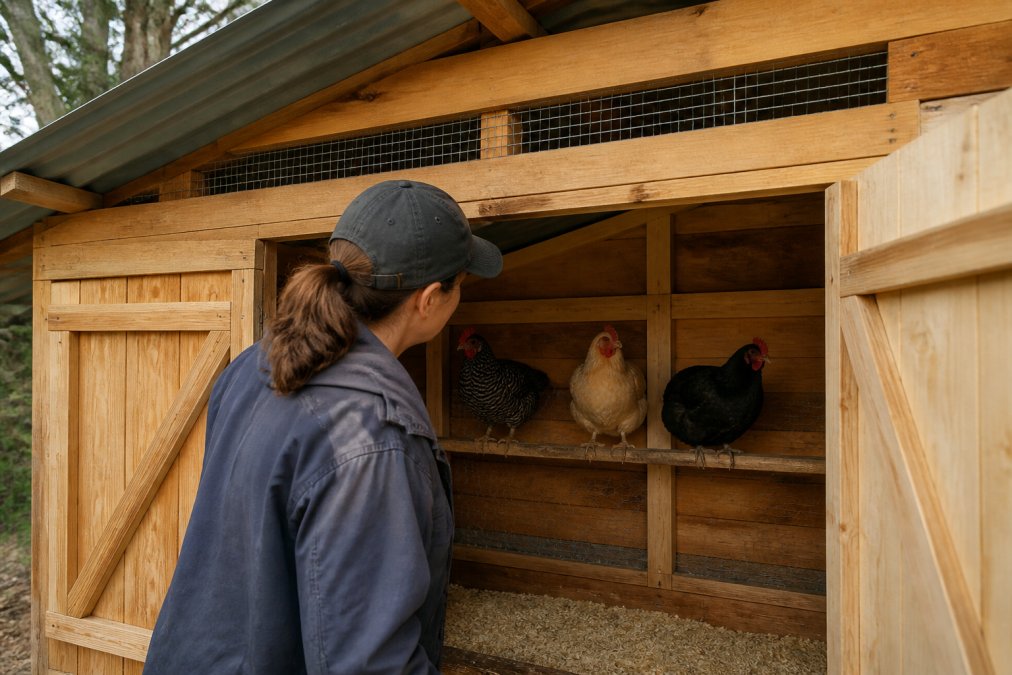
Ventilation works by moving fresh air in and stale air out. Without it, ammonia levels climb overnight while birds sleep.
Follow these coop ventilation best practices:
- Add vents high on the walls, above roost height
- Keep airflow moving without creating direct drafts on birds
- Aim for at least 1 square foot of vent space per bird
- Open windows on mild days, even in winter
- Check for condensation on walls and ceiling
Cold air isn't the enemy. Stale, damp air is. A coop that smells sharp when you open the door needs more airflow, not more bedding.
Step 3: Managing Coop Moisture and Ammonia to Protect Bird Health
Managing coop moisture and ammonia is a daily job, not a weekly one. Ammonia rises from wet litter, and high levels burn the lining of a chicken's respiratory tract.
That damage makes birds far more vulnerable to infection.
Signs your coop is too damp:
- Bedding clumps instead of staying loose
- A sharp smell hits you at the door
- Walls or windows show condensation
- Birds develop dirty, matted feathers
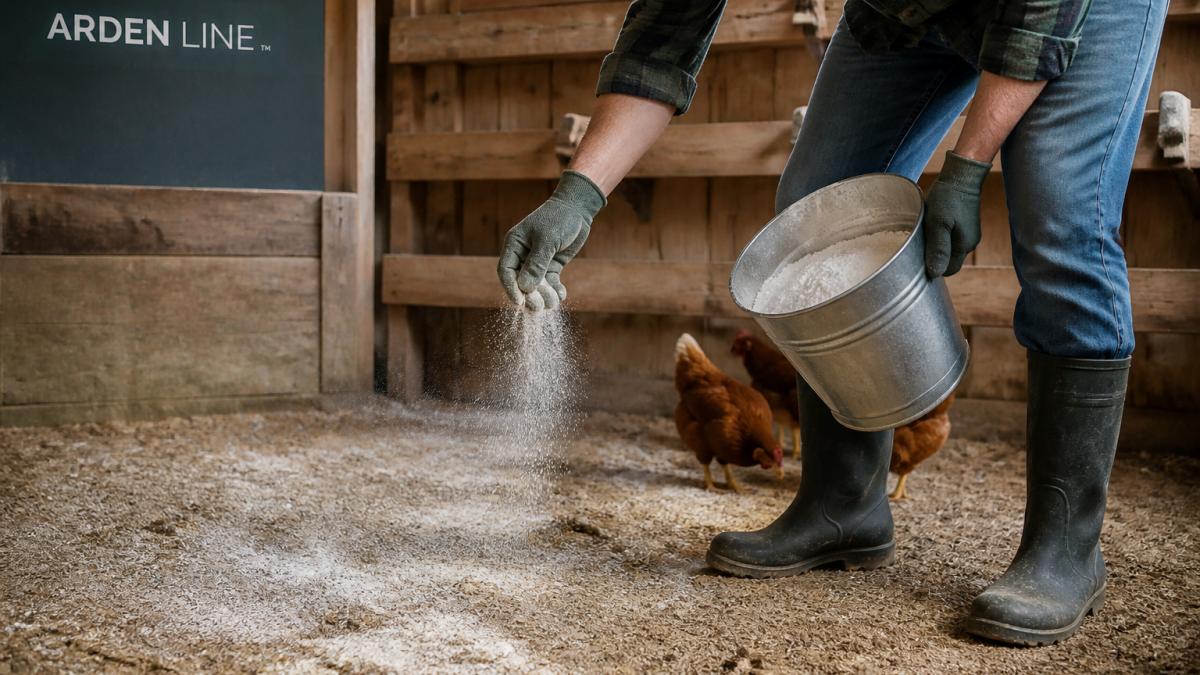
A simple fix is a mineral layer under the bedding. Arden Line's Chicken Coop Deodorizer uses pure volcanic zeolite to trap ammonia and moisture at the source. It's fragrance-free and chemical-free, so it's safe around your flock every day.

Sprinkle it over floors, bedding, and nesting boxes, then refresh with each bedding change.
Step 4: Biosecurity for Backyard Poultry: Everyday Habits That Work
Biosecurity for backyard poultry isn't about lab coats and bleach. It's about small habits repeated every day.
The CDC guidance on backyard poultry points out that germs travel on hands, shoes, and tools. That's how most backyard outbreaks start.
Build these habits into your routine:
- Keep a dedicated pair of coop boots
- Wash hands before and after flock visits
- Limit visitors, especially other bird keepers
- Never share tools with other flocks
- Isolate any bird that looks off
- Control rodents and wild birds near feed
Wild birds and rodents are common carriers, or vectors, of disease. Keep feed stored in sealed containers and clean up spills fast.
Step 5: Clean Feeders, Waterers, and Litter to Cut Pathogen Load
Dirty waterers are a hidden source of illness. Biofilm builds up inside them fast, and that film shelters pathogens your birds drink every day.
Clean waterers and feeders at least twice a week. Scrub with a brush, rinse well, and let them dry in the sun.
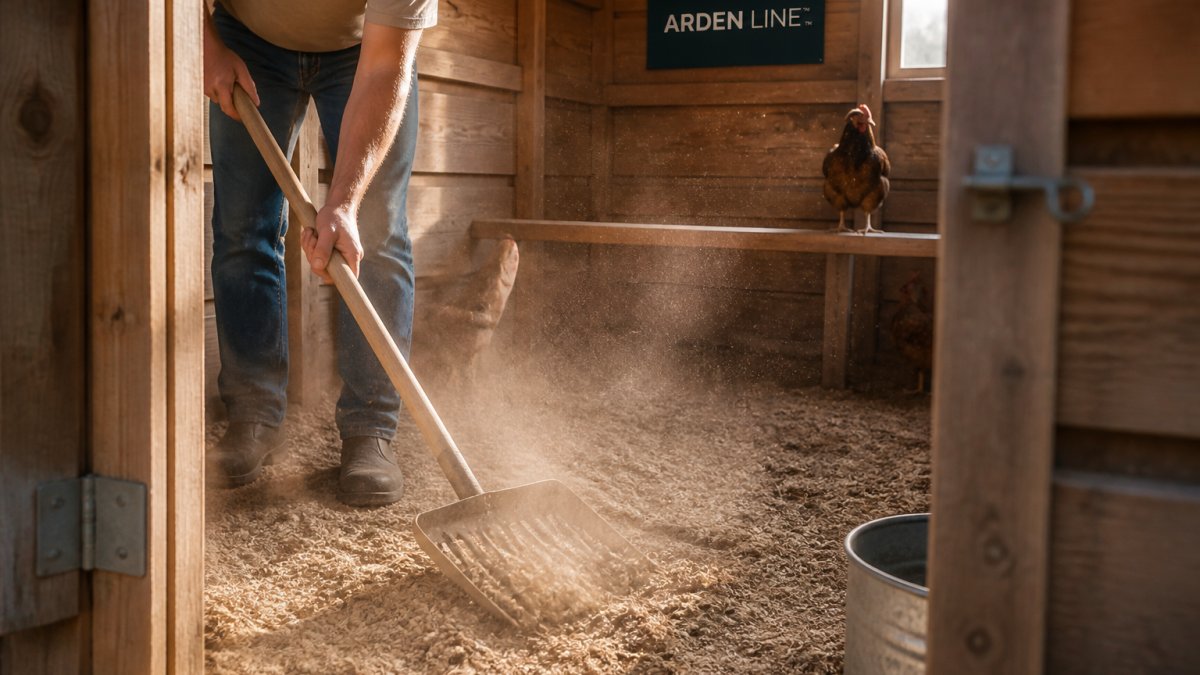
Litter management matters just as much. Wet litter grows bacteria and mold. Stir bedding weekly, remove soiled patches, and replace the whole layer when it stays damp.
| Task | Frequency | Why It Matters |
|---|---|---|
| Scrub waterers | 2x per week | Removes biofilm and pathogens |
| Clean feeders | 2x per week | Stops moldy feed and droppings |
| Stir litter | Weekly | Keeps bedding dry |
| Full litter change | Monthly or as needed | Cuts ammonia and bacteria |
| Check vents | Weekly | Maintains airflow |
Small, steady chores beat one big deep clean every few months.
Step 6: Manage Stocking Density and Reduce Flock Stress
Crowded birds get sick more often. Stress raises cortisol, and cortisol suppresses the immune system, making every pathogen a bigger threat. Stocking density is the lever most keepers can actually pull, so get the numbers right before anything else.
A common rule is 4 square feet per bird inside the coop and 8 to 10 square feet in the run. But that's a floor, not a target. Heavy breeds, cold-climate coops where birds spend more hours indoors, and flocks with a rooster all need more.
Roost space matters as much as floor space. Give each bird 8 to 10 inches of roost bar. When roost space runs short, birds pile on top of each other, and the ones forced to sleep on the floor pick up droppings and chill overnight, both of which wear down respiratory defenses.
Heat stress is the other density problem. Chickens don't sweat, so they pant to cool down. Once coop temperatures push past roughly 80°F, birds start diverting energy to cooling instead of immune function. At 90°F and above, egg production drops and panting becomes constant. Crowding makes it worse because each bird's body heat raises the temperature around it. In summer, cut density, add shade, and freeze waterers overnight so birds get cold water at dawn.
Ways to reduce flock stress:
- Give each bird enough roost space (8 to 10 inches)
- Add enrichment like dust baths, perches, and hanging greens
- Keep a consistent feeding and lighting schedule
- Introduce new birds slowly, behind a see-but-don't-touch barrier for the first week
- Watch for bullying and separate aggressors, not the bullied bird
- Handle birds calmly and avoid chasing them
The pecking order is the mechanism behind most stress. Every new bird or removed bird forces the flock to re-sort its hierarchy, and that re-sorting is when bullying, feather-pulling, and injuries spike. Slow introductions and extra space during the shake-up reduce the fallout.
A dust bath does double duty here.

Step 7: Know the Clinical Signs of Respiratory Distress in Backyard Flocks
Catching respiratory distress early saves birds. The clinical signs show up fast, and the sooner you isolate a sick bird, the better your flock's odds.
Watch for these signs:
- Wheezing or rattling breath
- Sneezing and coughing
- Runny or crusty eyes and nostrils
- Swollen face or sinuses
- Gasping or open-mouth breathing
- Drop in egg production
- Lethargy and ruffled feathers
Seasonal, Vaccination, and Air Quality Angles Most Keepers Miss
Three angles separate careful keepers from lucky ones: seasonal shifts, vaccination, and air quality. Most guides skip all three, so this is where you can get ahead of the problem instead of reacting to it.
A Seasonal Calendar for Respiratory Prevention
Respiratory risk doesn't stay constant through the year. It shifts with temperature, humidity, and wild-bird activity, and your management should shift with it.
Vaccination Protocols Worth Asking Your Vet About
Vaccination is the gap almost no backyard guide covers, and it's a high-intent question for a reason. Several common respiratory diseases have vaccines, but not every vaccine suits every flock.
- Marek's disease, hatcheries routinely vaccinate day-old chicks. If you hatch at home, you generally can't buy this vaccine in small doses, so buying vaccinated chicks is the practical route.
- Infectious bronchitis, caused by a coronavirus, and vaccines exist. They're most common in commercial settings, but some hatcheries and vets offer them for backyard flocks.
- Newcastle disease, vaccines exist and are widely used commercially. In many states, certain strains are regulated, so check with your state poultry extension office before ordering.
- Fowl pox, a viral disease with a vaccine, often recommended where mosquitoes are heavy.
Air Quality Monitoring You Can Actually Do
Air quality is the angle almost nobody covers, and you don't need fancy equipment.
Frequently Asked Questions
What are the early signs of respiratory distress in chickens?
Watch for wheezing, sneezing, rattling sounds when breathing, and discharge from the nostrils or eyes. Birds may shake their heads, gasp, or sit with ruffled feathers. A drop in egg production, reduced appetite, and pale combs often appear first. Catching these clinical signs early in backyard flocks lets you isolate sick birds before the infection spreads through the whole coop.
How does coop ventilation impact respiratory health in poultry?
Good coop ventilation best practices move fresh air through without creating drafts, keeping ammonia low and humidity controlled. Roof-level vents, open soffits, and cross-flow openings work well in most backyard setups, especially during winter when keepers tend to close coops up.
How can I safely quarantine new birds to prevent disease spread?
House new birds at least 30 feet from your existing flock for 30 days. Use separate feeders, waterers, and boots, and tend to your resident flock first each day. Watch for clinical signs like wheezing, nasal discharge, or lethargy. A quarantine period gives latent infections time to surface before a new bird meets your flock, and it is one of the cheapest preventative measures in backyard poultry care.
Are there natural ways to support respiratory health in chickens?
Yes. Dry litter is the foundation. Sprinkle a natural zeolite coop deodorizer over bedding to trap ammonia and moisture at the source, which keeps the air cleaner between cleanings. Pair that with dust bath access for feather and pest control, fresh water, and stress reduction. Natural interventions work best alongside quarantine and sanitation, not as replacements for them.

Leave a comment
This site is protected by hCaptcha and the hCaptcha Privacy Policy and Terms of Service apply.