
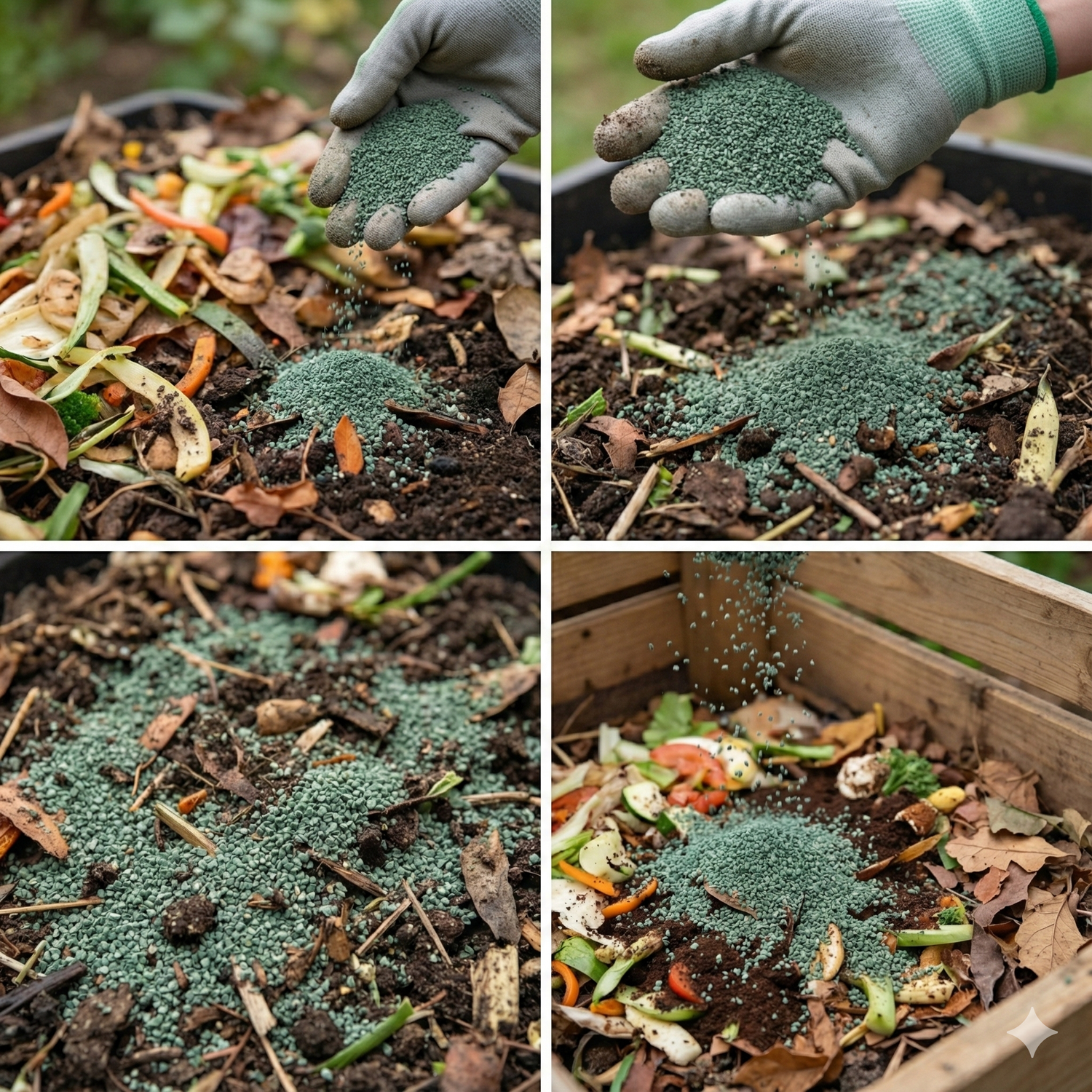
Composting is one of the most effective ways to recycle organic waste and return nutrients to the soil. But anyone who composts regularly knows the common challenges: unpleasant odors, excess moisture, slow breakdown, and nutrient loss.
Granular zeolite offers a natural, mineral-based way to support healthier, more balanced composting—without chemicals or additives.
What Is Granular Zeolite?
Zeolite is a naturally occurring volcanic mineral with a unique crystalline structure. That structure gives zeolite an exceptionally high surface area and the ability to absorb and hold moisture and certain compounds.
In granular form, zeolite is easy to mix directly into compost piles, bins, or tumblers, where it works quietly in the background to support the composting process.
Common Composting Problems (And Why They Happen)
Most compost issues come down to imbalance:
-
Strong odors often indicate excess nitrogen or trapped ammonia
-
Too much moisture slows decomposition and creates anaerobic conditions
-
Nutrient loss occurs when valuable compounds volatilize or leach away
-
Slow breakdown happens when airflow and microbial activity are disrupted
Granular zeolite helps address these issues by improving the physical and chemical balance inside the pile.
How Granular Zeolite Helps Composting
1. Helps Manage Excess Moisture
Zeolite’s porous structure allows it to absorb and hold moisture. When added to compost, it helps prevent overly wet conditions that can lead to odors and poor airflow—especially useful in kitchen-scrap-heavy or rainy environments.
Balanced moisture supports aerobic microbes, which are essential for efficient composting.
2. Reduces Odors Naturally
Unpleasant compost smells are often caused by trapped ammonia and anaerobic breakdown. Zeolite is known for its ability to bind ammonia molecules, helping reduce odor without masking it or adding fragrances.
The result is a cleaner-smelling compost pile that’s easier to manage close to the home.
3. Helps Retain Nutrients in the Pile
During composting, valuable nutrients can be lost to the air or washed away. Zeolite can help hold onto nutrient compounds within the compost matrix, keeping them available for the finished compost rather than letting them escape.
This can contribute to richer, more consistent compost over time.
4. Supports a Healthier Compost Environment
By improving moisture balance and reducing excess compounds, zeolite helps create conditions that beneficial microorganisms prefer. While zeolite itself is not a fertilizer or microbial inoculant, it supports the environment where decomposition happens efficiently.
How to Use Granular Zeolite in Compost
Using granular zeolite is simple:
-
New compost piles: Sprinkle a light layer of zeolite as you build layers of organic material.
-
Active compost bins or tumblers: Add a small amount periodically, especially after adding food scraps.
-
Odor control: Apply a thin layer directly over strong-smelling materials like kitchen waste or manure.
A little goes a long way. Zeolite works best as a supporting component, not the main ingredient.
Finished Compost Benefits
When compost that includes zeolite is added to soil, the mineral can continue to provide value by helping manage moisture and nutrient availability in garden beds. This makes compost not only a soil amendment, but also a more stable growing medium.
A Mineral-Based Approach to Composting
Composting works best when nature is allowed to do the heavy lifting. Granular zeolite doesn’t replace good composting practices—it enhances them by supporting balance, cleanliness, and efficiency.
For gardeners, homesteaders, and anyone looking to improve their compost naturally, granular zeolite is a simple, mineral-based tool worth considering.
Explore Arden Line Granular Zeolite
Designed for practical, everyday applications in soil, compost, and beyond.

Leave a comment
This site is protected by hCaptcha and the hCaptcha Privacy Policy and Terms of Service apply.