
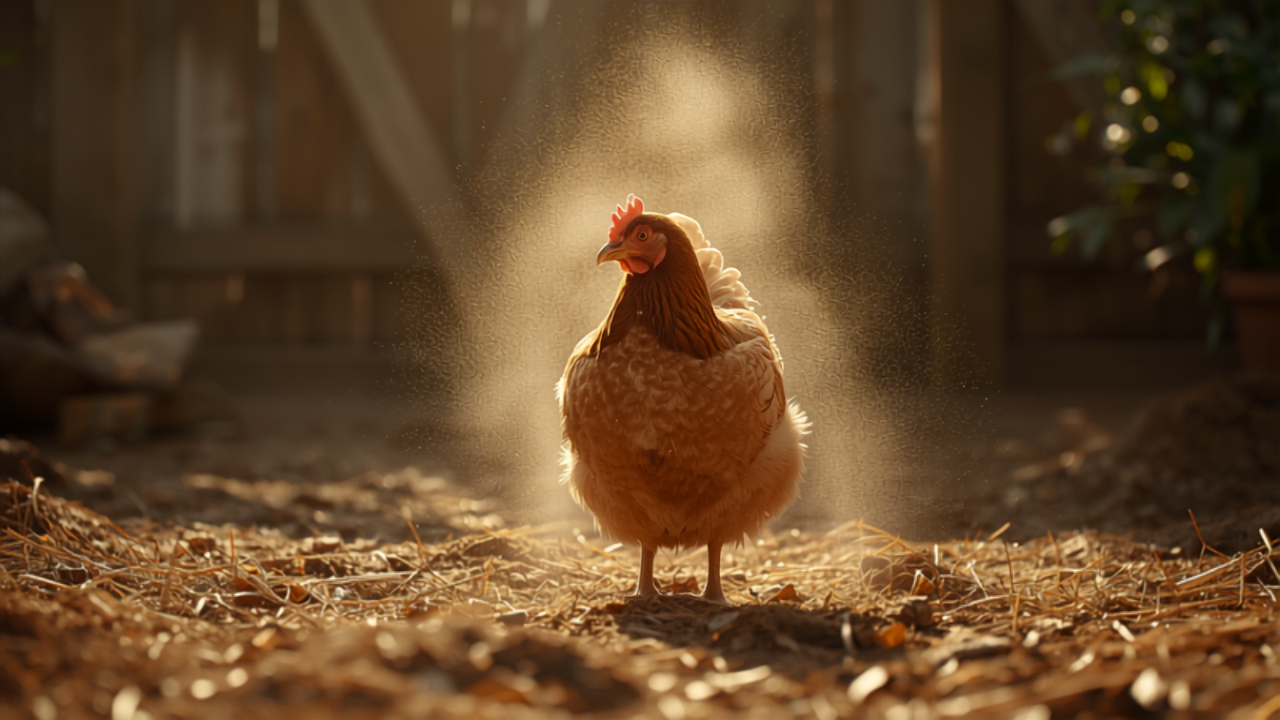
Chickens don't bathe in water — they bathe in dust. Rolling, kicking, and fluffing fine, dry material through their feathers is how a flock smothers mites and lice, absorbs excess skin oil, and keeps plumage in good condition. It's not optional grooming; it's how a healthy bird stays healthy. Give them a dedicated spot and they'll use it every day.
Adding natural zeolite to the mix makes a good dust bath better. Zeolite is a porous volcanic mineral that pulls moisture and ammonia odor out of the surrounding material, so the bath stays dry, light, and fluffy — exactly the texture chickens want — instead of clumping after rain or humidity.
What you'll need
- A container — a low tub, an old tire, a wooden box, or a scooped-out corner of the run. Aim for at least 24" across and 6–8" deep so a bird can sit and turn fully.
- Dry, loose base material — sandbox-grade sand or plain dry garden soil.
- Natural zeolite — for moisture and odor control.
- Optional add-ins — a handful of wood ash (no charcoal/lighter residue) or dried herbs like lavender.
The recipe
A simple, reliable mix by volume:
- 50% sand or dry soil — the bulk the birds roll in.
- 30% zeolite — keeps the whole bath dry and odor-free.
- 20% optional wood ash or dried herbs — extra grooming benefit and scent.
If you keep it simple, a 2:1 ratio of sand to zeolite alone works well.
Step by step
- Pick a dry, sheltered spot. Under a coop overhang or a covered run corner keeps rain out. Birds prefer a sunny, draft-free location.
- Set and stabilize the container. If it can tip, anchor it. A sinking tub flush with the ground is easiest for the flock to step into.
- Add the base. Fill about two-thirds with your sand or dry soil.
- Work in the zeolite. Sprinkle it across the top and mix it through with a hand trowel until evenly blended.
- Add any extras. Stir in wood ash or herbs if using.
- Let them discover it. Most birds start using a fresh bath within a day. Tossing a little scratch grain on top speeds up the introduction.
Keeping it fresh
- Fluff it weekly. Run a trowel through to break up any compaction and redistribute the zeolite.
- Top up the zeolite monthly, or sooner if the bath has taken on moisture or smells.
- Refresh fully every few months — empty, clean the container, and remix.
- Keep it covered. A bath that gets rained on turns to mud and stops working. Replace soaked material rather than trying to dry it.
A few tips
- One bath serves several birds, but in larger flocks a second spot prevents squabbling.
- Skip anything dusty-but-hazardous — no diatomaceous earth in enclosed coops where birds breathe heavy dust all day; zeolite is the gentler moisture-and-odor option.
- If your run is already dry dirt, you can simply work zeolite into a corner the birds have claimed rather than building a separate box.
That's the whole method. A dry, zeolite-rich dust bath is one of the lowest-effort, highest-payoff things you can give a backyard flock — cleaner birds, fewer parasites, and a run that smells better too.

Leave a comment
This site is protected by hCaptcha and the hCaptcha Privacy Policy and Terms of Service apply.